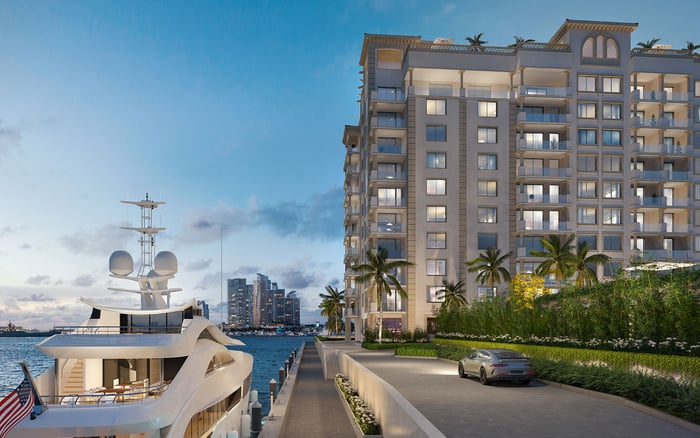
For buyers whose winter calendar moves between polo, Palm Beach, Miami dinners, and private family time, Fisher Island can make a pied-à-terre feel less like an occasional address and more like a disciplined seasonal base.
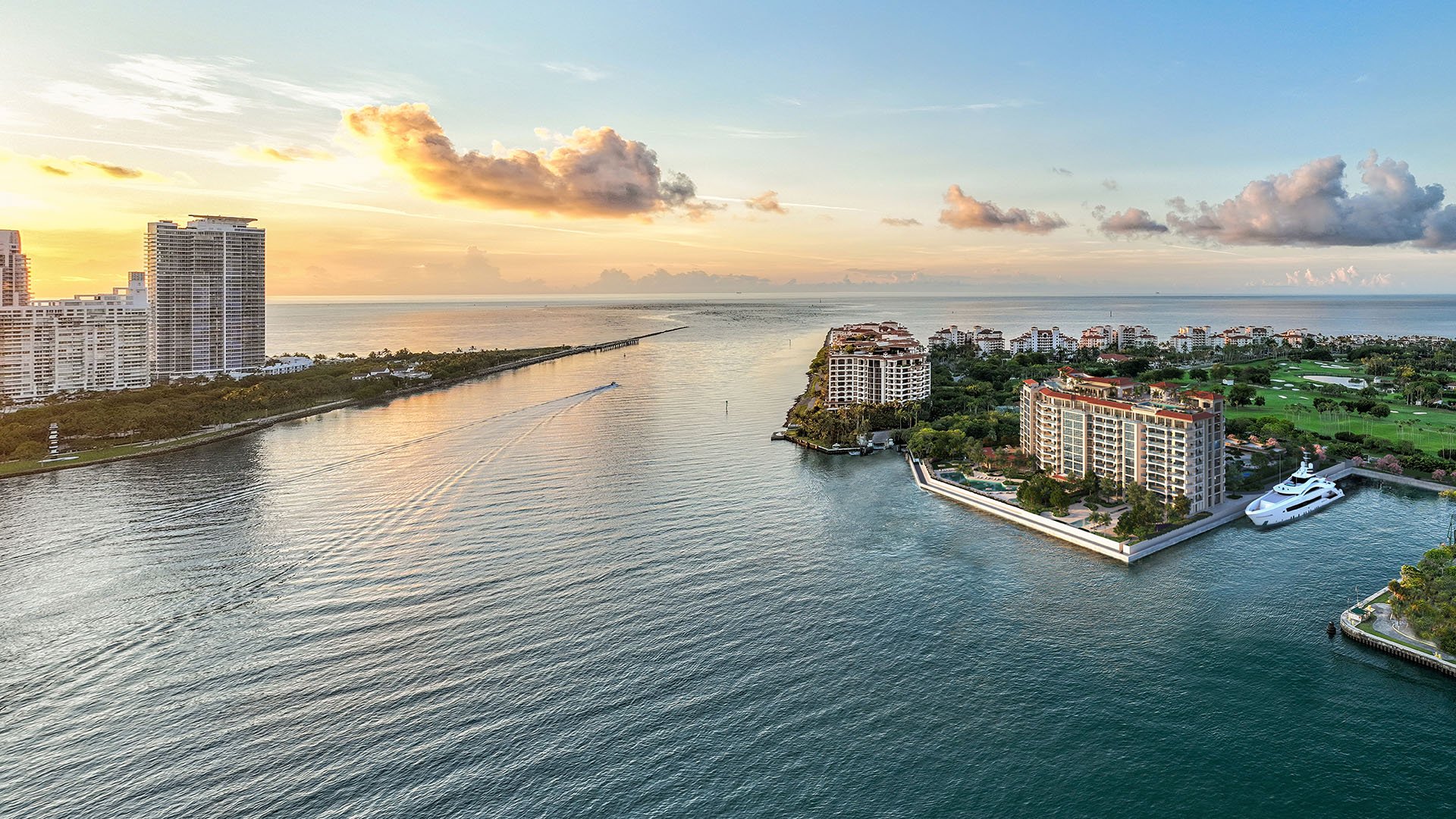
For a certain South Florida buyer, winter is not a retreat from activity. It is the season when the calendar compresses: polo days, Palm Beach lunches, Miami dinners, collector previews, charity evenings, family visits, and the quiet desire to wake up somewhere that does not feel like a hotel. In that rhythm, the pied-à-terre stops being a trophy accessory. It becomes infrastructure.
That distinction matters. A pied-à-terre chosen only for view, brand, or novelty may satisfy the first visit, but winter quickly exposes the weaknesses of an address that is inconvenient, overexposed, or too far from the buyer's actual social route. A better-positioned residence is not simply prettier. It is easier to arrive at, easier to leave from, easier to maintain, and easier to enjoy between commitments.
This is where Fisher Island enters the conversation with unusual force. For buyers who divide time between Miami and the Palm Beach orbit, the island setting offers a rare balance: close enough to participate, separate enough to decompress, and discreet enough to feel like a true private base rather than a public-facing seasonal perch.
Winter polo is not just a sport for many buyers. It is a social framework. It draws people north, encourages daytime hospitality, and turns weekends into a sequence of movement across South Florida. Location becomes less theoretical. Buyers begin to notice not only where a residence is, but how it performs under pressure.
A well-positioned Fisher Island pied-à-terre can function as the southern anchor of that circuit. It does not need to replace a Palm Beach residence, a yacht program, or a primary home elsewhere. Its value is more precise: a private Miami base with enough calm to make the winter season feel edited rather than exhausting.
In buyer shorthand, the comparison is often Fisher Island privacy versus Palm Beach proximity. The stronger answer may not be either-or. It may be a residence that lets the owner enjoy Palm Beach and Wellington-facing days, then return to an environment that feels distinctly removed from the social current.
That return is part of the appeal. The best second-home choices are not measured only by what they are near. They are measured by the quality of the pause they create.
The Fisher Island argument is strongest when framed around use. A pied-à-terre here is not trying to be a sprawling estate. It is a more deliberate instrument: a residence for arrivals, reset days, intimate dinners, visiting family, and the occasional decision to skip the evening entirely.
For buyers studying the island today, projects such as The Residences at Six Fisher Island bring the conversation directly to contemporary expectations. The appeal is not merely newness. It is the possibility of aligning privacy, design, service sensibility, and ease of ownership in a way that suits a highly mobile winter lifestyle.
The same logic applies when considering established names. Palazzo del Sol and Palazzo della Luna occupy a mental category that matters to buyers who want a Fisher Island address to feel complete from the moment they arrive. For a seasonal owner, that sense of readiness can be as important as square footage.
A gated-community expectation also changes the buyer's priorities. The question becomes less about being seen and more about being shielded from unnecessary friction. During the busiest weeks of the season, discretion, staff coordination, guest management, and the ability to host without spectacle become central features of value.
In ultra-prime real estate, better-positioned does not always mean closest. It means most aligned with the owner's actual pattern of life. For a winter polo client, that pattern may include early departures, late returns, wardrobe changes, family dinners, and days when the most luxurious decision is to do nothing at all.
The right Fisher Island pied-à-terre should therefore be evaluated through several lenses. First, arrival quality: does the residence make coming and going feel composed? Second, daily privacy: can the owner move between public season and private life without feeling exposed? Third, hospitality: can the home receive guests elegantly without requiring the scale of a primary estate? Fourth, lock-and-leave confidence: can the residence be managed with minimal emotional drag when the owner departs?
This is why a purely decorative purchase can fall short. A pied-à-terre may have a beautiful terrace and still be poorly suited to the owner. Conversely, a residence with a more disciplined plan, a calmer setting, and a stronger service profile can become indispensable because it understands the owner's actual winter.
For buyers who prefer a lower-density residential feel, The Links Estates at Fisher Island introduces another way to think about the island: less as a compact seasonal apartment and more as a private residential environment. The distinction can matter for families, collectors, and owners who want the convenience of a pied-à-terre without sacrificing the emotional register of a house.
There is a subtle advantage in not placing every seasonal need in one market. Palm Beach has its own rhythm, codes, and gravitational pull. For some buyers, that is precisely the appeal. For others, especially those whose lives remain meaningfully tied to Miami, a Palm Beach-only solution can feel too narrow.
A Fisher Island base allows the owner to participate in the northern winter calendar while preserving a Miami identity. It suits the buyer who may attend polo, dine in Palm Beach, and still prefer to wake up close to Miami's water, art, private aviation routes, restaurants, and family networks. The value is not in avoiding Palm Beach. It is in avoiding overcommitment to a single seasonal script.
That flexibility is increasingly important for the modern luxury buyer. Families are more mobile. Work is more distributed. Guests arrive from multiple cities. Children and adult children often have different plans. A pied-à-terre that supports only one use case can quickly feel rigid. A better-positioned Fisher Island residence can absorb more possibilities.
Second-home discipline is ultimately about optionality. The residence should be elegant when the owner is alone, comfortable when family arrives, and efficient when the calendar becomes complicated.
The best time to judge a winter base is before the calendar is fully underway. Buyers should walk through a realistic week, not an idealized weekend. Where will the owner dress before an event? Where will guests wait? How does the residence feel after a long day away? Is there space for staff coordination, luggage, deliveries, and recovery without disrupting the calm of the home?
The view still matters. Architecture still matters. Brand still matters when it reflects genuine quality. But the winter polo buyer should place equal weight on choreography. Luxury, in this context, is the absence of repeated small annoyances.
A stronger Fisher Island pied-à-terre should answer a simple question: does this home make the season feel easier, more private, and more pleasurable? If the answer is yes, the address is doing more than holding value. It is improving the owner's life during the months when South Florida is most in demand.
Why does winter polo season influence a Fisher Island purchase? It clarifies how a buyer actually moves through South Florida and whether a pied-à-terre supports that rhythm with privacy, ease, and comfort.
Is Fisher Island only for full-time residents? No. Many buyers consider it for seasonal use because the setting can support a refined lock-and-leave lifestyle when the residence is chosen carefully.
What makes a pied-à-terre better-positioned? It is aligned with the owner's real calendar, including arrivals, departures, hosting, recovery time, and access to preferred social circles.
Should polo buyers choose Palm Beach instead? Some should, but others may prefer Fisher Island if they want access to the Palm Beach season while keeping a more private Miami base.
How important is privacy in this decision? Privacy is central for buyers whose winter season includes public events, guests, and frequent movement between social settings.
Does a gated-community setting matter for seasonal owners? It can matter when the owner values discretion, controlled guest flow, and a quieter residential atmosphere during peak season.
Is a second home on Fisher Island mainly a lifestyle purchase? It is a lifestyle decision, but the best examples also solve practical issues around time, hospitality, family use, and seasonal fatigue.
Which Fisher Island projects should buyers compare first? Buyers often begin with options that match their preferred balance of privacy, service, scale, and residential feel rather than simply choosing by name.
Can a Fisher Island pied-à-terre work for family visits? Yes, if the floor plan, guest accommodations, storage, and day-to-day management are selected with family use in mind.
When should buyers begin planning for winter use? Ideally before the season intensifies, so the residence can be evaluated for real-life scheduling rather than only for presentation.
For a discreet conversation and a curated building-by-building shortlist, connect with MILLION.
If branded residences are on your mind — as a home or as an allocation — we would be glad to share what we are seeing, privately.
Begin a quiet conversation