A routine-first search considers how a residence could support movement, recovery, rest, and preventive care. In Miami Design District, buyers can compare private amenities with nearby wellness options while verifying access, staffing, costs, and completion status before assigning value to any feature.
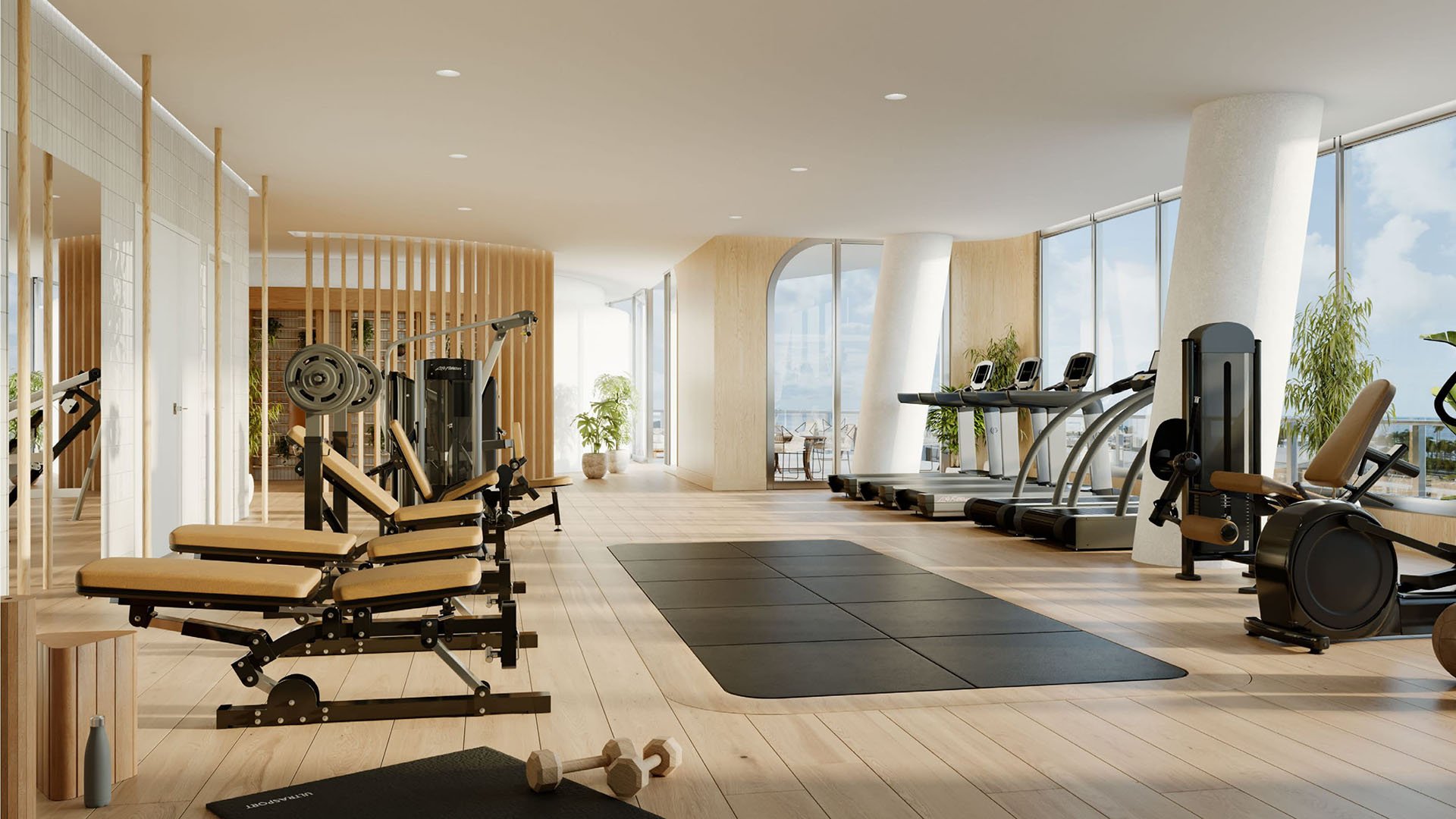
A luxury condo search often considers architecture, views, and entertaining space. For a wellness-minded buyer, an ordinary weekday can be a more useful test. Where would a morning workout happen? Would recovery require a reservation? Is there a suitable place for quiet reflection? How much effort would it take to reach a preferred practitioner?
This routine-first approach changes the search hierarchy in Miami Design District. A long amenity list may matter less than a focused set of spaces and services that a resident expects to use consistently.
Translate lifestyle preferences into practical criteria such as time, privacy, frequency, and ease of access. A buyer who trains daily may prioritize convenient fitness access, while a frequent traveler may care more about simple scheduling and dependable service.
A wellness-oriented search should assess both the building and the surrounding neighborhood. Buyers can map the route from a prospective lobby to the studios, practitioners, or services they already expect to use, preferably at the relevant time of day.
The question is not merely whether an option is nearby. Consider whether travel time, weather exposure, operating hours, and membership requirements would make it practical several times a week.
A Design District property itinerary may include Miami Tropic Residences and Kempinski Residences Miami Design District. Keep the comparison centered on how each option could fit the buyer's routine, subject to direct verification of current project details.
A treatment room, fitness area, sauna, or meditation space should not automatically be treated as a complete wellness program. Its practical value depends on matters such as availability, maintenance, capacity, staffing, scheduling, and resident access.
Buyers should ask who operates each component, whether services involve third parties, and which costs are included or separately charged. They should also confirm whether each feature is complete, under construction, or planned.
This distinction helps prevent an attractive presentation from carrying more weight than everyday usability. The goal is to understand what residents can use, when they can use it, and what additional arrangements may be required.
A multipurpose room can support several activities, but flexibility may also create scheduling or noise conflicts. Ask how the space is managed, whether private instruction is permitted, and whether reservations are required.
Quiet rooms deserve similar scrutiny. Consider acoustic privacy, lighting controls, ease of use, and proximity to active shared areas. A space intended for reflection should be simple to use without unnecessary setup.
Pool and fitness areas should be evaluated according to the buyer's intended routine. Operating hours, capacity, layout, temperature, equipment, and reservation procedures may determine whether a facility is genuinely useful.
Selective comparisons can sharpen a Miami Design District search without assuming that different projects offer identical programs. House of Wellness Brickell and The Well Coconut Grove can serve as additional stops on a broader Miami-Dade itinerary.
The purpose of comparison is to refine questions about location, service, privacy, access, and ownership-not to transfer claims from one development to another. Current amenities, operators, fees, and delivery status should be verified independently for every property.
Before assigning value to a wellness feature, confirm its delivery status, operating entity, hours, reservation process, guest rules, capacity, and pricing structure. Determine what association charges cover and what requires separate payment.
For nearby services, verify current availability, membership terms, and scheduling. For private facilities, consider capacity relative to likely demand. For staffed offerings, ask whether access depends on a particular operator or practitioner.
Tour when the routine would normally occur. Sound, elevator demand, natural light, shared-space activity, and the ease of entering or leaving the building can be more informative than a presentation at an unrepresentative hour.
Why begin a wellness-focused condo search with daily routines? A routine clarifies which spaces, services, and neighborhood connections are likely to receive consistent use.
Should nearby wellness services influence a condo decision? They can, but buyers should verify operating hours, access terms, scheduling, and the practicality of the route.
What distinguishes a facility from an operated wellness service? A facility is a physical space, while an operated service also depends on staffing, scheduling, maintenance, and defined access.
How should buyers assess recovery amenities? Consider availability, maintenance, capacity, operating procedures, and how easily the amenity fits into a repeatable routine.
What should buyers examine in a quiet or meditation room? Review acoustic privacy, lighting, ease of use, reservation requirements, and proximity to active common areas.
What should buyers ask about wellness-related costs? Confirm what association charges include and which facilities, appointments, memberships, or services require separate payment.
Why does completion status matter? A planned or unfinished feature may not be available when expected, so its delivery status should be confirmed directly.
Can an off-site studio be more useful than an in-building fitness room? Yes. The better option depends on the buyer's preferred instruction, equipment, schedule, privacy, and travel time.
How can buyers compare projects across Miami-Dade? Apply consistent criteria for access, staffing, cost, capacity, privacy, delivery status, and expected frequency of use.
What is the clearest sign of a practical wellness offering? It reduces friction around desired habits without excessive travel, booking, setup, or uncertainty.
To compare the best-fit options with clarity, connect with MILLION.
If branded residences are on your mind — as a home or as an allocation — we would be glad to share what we are seeing, privately.
Begin a quiet conversation