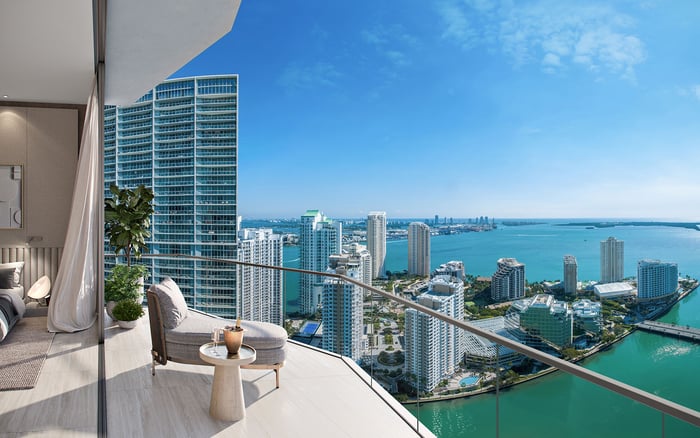
A practical underwriting framework for affluent cash buyers evaluating concessions in South Florida residences, from headline price to closing certainty, carry costs, liquidity, and long-term exit quality.

In South Florida’s high-end residential market, cash remains a powerful language. It can simplify execution, reduce financing uncertainty, and give a seller confidence that a contract will close. Yet in 2026, a cash buyer should not assume speed alone warrants a material discount. The more disciplined approach is to underwrite every concession as part of a complete capital decision: price, timing, closing risk, carry, improvements, association exposure, and future liquidity.
A concession is not always a simple reduction in purchase price. It may appear as a seller credit, a developer incentive, paid assessments, included furnishings, a finish allowance, flexible closing timing, parking or storage value, or a reduced deposit burden. Each has a distinct after-closing effect. A one-time credit may improve entry basis, while a recurring cost obligation can quietly erode returns over years.
For a buyer comparing a waterfront resale with a branded tower, the question is not, “What did they give me?” It is, “What is the all-in basis after I take possession, stabilize the residence, and preserve my exit?”
The first underwriting step is to convert every concession into a net effective basis. Begin with the contract price, then adjust for verified credits, seller-paid costs, included personal property, deferred maintenance, required improvements, transfer-related expenses, and timing costs. The goal is to understand the true capital required to own the residence in the condition and configuration you actually want.
This matters in luxury buildings where two residences with similar asking prices can carry very different ownership economics. A finished, turn-key home may justify a premium if it avoids months of design work, procurement, storage, and contractor coordination. Conversely, a residence that appears attractively priced may require substantial post-closing investment before it lives at the desired standard.
In Brickell, for example, a buyer considering 2200 Brickell may weigh a concession differently than a buyer pursuing an older resale nearby. In one case, the underwriting may focus on deposit structure, delivery timing, and finish expectations. In another, it may focus on immediate carry, renovation disruption, and association history. The same dollar concession can produce very different value depending on the asset.
Cash buyers often ask for a price concession because they can close without lender conditions. That is reasonable, but incomplete. Sellers also value certainty. A clean inspection period, credible proof of funds, a meaningful deposit, flexible closing timing, and limited contingencies can be worth as much as a visible price adjustment.
Underwriting should assign value to each term. If the seller needs a fast close, speed may become negotiable capital. If the seller needs time to relocate, delayed closing may become the concession. If the residence has lingering punch-list items, a holdback or repair credit may protect the buyer better than a nominal discount.
The strongest cash strategy is rarely the most aggressive opening offer. It is a disciplined offer that makes the seller comfortable while protecting the buyer’s basis. That balance can be especially important in trophy buildings, where reputation, discretion, and certainty can influence negotiation dynamics.
A concession only has value if it survives the carry calculation. Monthly association dues, insurance, taxes, utilities, staffing, club fees where applicable, and maintenance reserves should be modeled before a buyer treats a credit as profit. In luxury residences, carry is not a footnote. It is part of the asset’s operating character.
Cash buyers should also consider time-to-use. A residence requiring customization may be financially closed but not personally usable. During that period, the buyer is absorbing ownership costs without receiving the lifestyle benefit. If the concession does not compensate for that lost utility, it may be less valuable than it appears.
For Miami Beach buyers evaluating design-led residences such as The Perigon Miami Beach, the underwriting conversation should connect architecture, lifestyle, and timing. A residence that delivers the intended living experience with fewer post-closing interventions may justify a firmer basis than one that requires a lengthy transformation.
In new construction, concessions can be embedded in the transaction rather than presented as a direct discount. A developer may offer favorable deposit timing, design allowances, closing-cost participation, or other negotiated terms. These should be evaluated as structure, not as found money.
A lower upfront deposit may improve liquidity during construction, while a design allowance may only matter if it applies to selections the buyer truly values. A closing credit may be useful, but it should be compared with the price basis, delivery obligations, and the buyer’s opportunity cost over time.
The underwriting lens also differs by submarket. Portfolio labels should remain consistent-Brickell, Miami Beach, Sunny Isles, West-palm-beach, Investment, and New-construction-because a concession can mean different things in each setting. In Sunny Isles, for instance, a buyer considering St. Regis® Residences Sunny Isles may focus on brand positioning, future resale depth, and the premium associated with service culture. The concession must be judged against the whole ownership proposition.
The most refined cash buyers think about exit before closing. A concession that improves entry price but compromises resale appeal is not necessarily attractive. Floor height, view quality, plan efficiency, outdoor space, building reputation, service level, and parking can matter more than a modest discount.
If a seller offers a meaningful concession on a residence with an awkward layout, limited natural light, or a view vulnerability, the buyer should ask whether the discount is enough to compensate for reduced buyer depth later. In contrast, a prime residence with a smaller concession may still be the superior acquisition if it preserves liquidity.
In West Palm Beach, where buyers often compare waterfront living, cultural access, and newer residential offerings, the same discipline applies. A residence at The Ritz-Carlton Residences® West Palm Beach should be considered not only by price per square foot, but by service expectations, ease of ownership, and the durability of demand for that lifestyle profile.
A simple scorecard can keep emotion out of negotiation. Rate each concession across five dimensions: immediate dollar value, certainty of receipt, impact on liquidity, effect on lifestyle timing, and relevance to resale. A seller credit with clear contract language may score high on certainty. A vague promise of future improvements may not.
Buyers should also distinguish negotiable value from cosmetic value. Included furniture can be useful if it suits the residence and avoids procurement delays. It can be noise if replacement is likely. A repair credit is valuable when it addresses a known issue. It is inadequate if it masks broader capital exposure.
Finally, compare the concession with the buyer’s broader portfolio goals. A second home, a primary residence, and a long-hold investment each deserve different underwriting. The right concession for one may be irrelevant to another.
The most durable value in South Florida luxury real estate tends to come from qualities that cannot be easily recreated: location, views, architecture, privacy, service, land position, and scarcity. Cash-buyer concessions should be used to sharpen acquisition terms, not to rationalize a compromised asset.
A disciplined buyer can accept a smaller concession on a superior residence and still make the better decision. Conversely, a large concession on the wrong asset may simply be an invitation to inherit someone else’s problem. The art is to separate negotiating theater from transferable value.
In 2026, underwriting cash-buyer concessions is less about winning a discount and more about purchasing control. Control over timing. Control over basis. Control over future optionality. For the buyer who can move without financing friction, that control is the true premium.
What is a cash-buyer concession? It is any negotiated benefit offered to a cash buyer, including a price reduction, credit, timing flexibility, included property, or other economic term.
Should a cash buyer always ask for a discount? Not always. In a competitive situation, cleaner terms or flexible timing may create more leverage than a blunt price reduction.
How should credits be compared with price reductions? Convert both into a net effective basis, then account for closing costs, taxes, carry, and any post-closing work.
Are developer incentives the same as resale concessions? No. Developer incentives often involve structure, timing, or allowances, while resale concessions may address condition, urgency, or certainty.
Why does carry matter in concession analysis? Carry can reduce the practical value of a concession, especially if the residence will not be used immediately after closing.
Can included furniture be a valuable concession? Yes, if it is desirable, well suited to the residence, and reduces procurement time. Otherwise, it may have limited underwriting value.
How should inspection findings affect a cash offer? They should be translated into specific credits, repairs, holdbacks, or price adjustments rather than vague post-closing assumptions.
What is the biggest mistake cash buyers make? Treating the headline discount as the win while ignoring liquidity, association exposure, improvement costs, and future resale appeal.
Do concessions matter differently by neighborhood? Yes. The same concession can have different value depending on buyer depth, building profile, lifestyle demand, and replacement options.
What should a buyer prioritize in 2026? Prioritize durable asset quality, clean contract structure, verified economics, and the flexibility to exit well if plans change.
For a tailored shortlist and next-step guidance, connect with MILLION.
If branded residences are on your mind — as a home or as an allocation — we would be glad to share what we are seeing, privately.
Begin a quiet conversation