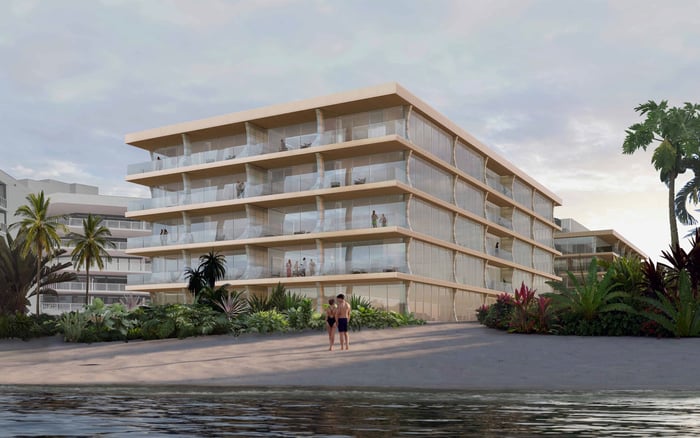
A Palm Beach residence for several generations must balance private space, service logistics, accessibility, and changing occupancy over time.

For a multi-generational family, a Palm Beach residence is more than a collection of rooms. It is a long-term operating environment that may need to accommodate grandparents, adult children, toddlers, teenagers, guests, and domestic staff-sometimes all at once, sometimes in very different combinations.
The purchase brief should begin with two occupancy scenarios. The first is peak use, when the entire family gathers. The second is everyday use, when only one couple or a small household may be in residence. A successful plan feels generous at peak occupancy without becoming impersonal, inefficient, or difficult to manage during quieter periods.
That distinction reshapes the search. Rather than asking only how many bedrooms a property has, buyers should define privacy boundaries, service expectations, accessibility requirements, and likely generational transitions. Palm Beach Residences offers a useful starting point for viewing the broader residential landscape through this more disciplined lens.
The first strategic question is whether Palm Beach Island or another Palm Beach County community better matches the family’s priorities. Island living may place walkability and proximity to Palm Beach amenities at the center of the lifestyle decision. Elsewhere in the county, a family may find greater design flexibility across gated waterfront enclaves, club communities, and luxury condominium residences.
On the island, compare in-town, estate-section, oceanfront, and Intracoastal settings. Each offers a different balance of access and seclusion. An in-town address may simplify independent movement for family members, while a more secluded setting may better preserve daily privacy. The right answer depends on how the household actually lives, not on a generalized hierarchy of addresses.
West Palm Beach should also be evaluated as a distinct operating proposition. Residences such as Forté on Flagler West Palm Beach and The Ritz-Carlton Residences® West Palm Beach merit consideration when comparing condominium living with the responsibilities of a private estate. Project selection should follow document review, not assumptions based on name, location, or presentation.
True privacy is shaped by movement as much as square footage. Buyers should trace how residents, overnight guests, vendors, and staff enter and circulate through the property. If every route crosses the principal living spaces, even a large home can feel exposed.
A practical plan may require distinct suites for separate family units, quiet quarters for older relatives, and dedicated staff accommodations. Flexible zoning is equally important. Doors, vestibules, secondary sitting rooms, and separated wings can allow part of a residence to close when occupancy is light, then reopen for holidays or extended visits.
Accessibility should be assessed across generations. Aging relatives may need simpler, quieter circulation, while young children and teenagers present different requirements for supervision and independence. The objective is not merely to meet today’s needs, but to avoid a layout that becomes restrictive as mobility, family structure, or caregiving arrangements evolve.
Single-family estates, boutique condominiums, and larger full-service buildings offer distinct models of privacy and service. An estate may provide greater control over access and reconfiguration, but it also concentrates responsibility for maintenance, security, staffing, and climate exposure. A condominium may transfer portions of that operational burden while introducing shared rules and procedures.
Waterfront properties warrant particular scrutiny because views and access do not resolve questions of weather exposure, insurance conditions, upkeep, or service circulation. Families looking beyond the island might also compare The Ritz-Carlton Residences® Palm Beach Gardens within a broader countywide search. It should be assessed against the same family-specific criteria as every other option.
In a condominium, buyers should examine HOA rules, guest procedures, security protocols, service access, and restrictions affecting staff or vendors. These provisions can shape daily life as decisively as the floor plan. A residence is a fit only if the building’s operating framework supports the family’s preferred degree of autonomy.
Families employing chefs, nannies, drivers, security personnel, or estate managers should confirm that the property can support those roles discreetly. Consider staff arrival, parking, deliveries, storage, kitchen access, laundry flow, waste removal, and the separation of service activity from private family rooms.
The relevant question is not simply whether staff are permitted, but whether they can work without unnecessary crossings, delays, or intrusion. A layout that functions elegantly during a quiet week may become strained when relatives, guests, and several service teams arrive together.
For condominium buyers, written procedures matter. Guest registration, vendor scheduling, security clearances, and service-entry rules should be reviewed before closing. For estate buyers, the focus shifts to the property’s physical capacity and the family’s willingness to oversee a more independent operating structure.
Older homes, irregular lots, and mature landscaping may limit plans to accommodate three or four generations on one property. Buyers contemplating renovation should investigate architectural review, historic-preservation requirements, and potential limits on reconfiguration before assuming an elegant concept can be executed.
Long-term suitability also demands a sober review of climate exposure, insurance conditions, maintenance obligations, and operating costs. These are not secondary concerns. They determine whether the residence can be held and enjoyed comfortably through changing occupancy patterns and future family leadership.
The strongest decision process combines architectural, legal, insurance, building, and operational due diligence. It asks whether the property works today, whether it can adapt tomorrow, and whether its service structure will remain acceptable when responsibility passes from one generation to the next.
What should a multi-generational purchase brief include? It should define peak and everyday occupancy, privacy boundaries, service expectations, accessibility needs, and anticipated family transitions.
Should families begin with Palm Beach Island or the wider county? Begin by deciding whether island access and walkability outweigh the broader range of residential formats available elsewhere in Palm Beach County.
Which Palm Beach settings should buyers compare? Compare in-town, estate-section, oceanfront, and Intracoastal settings for their differing balances of convenience and seclusion.
How can a large residence preserve privacy? Look for distinct suites, separated wings, quiet quarters, and circulation routes that reduce crossings among residents, guests, vendors, and staff.
Why does everyday occupancy matter? A home designed only for full-family gatherings may feel oversized or inefficient when occupied by one or two people.
What accessibility issues deserve early attention? Assess the needs of older relatives alongside those of children, teenagers, caregivers, guests, and domestic staff.
What should condominium buyers review? Review HOA rules, guest procedures, security protocols, service access, and any restrictions affecting staff or vendors.
What should estate buyers test before closing? Test maintenance responsibilities, staffing capacity, circulation, climate exposure, insurance conditions, and the feasibility of proposed alterations.
Can an older home be adapted for several generations? Possibly, but existing architecture, irregular lots, mature landscaping, preservation requirements, and architectural review may constrain reconfiguration.
What defines long-term fit? Long-term fit means the residence can adapt to changing occupancy, mobility, service needs, operating costs, and generational responsibility.
To compare the best-fit options with clarity, connect with MILLION.
If branded residences are on your mind — as a home or as an allocation — we would be glad to share what we are seeing, privately.
Begin a quiet conversation