A discreet buyer’s framework for testing Aventura security, digital privacy, association operations, structural records, and the durability of resale appeal.

In Aventura, privacy can appear effortless: a composed arrival, controlled vehicular access, attentive personnel, and discreet circulation from lobby to residence. Yet even the most polished entrance reveals little about how a property performs after hours, through a staffing change, or when technology fails.
Treat every security feature as a claim to test, not a conclusion to accept. Meaningful comparisons should be made property by property, with attention to both documented procedures and observed operations.
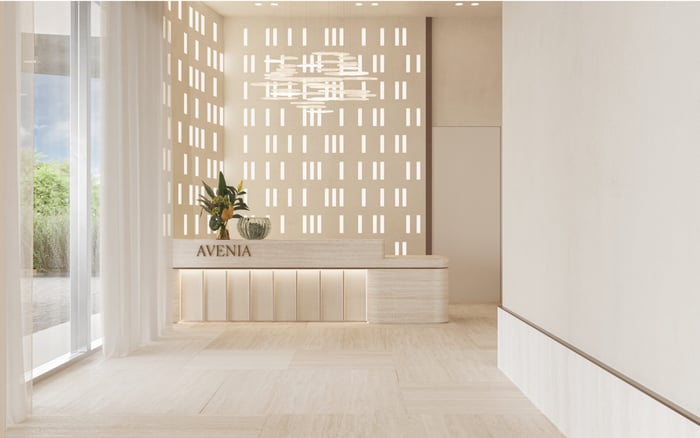
During an Avenia Aventura visit, for example, apply the same written diligence framework used for every candidate rather than relying on differences in presentation. Observe the arrival, request available documentation, and test whether policy aligns with daily practice.
A serious assessment begins before the front door. Document the perimeter, vehicular and pedestrian access points, cameras, alarms, secure storage, lighting, landscaping, and adjacent infrastructure. Consider whether entrances, service areas, and sight lines support or weaken the broader security plan.
Request an operational walkthrough at a representative time. Confirm how residents, guests, vendors, deliveries, domestic staff, and service contractors are authenticated. Observe whether tailgating is challenged, whether loading areas receive the same scrutiny as the lobby, and what happens when a credential is lost.
Layering matters. Review whether the property relies on one control or combines access management, staffing, monitoring, maintenance, escalation procedures, and incident response. In a gated community, the gate is only one part of the system.
Review physical and digital vulnerabilities together. Entry credentials, resident networks, smart-home controls, intercoms, cameras, and alarm equipment may intersect, so hardware condition and network administration deserve careful attention.
An independent security consultant can examine both domains before closing. The scope should distinguish association-controlled systems from owner-installed devices and subscriptions. Ask who administers credentials, how access is revoked, whether equipment is maintained, and what contingency plan applies during an outage. Sensitive technical details need not circulate broadly, but governance and accountability should be clear.
The same questions can sharpen comparisons beyond Aventura. A buyer considering Bentley Residences Sunny Isles or One Park Tower by Turnberry North Miami should use a consistent worksheet, allowing operational differences to emerge without assuming that a newer presentation means stronger protection.
Security is an ongoing service, not a one-time installation. Request association documents that define responsibilities, budgets, maintenance practices, vendor arrangements, and relevant operating procedures. Where available and appropriate, review incident information and evidence of testing without seeking details that could compromise residents.
Ask how and when the property reassesses risk. Staffing, surrounding infrastructure, resident behavior, and technology can change, so the review process should be clear and repeatable.
During diligence, compare advertised patrols and monitoring with actual schedules, staffing, maintenance, and escalation procedures. A camera system has limited value if coverage gaps persist or defective equipment remains unresolved. For a waterfront residence, also examine less visible approaches, service zones, storage areas, and the relationship between private and shared access.
Treat security as both an investment input and a resale variable. A clear value proposition may include coherent building-wide access control, documented maintenance, credible staffing, layered detection, and governance capable of adapting without continual disruption.
Separate those attributes from owner-installed systems. Custom cameras, alarms, network equipment, biometric devices, and service subscriptions may be removed, become obsolete, or require a purchaser to enter a new contract. They can enhance daily life, but they should not automatically be valued as permanent common infrastructure.
Scrutinize costs with equal care. Determine whether current assessments support ongoing operations and anticipated modernization. Deferred upgrades may create future expense, while excessive complexity may burden residents without delivering a clear benefit. The objective is dependable protection that future buyers can understand, operate, and afford.
Keep every comparison focused on disclosed documents and demonstrated procedures, not assumptions about a property or project.
For pre-construction and new-construction acquisitions, read security descriptions alongside the available offering documents, purchase agreement, escrow terms, deposit schedule, assignment policy, warranty terms, and stated completion provisions. Have qualified legal counsel explain the documents and obligations applicable to the transaction.
For existing buildings, request available structural, inspection, recertification, reserve, and capital-planning records relevant to the property. These materials can inform risk, carrying-cost, and future-marketability assessments. Privacy excellence cannot compensate for unclear capital obligations, just as sound structure cannot replace competent access control.
Before making an offer, reduce the findings to a concise matrix: control, responsible party, evidence reviewed, observed performance, recurring cost, upgrade exposure, and transferability. Flag every discrepancy between marketing language and operating reality. A repeatable record makes competing residences easier to compare and gives future resale planning a rational foundation.
Is a guarded entrance enough to establish strong security? No. Buyers should also evaluate staffing, patrols, access procedures, maintenance, layered controls, and incident response.
Should buyers commission an independent security audit? It may be prudent for a high-value purchase, particularly when physical and digital systems are complex.
What should a physical assessment cover? Review the perimeter, access controls, cameras, alarms, storage, lighting, landscaping, service areas, and adjacent infrastructure.
Why should network security be part of privacy diligence? Connected access, alarm, camera, intercom, and smart-home systems may depend on properly administered networks and current equipment.
How should buyers evaluate changing security risks? Ask whether the association follows a documented, repeatable review process and how it responds to operational or technological changes.
What helps verify advertised patrols and monitoring? Compare marketing claims with available staffing information, schedules, maintenance records, operating procedures, and escalation protocols.
Which security features may support resale? Transferable, building-wide controls with clear governance and documented upkeep may be easier for future buyers to evaluate.
How should owner-installed systems be valued? Conservatively, because equipment may be removed or become obsolete, while subscriptions and service contracts may not transfer.
What deserves attention in a pre-construction purchase? Review available offering and contract documents, escrow terms, deposits, assignment provisions, warranties, and completion provisions with qualified counsel.
Why do structural and capital-planning records matter? They help buyers assess potential risk, carrying costs, future obligations, and long-term marketability alongside privacy and access controls.
If you'd like a private walkthrough and a curated shortlist, connect with MILLION.
If branded residences are on your mind — as a home or as an allocation — we would be glad to share what we are seeing, privately.
Begin a quiet conversation