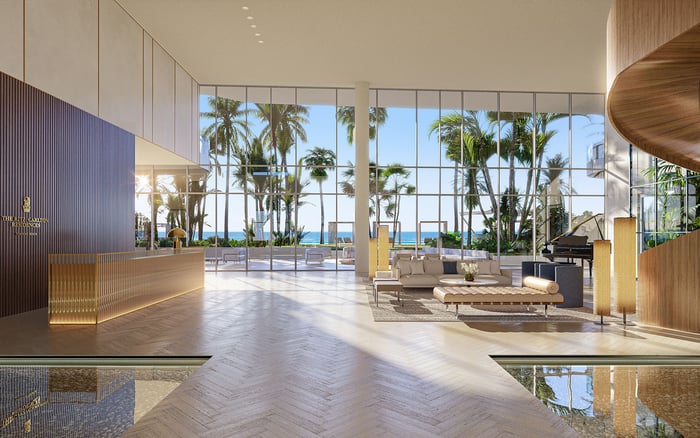
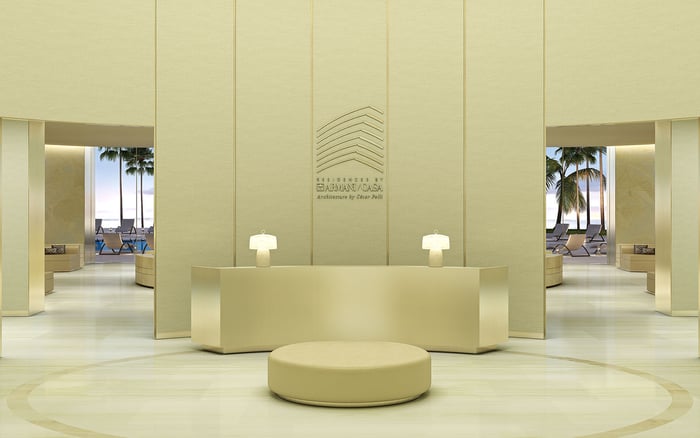
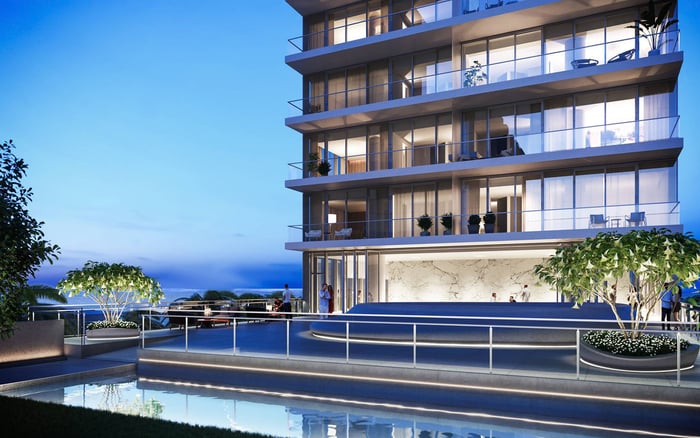
Private elevator access and polished valet service can distinguish a Hallandale Beach residence, but enduring value depends on how the entire arrival sequence performs under real conditions.
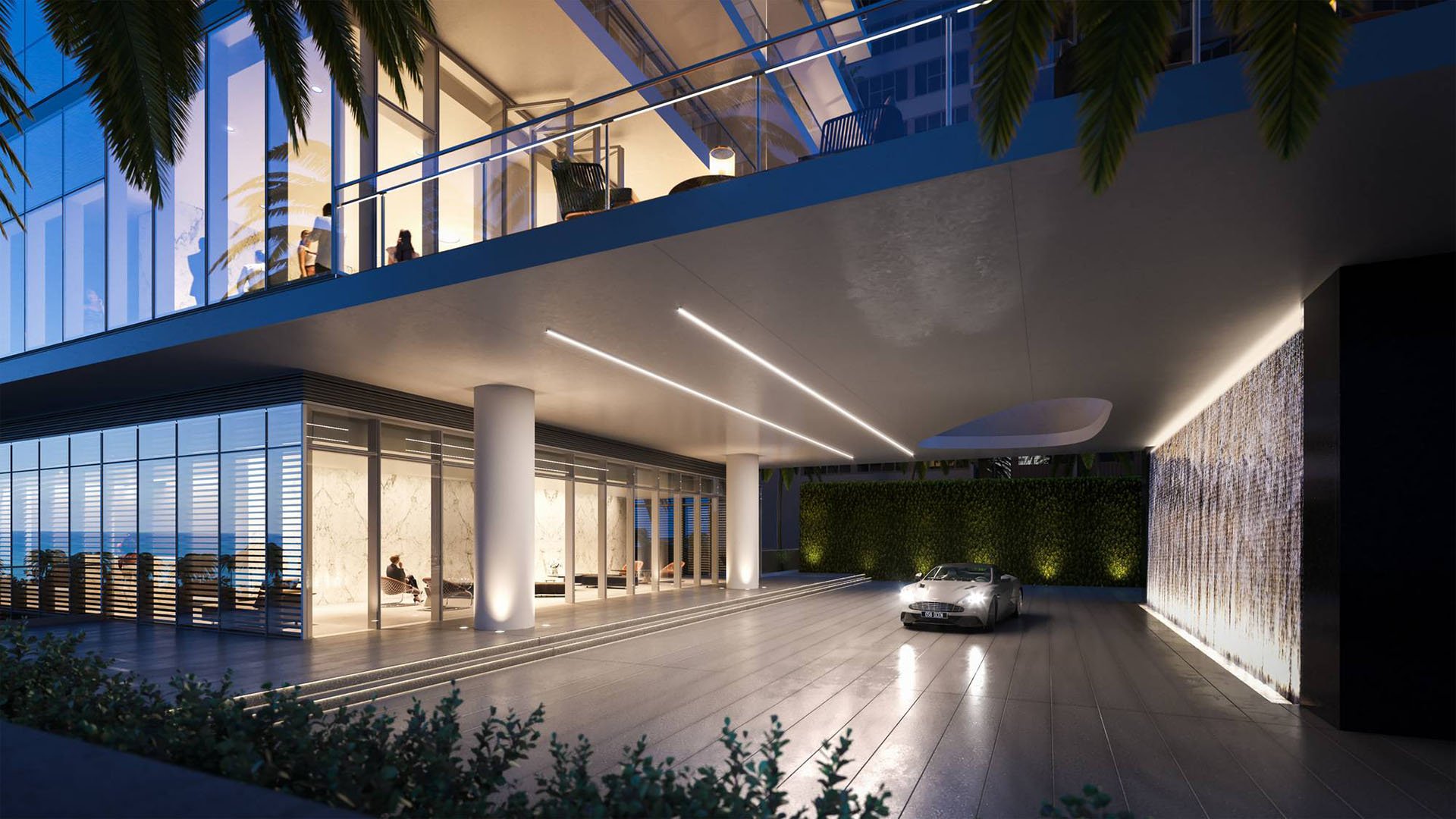
In Hallandale Beach, a private elevator and attentive valet can make a condominium feel composed before the front door even opens. Yet these features should not be judged as isolated amenities. Together, they form an arrival system encompassing the porte cochere, attendants, parking capacity, security controls, elevator allocation and the route from vehicle to residence.
For buyers focused on resale and investment, the central question is not whether a brochure uses the word “private.” It is whether the experience remains intuitive at dinner hour, during a storm, when guests arrive or when a resident needs a car promptly. This Buyer's Guides framework begins with daily performance because future purchasers will notice friction as quickly as finishes.
“Private elevator” is not a standardized term. It may describe an elevator that opens directly into a residence, a dedicated landing shared by no other home or a common elevator activated by a resident credential. At Anchor Bay Club, for example, private elevators require a tenant card. The distinction illustrates why buyers must understand both physical exclusivity and access control.
Ask where the elevator doors open, who can authorize access to a floor, how guests are admitted and whether service personnel use the same cab or landing. Determine what happens if an elevator is offline and whether the alternate route preserves privacy. A beautiful foyer has less practical value if deliveries, contractors and neighboring traffic converge there.
At 2000 Ocean Hallandale Beach, residences feature private elevator landings. The 38-story boutique building has 64 residences in half-floor and full-floor layouts. That low-density arrangement offers a useful reference point: elevator quality is partly a function of how many households depend on each circulation path, not simply how quickly a cab appears.
Valet service deserves the same scrutiny as the residence plan. At Beachwalk, 24-hour valet and complimentary service are among the stated features, alongside private elevator access and concierge service. These are meaningful distinctions, but availability alone does not reveal retrieval times, queuing behavior or guest procedures.
Visit at more than one hour. Watch how vehicles enter, stack and exit. Note whether arriving cars conflict with retrieved vehicles, rideshare pickups or deliveries. Ask where keys are secured, how residents request vehicles, whether oversized vehicles are accommodated and what protocol applies during severe weather or a staffing interruption.
The comparison should extend beyond a single tower. Beach Club offers full-service concierge and valet, while 2080 Ocean Drive combines complimentary valet with a staffed lobby, 24-hour security and high-speed elevators. Parker Plaza pairs secured parking with valet and 24-hour security. Each example reinforces the same point: the curb, lobby and vertical journey should be evaluated as one continuous sequence.
Operational elegance often comes from separation. A resident returning home, a guest awaiting authorization and a delivery team moving equipment have different needs. When all three occupy the same driveway, lobby and elevator bank, even a luxurious property can feel congested.
Request a walkthrough that follows each route. Begin at the street and trace resident arrival, guest check-in, package delivery and contractor access. Confirm whether there is a service elevator, where loading occurs and how staff prevent unauthorized floor access. In mixed-use settings, this becomes especially important. Oasis Hallandale plans 1,486 parking spaces, including valet parking, within a development containing retail, restaurants and offices, so buyers should examine how residential movement is distinguished from other traffic.
A visit to Shell Bay by Auberge Hallandale can broaden the local comparison, while Regalia Sunny Isles Beach offers another regional reference for discussing privacy expectations with an adviser. The objective is not to compare names alone, but to establish a sharper standard for what calm circulation feels like.
Future buyers may be drawn first by views and interiors, but repeated inconvenience can narrow enthusiasm. A private landing is most defensible as a resale attribute when elevator access is secure, backup procedures are coherent and unit density supports reliable service. Valet is most compelling when hours, charges, staffing and guest handling are transparent.
Review current association rules, budgets and fee schedules rather than relying solely on listing language. Ask whether valet is mandatory, complimentary or separately charged; whether tipping policies are formalized; and whether self-parking or assigned parking is available. At one Three Islands residence, valet, 24/7 security and an assigned space next to the elevator demonstrate how parking proximity can complement staffed service.
Buyers should also consider whether the operating model will be clear to a later purchaser. Complex credentialing may support security, but unexplained steps can feel cumbersome. Full service may enhance convenience, but unclear fees can weaken the proposition. Durable value usually favors a system that is easy to describe, simple to demonstrate and consistently maintained.
Arrive without requesting a specially staged reception. Time the vehicle handoff and the walk to the elevator. Observe sightlines, shelter from rain, lobby staffing and the distance between the valet station and residence access. If possible, request the car before leaving and record the actual retrieval interval.
Inside, test the resident credential, guest authorization and backup route. Ask how move-ins are scheduled, how large deliveries reach the unit and whether service traffic can enter a private foyer. Review the elevator count relative to the number of residences, and clarify which cabs serve amenities, parking and residential floors.
For wider Broward context, Auberge Beach Residences & Spa Fort Lauderdale can serve as another conversation point when defining the level of arrival service a luxury buyer expects. Across Hallandale and neighboring markets, the most persuasive proposition is rarely the longest amenity list. It is a quiet, secure sequence that performs consistently.
Does a private elevator always open directly into the residence? No. It may open into a private landing or depend on credential-controlled floor access.
Why does unit density matter? Fewer residences sharing circulation may reduce traffic, though buyers should still test actual operations.
Is 24-hour valet the same as complimentary valet? No. Hours describe availability, while complimentary service addresses whether a separate charge applies.
When should I observe valet flow? Visit during a busy arrival period and again during quieter hours to compare performance.
What elevator backup should I verify? Confirm the alternate cab or route, its security controls and whether it preserves reasonable privacy.
Should guests use the resident elevator? That depends on building policy, but the authorization process should be secure and easy to understand.
How should deliveries reach a private foyer? Ask whether deliveries use a service elevator and how access to the residential landing is controlled.
Can assigned parking strengthen the valet proposition? Yes. A conveniently located assigned space can provide flexibility when self-parking is permitted.
Which documents should a buyer review? Review current association rules, fee schedules, budgets and written access or parking policies.
What supports long-term resale most? Clear rules, reliable staffing, sensible traffic separation and secure elevator access create durable appeal.
For a discreet conversation and a curated building-by-building shortlist, connect with MILLION.
If branded residences are on your mind — as a home or as an allocation — we would be glad to share what we are seeing, privately.
Begin a quiet conversation