A practical luxury buyer’s guide to evaluating school-zone traffic around new construction and resale condos in South Florida, with emphasis on timing, access, building operations, and daily livability.
In South Florida luxury real estate, views, finishes, private elevators, wellness amenities, and service culture often define the first tour. Yet for buyers with children, visiting grandchildren, staff schedules, or a preference for predictable mobility, school-zone traffic can matter as much as the floor plan. A residence may feel serene upstairs while the curb tells a more complicated story.
The question is not simply whether a building sits near a school. It is how the surrounding streets perform during the precise windows when parents, buses, rideshare vehicles, delivery vans, cyclists, and commuters compete for space. Morning arrival can feel entirely different from afternoon dismissal. A street that seems effortless at noon may become slow, tightly managed, or noisy at 7:45 a.m.
For buyers comparing new-construction and resale condos, the evaluation should be practical rather than emotional. New buildings may offer modern ingress, porte cochères, valet sequencing, and garage technology. Resale buildings may provide a clearer view of established traffic behavior, resident routines, and curbside friction. Neither category is automatically superior. The better choice depends on how the building, block, and school-day rhythm interact.
Maps are useful, but they flatten time. A school-zone corridor should be evaluated by clock and calendar. Visit during morning arrival, the midday lull, afternoon dismissal, and, if possible, at least one rainy-day window. In South Florida, a storm can change driver behavior quickly, especially where covered drop-off areas are limited or where families wait in vehicles.
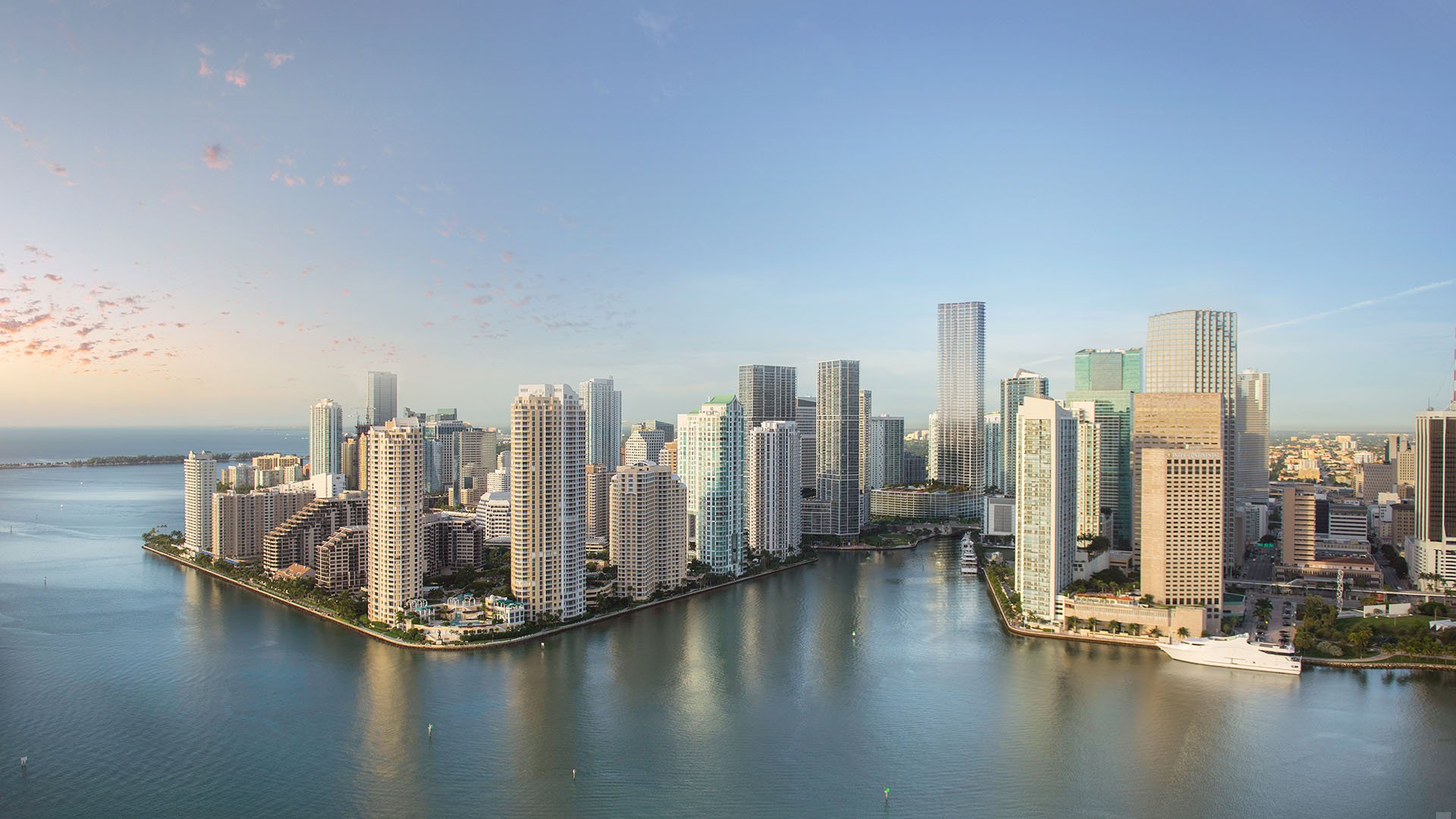
For a Brickell buyer, the issue may be the overlap between school movement, office arrivals, garage exits, and rideshare activity. For an Aventura buyer, the concern may be how residential towers, shopping traffic, and school schedules share arterial roads. In Edgewater, where growth and construction activity can shape movement block by block, the question is often whether the final approach to the building remains calm when neighboring streets are active.
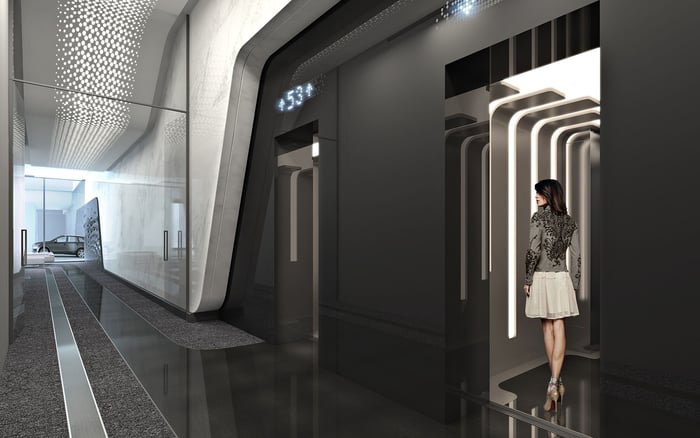
The most revealing test is a door-to-door rehearsal. Begin from the school or likely route, drive to the building at the same time you expect to travel, and continue through the actual resident entry sequence. Do not stop the test at the curb. Include the valet line, garage ramp, elevator transfer, and any security gate or front-desk process.
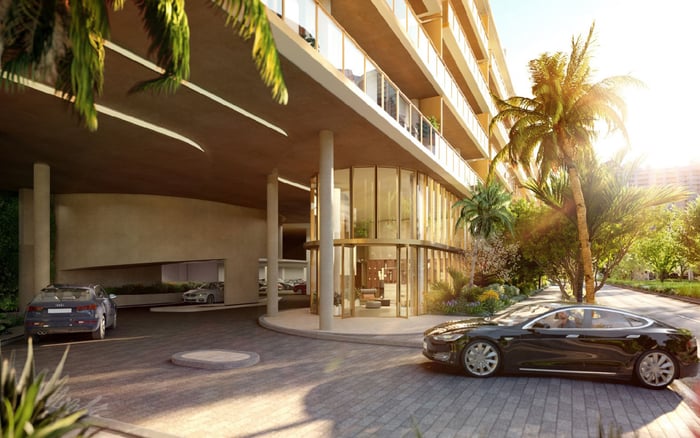
New construction often promises a more choreographed arrival. Wider drop-off areas, contemporary garage circulation, license-plate access, separate service entries, and improved lobby staging can make a meaningful difference. Still, a new building is not fully proven until residents occupy it, staff routines mature, and surrounding projects settle into their own traffic patterns. Ask how the building will separate residents, guests, deliveries, school drivers, and service vehicles during peak hours.
Resale condos offer a different advantage: observable routine. You can watch whether residents queue onto the street, whether delivery vehicles block lanes, whether school buses pass smoothly, and whether the garage clears efficiently. A mature building may also have longstanding staff who understand local timing, resident habits, and the most efficient alternatives when a nearby corridor slows.
The trade-off matters. New construction may offer stronger infrastructure, but some future traffic behavior remains hypothetical. Resale may reveal real-life movement, but older access points can be less adaptable. A disciplined buyer compares not only the residence and amenities, but also the choreography of arrival and departure.
In a luxury condominium, the curb functions almost like an amenity. It determines how easily a child is picked up, how discreetly a driver waits, how quickly a resident can leave for the airport, and whether guests experience calm before they reach the lobby. A beautiful porte cochère loses value if it is routinely compressed by unmanaged stopping.
Look closely at the physical details: turning radius, queue depth, sight lines, separation between valet and self-park, and the distance from the building entrance to the first congested intersection. A short driveway can work well in a quiet setting, but poorly on a school-influenced street. A longer entry court can absorb vehicles, but only if staff manage it precisely.
Buyers should also watch pedestrian behavior. School zones often produce concentrated crossing patterns. If a building exit intersects with student foot traffic, bicycles, scooters, or stroller movement, the experience may feel slower even when vehicle counts are moderate. The best luxury buildings make these moments feel orderly rather than improvised.
The right questions are direct. How are morning and afternoon peaks staffed? Where do rideshare vehicles wait? Are delivery windows controlled? Does the building have separate service access? How does the garage perform when multiple residents leave at the same time? If the project is not yet delivered, what assumptions have been made about resident volume and traffic management?
For families considering private education, ask about the practical route rather than the prestige of the address. A private-school commute can be graceful if the approach is intuitive, or frustrating if it requires a difficult turn, bridge timing, or repeated exposure to school queues. The key is repeatability. A five-minute difference may not matter once, but it becomes material across the school year.
Downtown buyers should be especially attentive to overlapping uses. Office towers, cultural venues, hotels, and residential garages can converge in ways that make school-zone timing less predictable. The strongest buildings provide not just security and service, but operational intelligence: staff who know when to stage vehicles, when to redirect arrivals, and when to advise residents on alternate exits.
A polished comparison can be built in one week. First, identify the two or three school-day windows that matter most to your household. Second, visit each building at those exact times, using the same mode of arrival you will use in real life. Third, time the final half mile, the entry sequence, and the elevator-to-residence transition. Fourth, record qualitative impressions: noise, honking, blocked lanes, staff control, pedestrian comfort, and the ease of making a protected turn.
Then compare categories. If the new-construction option performs beautifully on paper, test the surrounding street network and ask how operations will scale. If the resale option feels proven, watch for structural constraints that cannot be fixed by better staffing. The winning building is the one that makes daily movement feel calm, not merely the one closest to a preferred school.
In the ultra-premium market, discretion is often measured in small moments. A smooth school-morning departure, an unhurried return after dismissal, and a lobby approach that does not feel exposed to street friction can quietly improve everyday life. School-zone traffic is not a secondary detail. It is part of the residence’s lived architecture.
Should I compare school-zone traffic before or after choosing a condo? Compare it before making a final commitment. Traffic behavior can materially affect daily comfort, even when the residence itself is exceptional.
Is new construction better for school-zone traffic? Not automatically. New construction may have modern access design, but real performance depends on staffing, street conditions, and resident volume.
Is a resale condo easier to evaluate? Often, yes. A resale building allows you to observe established patterns during real school-day peaks.
What time should I visit a building near a school? Visit during morning arrival and afternoon dismissal. Midday tours rarely reveal the most relevant traffic conditions.
Should I test the garage, not just the street? Yes. The resident experience includes the garage ramp, valet flow, elevator transfer, and lobby access.
How does Brickell differ from quieter residential areas? Brickell can combine school traffic with office, hotel, and rideshare activity, making timing and entry design especially important.
Can staff quality reduce traffic friction? Yes. Experienced valet, security, and front-desk teams can improve flow by staging vehicles and guiding arrivals.
Do school zones affect buyers without children? They can. Noise, pedestrian activity, and peak-hour congestion may affect any resident’s daily routine.
What is the most overlooked traffic detail? The final turn into the building is often overlooked. A difficult turn can make an otherwise short route feel inefficient.
Should I compare Aventura, Edgewater, and Downtown differently? Yes. Each area has its own mix of residential density, commuting patterns, and school-day movement.
For a confidential assessment and a building-by-building shortlist, connect with MILLION.
If branded residences are on your mind — as a home or as an allocation — we would be glad to share what we are seeing, privately.
Begin a quiet conversation