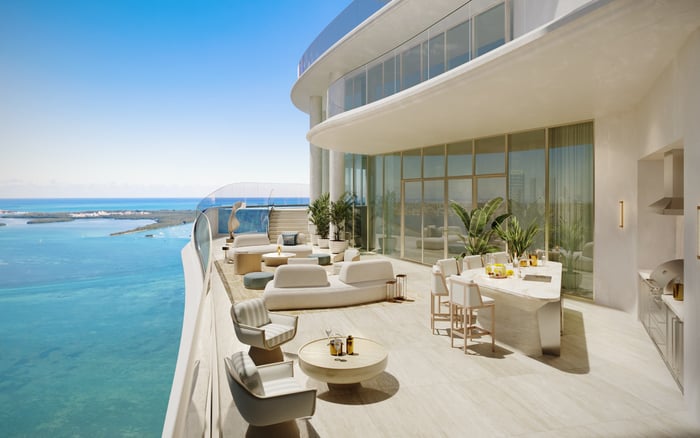
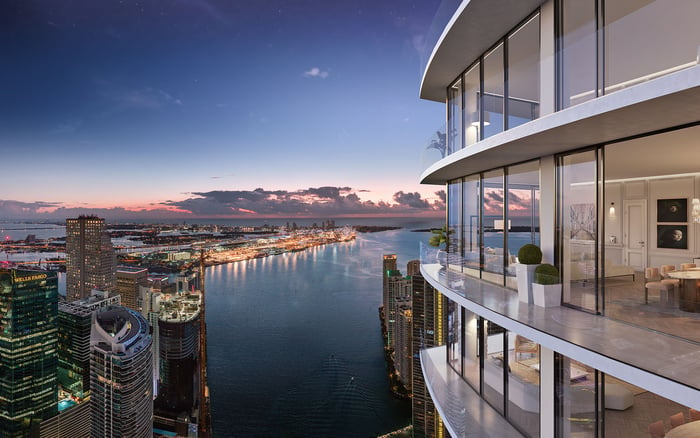
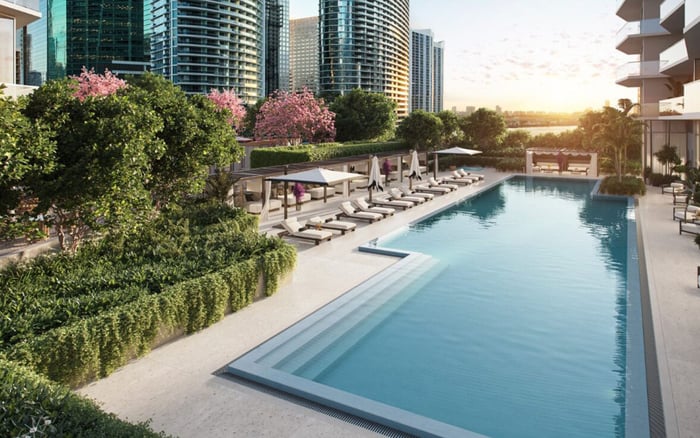
A buyer-focused guide to evaluating pool seating in South Florida condos, from layout and shade to privacy, service, maintenance, and long-term livability.
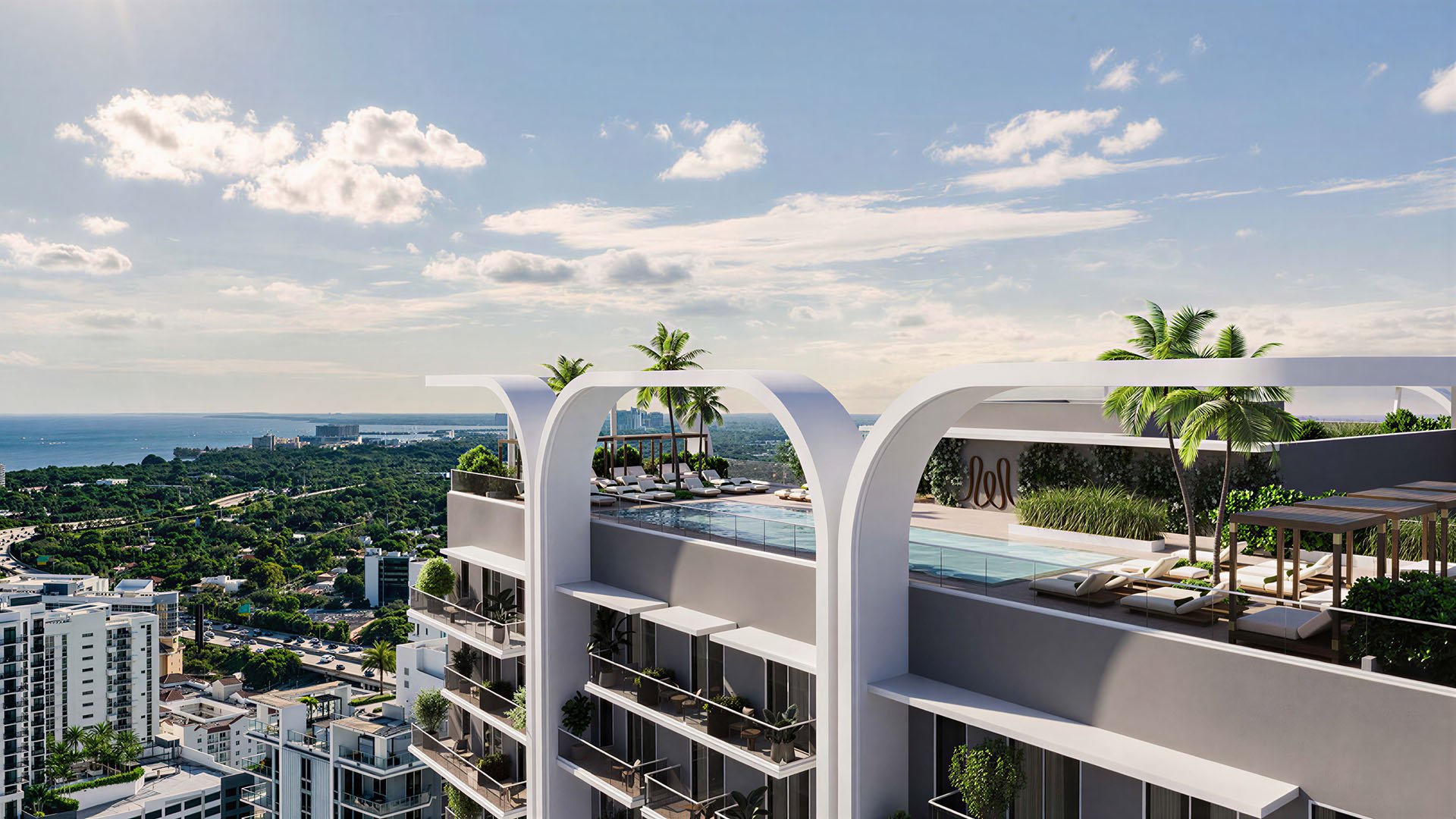
In South Florida, the pool deck is not a secondary amenity. It is often the social terrace of a condominium: the place where residents read before dinner, host guests after the beach, take a quiet call in the shade, or simply sense the building’s daily ease. For buyers comparing new construction and resale condos, pool seating deserves the same scrutiny as ceiling heights, views, elevator service, and parking.
The question is not just whether a building has a beautiful pool. It is whether the seating works. A photogenic deck can feel crowded at peak hours, while a more understated resale property may deliver a calmer, better-proportioned experience. The strongest pool environments balance loungers, shaded seating, conversation areas, circulation, service access, privacy, and sightlines.
For many buyers, the decision starts with simple priorities: pool comfort, balcony lifestyle, neighborhood rhythm, and whether the building feels more like a private residence or a resort. The vocabulary may be simple, but the evaluation is nuanced.
New construction often presents the pool experience as part of a complete lifestyle composition. Seating may be integrated with cabanas, outdoor lounges, wellness decks, summer kitchens, landscaped edges, and hospitality-style service zones. The advantage is cohesion. Furniture, planting, finishes, and circulation are typically conceived together, creating a polished first impression.
The key is to separate design intent from daily function. Renderings may show a serene deck, but buyers should ask how many residents the area is designed to accommodate, how seating is distributed across sun and shade, and whether quiet zones are meaningfully separated from more social areas. A long row of chaise lounges can look elegant, yet feel far less appealing if every seat is exposed, too close to walkways, or directly overlooked by neighboring towers.
New construction also tends to emphasize outdoor programming. That can be a genuine advantage for buyers who want a resort rhythm without leaving home. It can also mean more scheduled activity, more guest use, and greater demand for prime seating. The best buildings avoid making the pool deck feel like a hotel by creating residential scale, subtle service, and multiple seating moods.
Resale condos offer something new construction cannot fully provide: evidence. A buyer can often see how the deck is actually used, where residents choose to sit, which areas remain empty, and how staff maintains the furniture during a normal day. This practical visibility is invaluable.
Study the cushions, umbrellas, tables, and pathways. If seating is consistently well kept, the association may be treating the amenity with appropriate seriousness. If chairs are worn, shade structures are limited, or furniture feels mismatched, the pool deck may require future capital attention. In a luxury building, the condition of pool seating often reflects broader standards of care.
Resale properties may also have mature landscaping that softens sightlines and improves comfort. A newer deck can be architecturally impressive, while an established deck may feel more private because plantings have grown in and residents have naturally settled into patterns. The comparison should not be old versus new. It should be theoretical promise versus proven comfort.
Buyers often ask whether there are enough chairs. That is a reasonable question, but it is not the full question. The better inquiry is whether there are enough desirable seats at the times you expect to use them. Morning swimmers, weekend sunbathers, families, seasonal residents, and remote workers all create different patterns.
Visit during the hours that matter to your life. A pool deck that feels open on a weekday morning may feel tight on a winter weekend. A building that seems tranquil in summer may become more active during peak season. If you plan to use the pool as an extension of your home, observe it as carefully as you would a living room.
Also study the variety of seating. Chaise lounges serve sunbathers, but upright chairs are better for conversation. Sofas encourage lingering but can dominate space. Cabanas offer privacy, but may reduce the democratic feel of a deck if access is limited. A well-composed pool deck gives residents choices without making any single style of use feel secondary.
In South Florida, shade is not decorative. It is functional luxury. The most beautiful seat on the deck may be unusable at certain hours if it lacks cover or ventilation. Umbrellas, trellises, palms, covered terraces, and building overhangs can all improve comfort, but they should be evaluated in person whenever possible.
Sun exposure changes throughout the day and by season. Wind can also influence where people actually sit, especially on elevated decks or waterfront sites. A chair with a postcard view may be less comfortable if it is exposed to constant gusts. Conversely, a protected corner with filtered shade may become the most coveted place on the property.
Buyers should also consider whether shade is distributed fairly across the deck. If only a small portion of seating is protected, those seats may be informally claimed early. In luxury living, the strongest amenity spaces reduce friction. Residents should not feel they must strategize to secure a comfortable place outdoors.
Pool seating is partly about how it feels to be seen. A deck surrounded by towers, corridors, or neighboring balconies may lack the calm that luxury buyers expect. Privacy can be created through planting, elevation, setbacks, screens, and careful orientation. It can also be compromised by poor furniture placement.
The relationship between balcony life and pool life is especially important. If your residence overlooks the pool, consider whether that view feels lively or intrusive. Some buyers enjoy watching the energy below. Others prefer a quieter outlook, particularly from primary bedrooms or deep terraces. Likewise, if the pool deck looks back toward your windows, think about how that affects curtains, lighting, and daily ease.
In dense markets such as Brickell, privacy may come from intelligent vertical planning and layered amenity decks. In Miami Beach settings, the comparison may hinge more on resort energy, beachfront proximity, and the transition between sand, pool, and residence. Each location has its own rhythm, so seating should be judged in context rather than by photography alone.
The comfort of pool seating is shaped by operations. Towel service, food and beverage policies, guest rules, reservation systems, music guidelines, and staff presence all affect how the deck feels. A beautiful setting can lose its appeal if the atmosphere is inconsistent or overly managed. A modestly scaled deck can feel exceptional if service is intuitive and rules are clear.
Ask how guest access works and whether cabanas or premium seating are reservable. Understand whether events occur on the pool deck and how often. For some owners, social programming adds value. For others, it may reduce the sense of private retreat. Neither preference is wrong, but the building should match the buyer’s lifestyle.
Maintenance is equally important. Outdoor furniture faces salt air, sun, moisture, and heavy use. In resale condos, look for condition. In new construction, review the quality of the proposed furniture package and how replacement will be handled over time. The most refined properties treat pool seating as an ongoing standard, not a one-time installation.
When comparing buildings, give yourself a simple framework. First, identify your primary use: sun, shade, swimming, entertaining, reading, family time, or quiet retreat. Second, visit or study the deck at relevant hours. Third, evaluate seating diversity, not just quantity. Fourth, assess privacy from neighboring buildings and internal residences. Fifth, consider operations, including towels, guests, reservations, and maintenance.
Finally, compare the pool deck to your own residence. If you have a generous terrace, the pool may function as an occasional resort layer. If your unit has limited outdoor space, the shared deck becomes far more important. A luxury condo should offer both personal sanctuary and collective ease, and pool seating is where those two ideas often meet.
Is pool seating more important in a new construction condo or a resale condo? It matters in both. New construction shows design ambition, while resale reveals how the deck performs in daily life.
How should I judge whether there are enough pool chairs? Focus on desirable seating at your preferred usage times, not simply the total number of chairs.
Are cabanas always better than open loungers? Not always. Cabanas offer privacy, but open loungers may provide better views, airflow, and flexibility.
What is the biggest mistake buyers make when evaluating pool decks? Many rely on photography instead of studying shade, privacy, spacing, and real resident behavior.
Does a larger pool deck always mean a better experience? No. Proportion, furniture placement, service, and atmosphere often matter more than size alone.
Should I visit the pool during peak hours? Yes. Peak-hour visits reveal crowding, noise, towel service, guest use, and the true demand for seating.
How does shade affect long-term enjoyment? Shade can determine whether the deck is comfortable for reading, relaxing, and spending extended time outdoors.
Can pool seating influence resale appeal? Yes. A well-maintained, comfortable pool deck can strengthen the overall impression of a luxury building.
What should I ask about pool rules? Ask about guests, reservations, food service, events, music, towel service, and any restrictions on seating areas.
How should I compare a private terrace with shared pool seating? Treat them as complementary spaces. Your terrace offers privacy, while the pool deck adds scale, service, and social energy.
For a discreet conversation and a curated building-by-building shortlist, connect with MILLION.
If branded residences are on your mind — as a home or as an allocation — we would be glad to share what we are seeing, privately.
Begin a quiet conversation