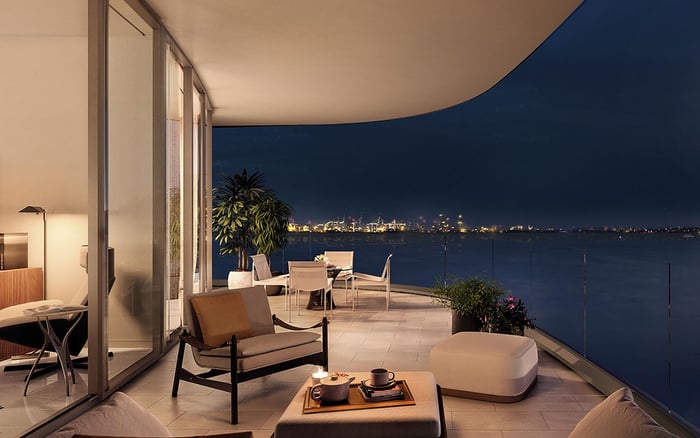
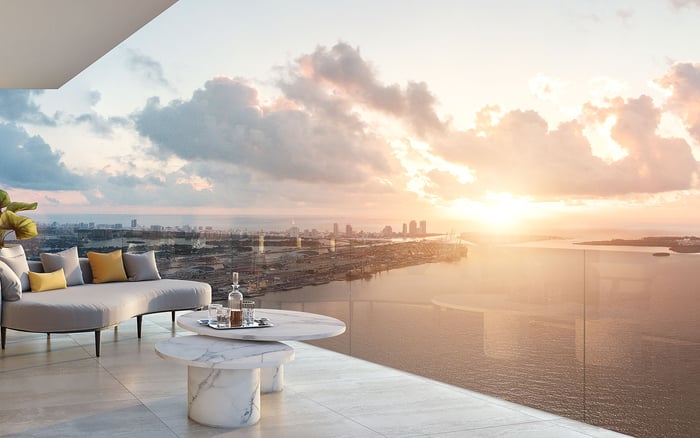
A buyer-focused guide to evaluating penthouse terrace wind in South Florida, distinguishing everyday outdoor comfort from storm-event safety, and comparing oceanfront, bayfront, and city-core exposure.
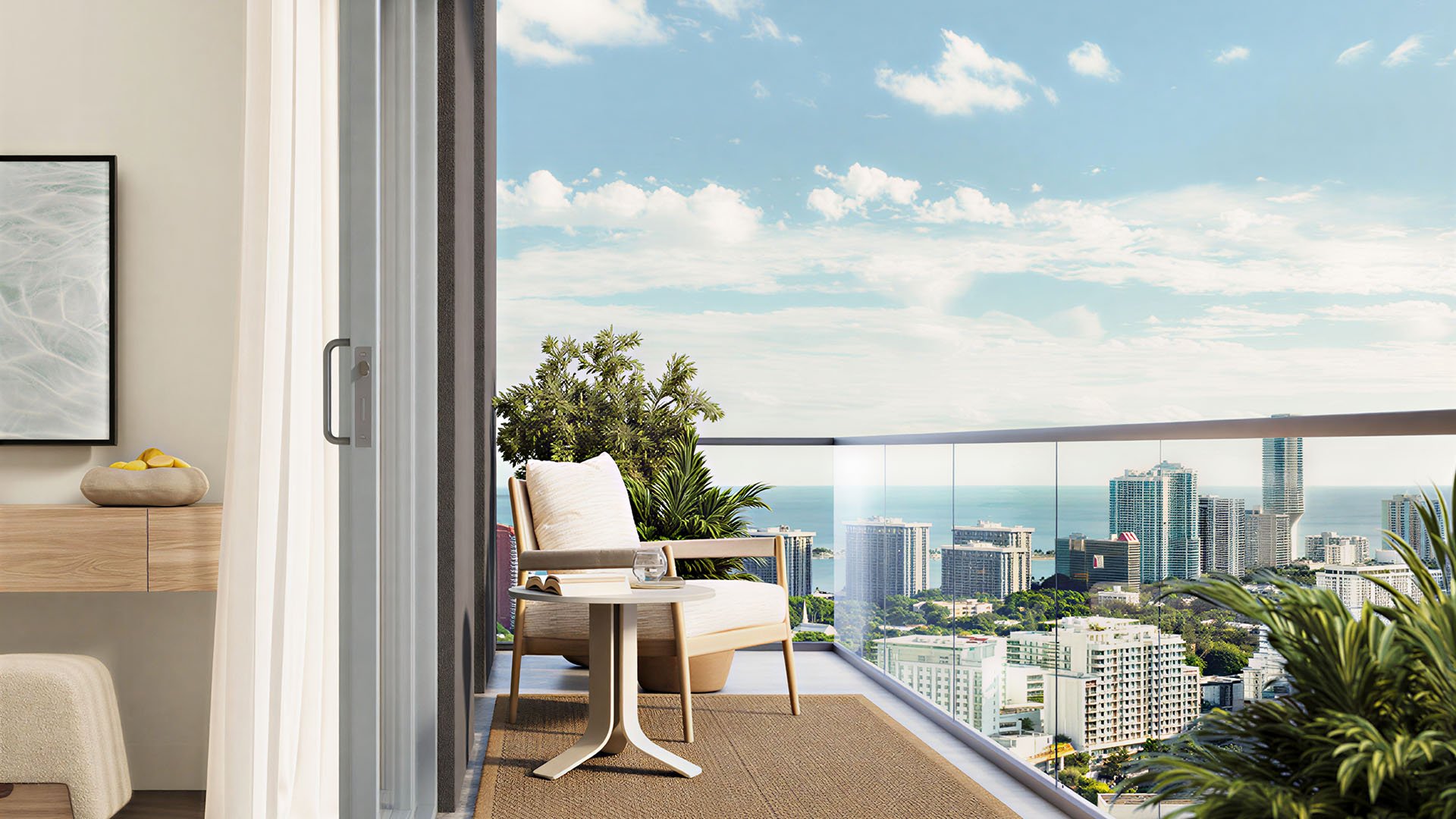
A penthouse terrace is often presented as the ultimate South Florida room: open sky, long water views, sunrise coffee, evening entertaining, and a private outdoor volume that feels rare in a vertical market. Yet wind is one of the least visible variables during a showing. It can turn a dining terrace into a place better suited for sculpture, make planters impractical, or render a dramatic corner the least used portion of the home.
The first principle is straightforward. Wind speed generally increases with height because surface friction slows air closer to the ground. A pool deck, sidewalk, valet court, or marina promenade may feel calm while an upper terrace on the same property feels materially different. A penthouse buyer should not judge outdoor comfort from street-level impressions or a single fair-weather tour.
The second principle is more nuanced. Daily comfort wind is not the same as storm-event safety wind. Florida’s wind design environment is built around safety and code performance, but code compliance does not mean a private terrace will feel comfortable for dinner, reading, gardening, or leaving lightweight furnishings outside. The buyer’s question is not only whether the building is engineered for extreme events. It is whether the terrace supports the way the owner intends to live on ordinary days.
Oceanfront towers usually have the most direct exposure to onshore marine winds. The Atlantic creates a long, open fetch with minimal upwind obstruction, so a high-floor terrace facing the water can receive a more consistent breeze than a comparable terrace several blocks inland. For many owners, that breeze is part of the romance of coastal living. For others, especially those planning formal outdoor dining or delicate landscaping, it becomes a meaningful design constraint.
Bayfront locations can be more variable. Open water can still deliver strong marine wind, but the experience depends on the width of the water corridor, the orientation of the residence, and the massing of nearby towers. A wide bay view may behave closer to open exposure, while a more enclosed urban bayfront setting may feel moderated at certain hours and accelerated at others.
City-core towers can seem more sheltered, but they are not automatically calmer. Tall buildings redirect air, create downdrafts, accelerate wind around corners, and channel flow through gaps between towers. A terrace that appears protected on plan may sit in a localized stream of faster air, while another line in the same building may be comfortable because of orientation, setbacks, or adjacent structures.
This is especially relevant in Brickell, where dense tower massing can create highly specific microclimates from one elevation and exposure to another. The same caution applies to Miami Beach and Sunny Isles, where water exposure, height, and neighboring buildings can combine in ways that are difficult to read from renderings alone. In buyer notes, treat oceanfront, penthouse, and terrace as separate variables rather than a single lifestyle category.
South Florida’s sea breeze is a daytime phenomenon driven by land heating faster than nearby water. Cooler marine air moves inland, and the effect often strengthens through the day before weakening after sunset. A terrace that feels lively at 3 p.m. may feel calm and usable for dinner, while a morning showing may understate the afternoon wind a resident will actually encounter.
A serious comparison should include multiple visits when possible. Start with a morning appointment to understand baseline comfort. Add an afternoon visit during sea-breeze hours, when ocean-facing and bay-facing terraces may reveal their true character. Return near sunset or after dark to see whether the terrace becomes more hospitable for entertaining. If timing allows, visit after a frontal passage or during a seasonal shift, because wind comfort in South Florida does not remain constant across the year.
Seasonality matters as well. The region’s wet season, roughly May through October, brings humidity, storms, and rapid wind shifts, while the drier months from roughly November through April can feel different in both air movement and outdoor comfort. Summer sea breezes and thunderstorms can create abrupt changes, which is why a one-hour tour should never be treated as a complete wind portrait.
Begin with the building team. Ask whether wind-tunnel testing or computational studies were performed for the tower form, amenity decks, and upper terraces. Then ask a more precise question: did the evaluation consider human comfort on private outdoor spaces, or was it focused mainly on structural performance and exterior loads? The answer can clarify whether the terrace was studied as a place to live, not merely as part of a code-compliant envelope.
Next, ask how the terrace is intended to be furnished. Wind comfort should be judged by activity. Outdoor dining is less forgiving than lounging. Standing near a railing feels different from sitting behind a solid planter. A garden of tall tropicals has different tolerances than low, sculptural planting. Even the frequency of wind matters. A terrace with occasional gusts may be manageable with careful furniture selection, while persistent moderate wind can affect day-to-day use more than a buyer expects.
Railing design also deserves attention. Glass railings, parapets, screens, and planters can influence perceived comfort, but alterations may be governed by condominium documents, architectural controls, or maintenance standards. Before assuming that wind screens, heavier planters, or custom shading can solve the issue, confirm what is permitted.
Operable doors are another practical test. During a visit, observe whether terrace doors open smoothly, slam, or require unusual effort when interior and exterior pressure differs. Ask about furniture anchoring, storage for cushions, and the building’s rules for balcony objects during severe weather. These details are not glamorous, but they determine whether a spectacular outdoor room functions gracefully.
The best approach combines regional awareness with site-specific observation. Start by understanding the broad setting: open ocean, bay corridor, or dense city fabric. Then study orientation. A north-facing terrace, a southeast corner, and a west-facing sunset terrace can behave differently even in the same building. Look at surrounding tower massing, not only today’s view, but also the way gaps, podiums, and future development sites may affect air movement.
Then evaluate geometry. Deep terraces may offer usable protected zones closer to the interior wall, while narrow projecting balconies may feel more exposed. Corners can be prized for views but more vulnerable to acceleration. Uppermost levels can be spectacular, yet they may also experience wind more directly than lower premium floors.
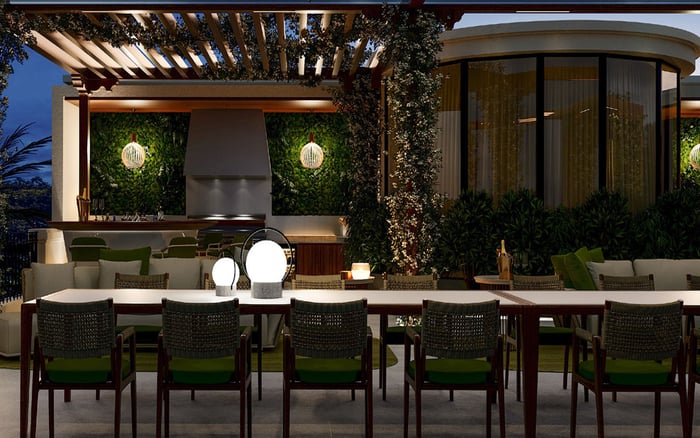
Finally, compare the terrace to your intended lifestyle. If your South Florida home is meant for quiet morning coffee and occasional sunset cocktails, a brisk marine breeze may be desirable. If you envision seated dinners for twelve, a full outdoor kitchen, large planters, and artful furnishings, the threshold for comfort is higher. The most successful penthouse purchase is not the one with the abstract best view. It is the one where exposure, architecture, and daily ritual align.
Does wind usually feel stronger on a penthouse terrace than at ground level? Yes. Wind generally increases with height, so sidewalks, pool decks, and street readings can understate upper-floor exposure.
Is an oceanfront penthouse always windier than a city penthouse? Not always, but oceanfront towers often receive more direct marine wind because the open Atlantic provides fewer upwind obstructions.
Can bayfront terraces be as windy as oceanfront terraces? They can be, especially across wide open water. Exposure depends on the bay corridor, tower orientation, and nearby building massing.
Are city-core penthouses protected from wind? Sometimes, but surrounding towers can redirect, channel, or accelerate wind, particularly near corners and gaps between buildings.
When should I visit a penthouse to judge wind comfort? Visit in the morning, during afternoon sea-breeze hours, and in the evening if possible. Each period can feel meaningfully different.
Why can a terrace feel calmer after sunset? Sea-breeze circulations often weaken after sunset, so a terrace that feels brisk in midafternoon may become more comfortable at night.
Should I rely on local weather readings before buying? Use them only as background. Ground-level or airport readings may not reflect the wind experienced on a private upper-floor terrace.
What should I ask the developer or architect? Ask whether wind studies considered private terrace comfort, not only structural safety, cladding loads, or general tower performance.
Does building-code wind safety mean the terrace will be pleasant? No. Safety standards address extreme-event performance, while daily comfort depends on speed, frequency, geometry, and intended use.
What terrace features should I evaluate during a showing? Test door behavior, railing exposure, seating zones, planter feasibility, furniture anchoring, and whether wind screens are permitted.
For a tailored shortlist and next-step guidance, connect with MILLION.
If branded residences are on your mind — as a home or as an allocation — we would be glad to share what we are seeing, privately.
Begin a quiet conversation