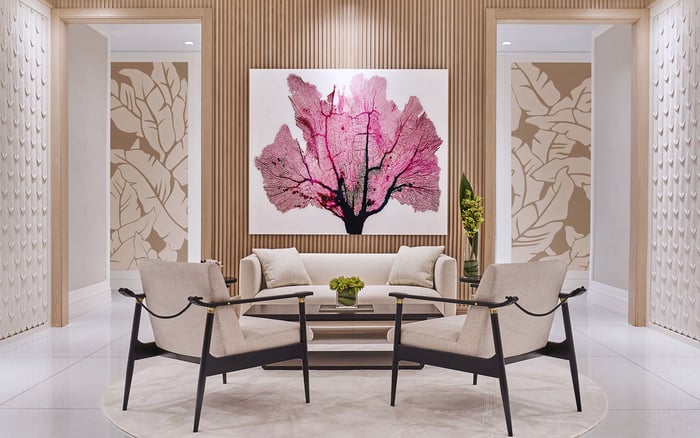
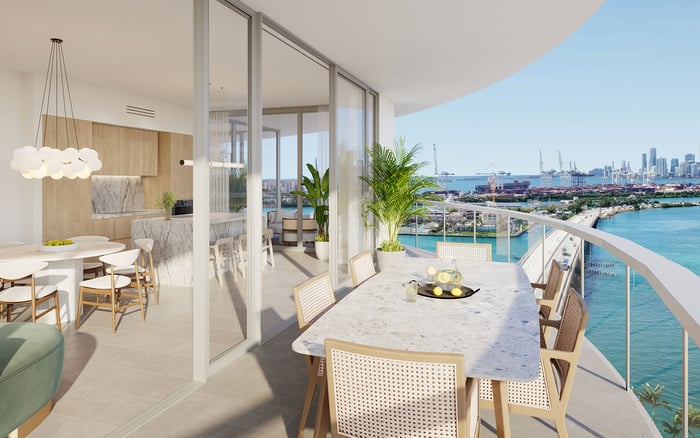
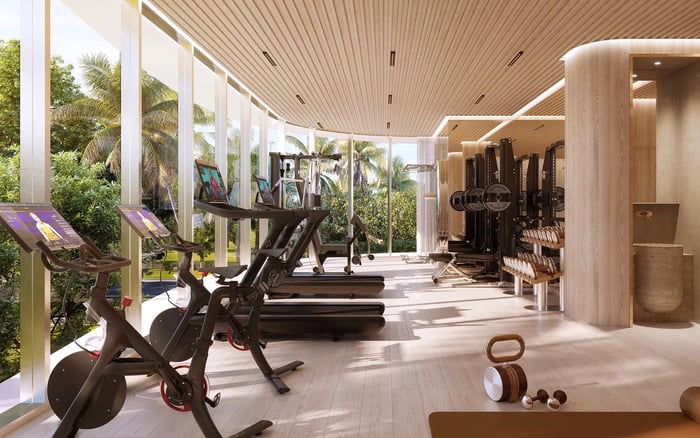
A buyer-oriented guide to evaluating art-scale walls in South Florida penthouses, from oceanfront light and bayfront reflections to city-view architecture, circulation, lighting, and long-term design flexibility.
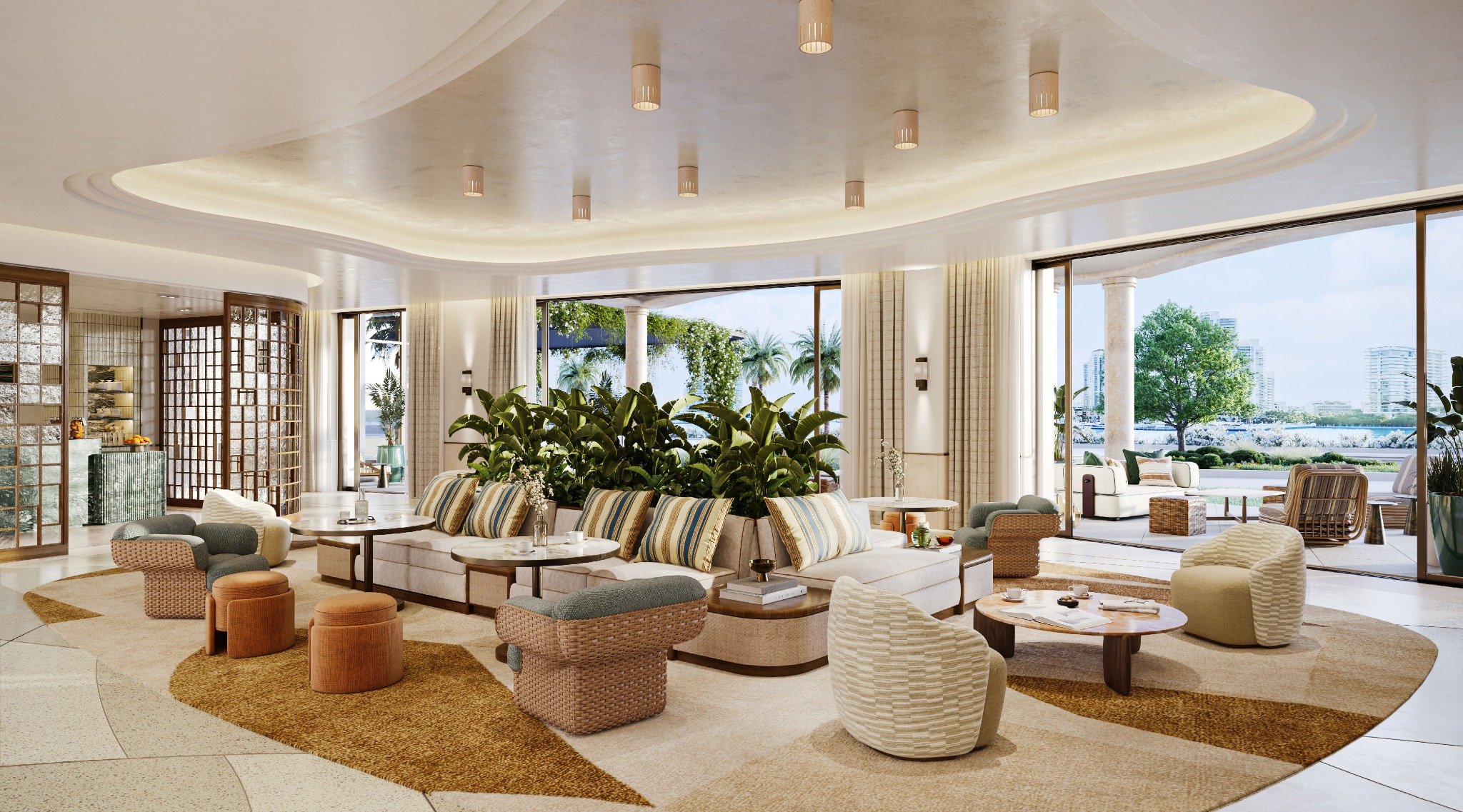
In South Florida’s upper tier, a penthouse is no longer judged only by its view, terrace depth, or private elevator arrival. The best residences are also measured by what they allow an owner to live with: large-format painting, sculpture, textile work, photography, and collectible design. A generous wall can transform a living room into a private gallery, but only when the architecture supports scale, light, proportion, and circulation.
For buyers comparing oceanfront, bayfront, and city penthouses, art-scale walls deserve the same scrutiny as ceiling height or outdoor space. A wall that reads beautifully in a rendering may be compromised by glare, doors, return-air grilles, media placement, or a competing view corridor. Conversely, a quieter wall in a secondary salon, gallery hall, or dining area may become the home’s most important curatorial surface.
This is why buyers considering residences such as 57 Ocean Miami Beach or The Perigon Miami Beach should study the interiors not simply as luxury rooms, but as architectural containers for art.
In waterfront markets, the window often dominates the conversation. Understandably so: water, sky, and skyline are central to the value proposition. Yet for collectors, the more revealing question is what remains when the eye turns away from the glass.
A true art-scale wall offers uninterrupted width, clean height, and enough viewing distance for the work to breathe. It should not feel like leftover space between sliding doors and millwork. Look for walls that can hold a major piece without forcing furniture into awkward positions. The ideal composition allows the art, seating, and view to coexist without one becoming decorative background for the other.
Buyers should request furniture plans, reflected ceiling plans, and wall elevations early. The art question is rarely answered by square footage alone. A larger residence can have weaker art walls if too many openings divide the perimeter. A more compact plan can be stronger if it offers one long, disciplined gallery surface.
Oceanfront penthouses create the most cinematic setting, but also the most demanding one. The Atlantic horizon introduces intense daylight, shifting glare, and a powerful visual axis. Art placed opposite broad glass can be striking in the morning and difficult by afternoon if the lighting strategy is not carefully resolved.
For oceanfront residences, evaluate where the principal art wall sits relative to direct sun, reflective flooring, and terrace doors. A wall adjacent to the view may be more usable than one directly opposing it. Side-lit art can feel luminous and composed, while front-facing glare can flatten texture and make protective glazing more visible.
The most successful oceanfront layouts establish a clear hierarchy: the view as the primary landscape, the art wall as the interior anchor, and the seating plan as the mediator between them. In this context, pieces with texture, matte surfaces, or sculptural relief may perform differently from glossy photography or glass-framed work. The architecture should give an advisor or designer options rather than dictate a single solution.
Bayfront residences often offer a different character. The light can feel more layered, with reflections from water, boats, bridges, and neighboring towers. Instead of a single horizon line, the eye experiences movement and depth. That quality can be especially effective for art when the interior lighting is restrained and precise.
In bayfront settings, buyers should examine how art walls behave at night. A piece that recedes during a bright afternoon may become the room’s focal point after sunset. Dimmable ceiling lighting, concealed wall washing, and the ability to separate art illumination from general ambient light are essential. The goal is not brightness. It is control.
Projects in bay-oriented urban neighborhoods, including Aria Reserve Miami, invite buyers to think carefully about the relationship between water, glass, and the vertical city beyond. A strong art wall here should not compete with the view. It should provide a calmer counterpoint, giving the residence a sense of interior permanence.
City penthouses, particularly in Brickell and Downtown Miami, can be exceptional for art because the view is more architectural. Towers, lights, and streets create a graphic backdrop rather than a purely natural one. This can make bold work feel at home, especially in spaces with strong geometry and controlled sightlines.
In a city setting, privacy and nighttime reflections become part of the evaluation. Glass walls can mirror interiors after dark, doubling visual activity and making art placement more complex. A gallery-scale wall set away from the perimeter may be more valuable than a view-facing display surface. It allows the owner to build a true interior composition while the skyline remains present but not overpowering.
For buyers studying Brickell residences such as The Residences at 1428 Brickell, the strongest question is how the plan balances spectacle with restraint. A city penthouse succeeds when it gives the owner places to look out, and equally compelling places to look within.
Begin with dimensions. Measure usable wall width, clear height, and viewing distance. Confirm where switches, thermostats, speakers, vents, access panels, and cabinetry interrupt the surface. A beautiful wall can lose its curatorial value if essential controls are scattered across it.
Then review lighting. Ask whether the ceiling can support directional fixtures, wall washers, or recessed framing projectors. Confirm dimming capability and whether circuits can be separated. Art lighting should be layered, adjustable, and serviceable without redesigning the room.
Next, consider logistics. Large works require elevator capacity, service corridors, turning radii, and installation access. A residence may have an extraordinary salon, but the path to reach it matters. For heavy sculpture or large framed works, structural support and floor protection should be discussed before closing, not after move-in.
Finally, assess humidity control, UV exposure, and mechanical consistency. South Florida living is defined by water and light. A refined penthouse should make those qualities pleasurable without exposing important works to avoidable stress.
Art-scale walls add value because they expand how a residence can be lived in. They allow formal entertaining, quiet daily viewing, seasonal rotation, and collaboration with designers, advisors, and installers. They also make a home feel collected rather than merely furnished.
Still, not every buyer needs the same kind of wall. A collector may want museum-like neutrality. A design-led buyer may prefer integrated paneling, stone, or plaster as a backdrop. A seasonal owner may value flexibility and low-maintenance lighting. The right comparison is not simply which penthouse has the largest blank surface. It is which residence offers the most intelligent balance of scale, light, circulation, and future adaptability.
Terrace access also matters. A terrace can extend the social life of the room, but it should not fracture the primary art wall with too many openings. The most elegant plans make indoor and outdoor living feel connected while preserving at least one commanding interior plane.
When comparing oceanfront, bayfront, and city penthouses, imagine the residence both empty and inhabited. Empty, the walls reveal their architectural discipline. Inhabited, they reveal whether art, furniture, view, and movement can coexist without compromise.
Oceanfront homes reward restraint and careful daylight management. Bayfront homes reward atmosphere and evening control. City homes reward strong geometry and privacy-conscious placement. The best penthouse is not necessarily the one with the most dramatic view. It is the one where the view and the collection elevate each other.
What makes a wall truly art-scale? It has meaningful uninterrupted width, clear height, proper viewing distance, and minimal visual interruptions from systems or openings.
Are oceanfront penthouses harder for art placement? They can be, because strong daylight and glare require more disciplined placement, lighting, and material choices.
Why can bayfront residences be appealing for collectors? Bayfront settings often create layered light and evening mood, which can make controlled art lighting especially effective.
Do city penthouses work well for large art? Yes, especially when the plan provides strong interior walls away from reflective glass and high-activity view corridors.
Should buyers review lighting before purchase? Yes. Lighting determines whether art can be viewed properly throughout the day and evening.
Is square footage the best indicator of art potential? No. Wall continuity, ceiling conditions, circulation, and viewing distance are often more important than total size.
Can a media wall also be an art wall? Sometimes, but combining both usually requires careful millwork, concealed technology, and disciplined proportions.
How does terrace placement affect art walls? Terrace doors can enhance flow, but too many openings may reduce the uninterrupted surfaces needed for major works.
When should an art advisor or designer be involved? Ideally before contract finalization, so wall, lighting, and installation constraints can be evaluated early.
What is the main difference between view value and art value? View value looks outward, while art value depends on the interior architecture that supports daily living with a collection.
When you're ready to tour or underwrite the options, connect with MILLION.
If branded residences are on your mind — as a home or as an allocation — we would be glad to share what we are seeing, privately.
Begin a quiet conversation