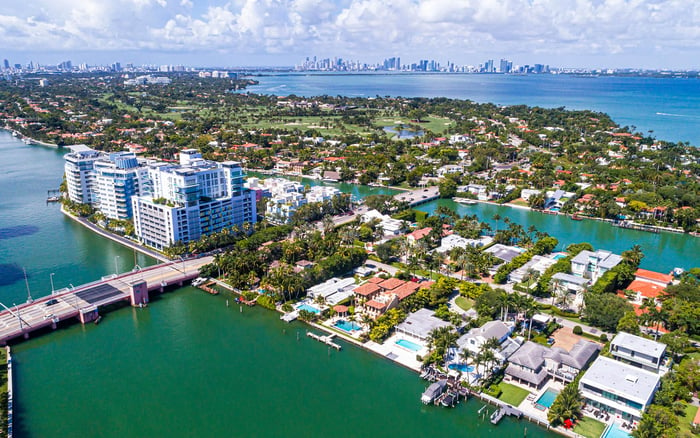
A due-diligence guide for buyers evaluating The Perigon Miami Beach as a lock-and-leave South Florida residence while maintaining a home base in Austin.

For buyers dividing their time between South Florida and Austin, a second home must be assessed both as a place to occupy and as a property that may sit unused between visits. The central question is whether The Perigon Miami Beach can fit the owner’s travel pattern without creating an impractical level of coordination.
Lock-and-leave is not a single feature. It is the combined result of building operations, access procedures, security protocols, maintenance responsibilities, technology, and the services an owner can arrange. Buyers should verify each component rather than treat the phrase as a guarantee that every aspect of an individual residence will be handled automatically.
A useful review begins with the household’s expected schedule. An owner who visits Miami Beach for longer seasonal stays may have different priorities from one making frequent short trips. The amount of time a residence will remain vacant also affects which operational questions deserve the most attention.
Prospective buyers can map the full cycle of a visit: preparing to arrive, entering the property, using the residence, securing it before departure, and managing the interval until the next stay. This exercise helps identify which tasks require the owner’s involvement and which may fall within building operations or separately arranged services.
The Austin connection matters primarily as a planning consideration. Travel between homes can make clear procedures more valuable, but buyers should avoid assuming that a building’s general service model covers every residence-level need.
Due diligence should distinguish common-area management from work performed inside a private residence. Buyers can ask for written clarification about access, emergency procedures, maintenance reporting, vendor entry, deliveries, and any options available during an extended absence.
The same distinction applies to technology. Buyers should identify which systems are included, what they control, who maintains them, and whether remote functions depend on third-party accounts or services. Any capability important to the ownership plan should be confirmed through current project documentation.
Security also requires precise questions. Owners should understand access procedures for residents, guests, staff, and approved vendors, along with the process for responding to an issue while the owner is away. The objective is not to rely on broad descriptions, but to understand how the relevant procedures operate in practice.
Amenities can contribute to a lower-friction stay when they align with an owner’s routine. Their practical value depends on availability, operating rules, reservation procedures, fees, and the frequency with which the owner expects to use them.
A buyer splitting time between cities may benefit from ranking amenities as essential, useful, or unlikely to be used. That approach keeps the analysis focused on the ownership experience rather than the length of an amenity list. Current terms should be reviewed directly because access and operating details may affect convenience.
A meaningful comparison should examine operations and responsibilities alongside design and location. Buyers considering Miami Beach alternatives can review Setai Residences Miami Beach and The Ritz-Carlton Residences® Miami Beach while also considering 57 Ocean Miami Beach.
The goal is not to assume that these properties offer identical arrangements. Instead, buyers can compare the documents and disclosures available for each project, ask the same operational questions, and determine which structure best matches their anticipated use, privacy preferences, and willingness to manage residence-level tasks.
Before making a decision, a buyer can request current information covering building operations, owner obligations, access procedures, fees, insurance requirements, maintenance responsibilities, technology, and any optional services. Legal and financial documents should be reviewed with qualified advisers.
It is also helpful to identify what happens when plans change. Buyers can ask how authorized access is handled if the owner cannot return as expected, how an issue is reported, and which parties may enter the residence. Any arrangement involving a separate vendor should be evaluated independently from the building’s standard obligations.
A strong lock-and-leave fit ultimately depends on alignment. The residence, building procedures, service expectations, and owner’s travel habits must work together. For an Austin-connected household evaluating a Miami Beach base, that operational clarity is the foundation of a confident decision.
What does lock-and-leave ownership mean in this context? It describes a residence evaluated for straightforward departures, extended absences, and efficient returns. The exact responsibilities must be confirmed in current project documents.
Why should buyers distinguish building services from residence-level care? Common-area operations do not necessarily include work inside a private home. Buyers should verify the division of responsibilities in writing.
What should an Austin-connected buyer review before choosing The Perigon? The review should cover anticipated travel patterns, access procedures, maintenance obligations, fees, security protocols, technology, and available services.
Can buyers assume every task is handled while they are away? No. Any service important to an extended absence should be confirmed rather than inferred from general descriptions.
How should technology be evaluated for part-time ownership? Buyers should identify included systems, available controls, maintenance responsibilities, and any third-party dependencies.
Why do access procedures matter? Clear procedures help owners understand how residents, guests, staff, and authorized vendors may enter the property during occupied and vacant periods.
How can amenities affect a lock-and-leave decision? Amenities may simplify a stay when they match the owner’s habits, but buyers should review access rules, availability, and applicable fees.
What is the best way to compare Miami Beach projects? Apply the same questions to each project and compare documented operations, owner obligations, privacy, services, and anticipated use.
Should buyers review fees and optional services separately? Yes. Standard building charges and separately arranged services may involve different terms, responsibilities, and costs.
What is the central test for a low-friction second home? The property’s documented operating structure should align with the owner’s schedule, expectations, and willingness to coordinate private residence care.
For a tailored shortlist and next-step guidance, connect with MILLION.
If branded residences are on your mind — as a home or as an allocation — we would be glad to share what we are seeing, privately.
Begin a quiet conversation