A buyer-focused look at why terrace drainage can influence ownership cost, livability, maintenance planning, and long-term confidence in South Florida private-club residences.

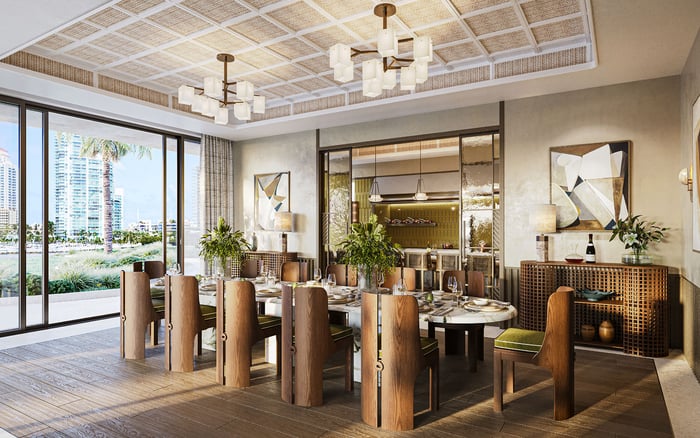
For many South Florida private-club buyers, the terrace is not an accessory. It is the outdoor dining room, the quiet morning salon, the place where water views, golf greens, palms, and evening air become part of daily life. In the ultra-premium market, that square footage can shape emotional value as powerfully as the primary suite or chef’s kitchen.
Yet the real cost of a residence is not defined only by acquisition price, club dues, design packages, or assessments. It is also defined by how gracefully the home handles water. Terrace drainage, often invisible during a champagne tour, can change the ownership experience for years. It affects furniture life, flooring choices, waterproofing confidence, maintenance cadence, and the ease with which a residence can be locked and left.
A well-conceived terrace should feel effortless. After rain, it should return quickly to use. Planters should not become reservoirs. Door thresholds should inspire confidence. Drains should be accessible enough to maintain, yet discreet enough to preserve the architecture. When those elements are overlooked, even the most cinematic outdoor space can become a recurring management item.
In South Florida, outdoor space commands a premium because it expands how a residence lives. Buyers comparing waterfront condominiums, club residences, and low-density enclaves often assign meaningful lifestyle value to large terraces. The question is whether that terrace is simply large, or whether it is truly engineered for the climate.
The distinction matters. Poor drainage can turn premium square footage into conditional square footage, usable only when conditions are ideal. Water that lingers may influence surface selection, cleaning frequency, furnishing strategy, and owner confidence. A terrace that dries predictably supports a more permanent outdoor room, with better furnishings, rugs, lighting, and plantings. A terrace that holds water forces compromise.
This is especially relevant in private-club settings, where owners often expect hotel-level ease. At residences associated with golf, wellness, marina, or beach lifestyles, the outdoor environment is part of the promise. Buyers looking at Shell Bay by Auberge Hallandale, for example, are not merely buying interior space. They are weighing how the full residential experience performs across leisure, service, privacy, and climate.
Drainage due diligence does not require becoming an engineer, but it does require sharper questions. The first is slope. Water needs a path, and the terrace should be designed so that path moves away from interiors and toward appropriate drains. A surface that appears perfectly flat may photograph beautifully, but a slight, intentional slope is what protects usability.
The second question is redundancy. Are there enough drains for the terrace size and configuration? Are planter zones, summer kitchens, and furniture areas considered separately? If one drain is obstructed, is there a secondary route for water? In luxury real estate, redundancy is a form of discretion. The owner may never see it, but it is part of why the residence feels calm.
The third question is access. Beautiful drainage details can still become expensive if maintenance requires disruptive work. Drain covers, cleanouts, and waterproofing transitions should be reviewable. For a lock-and-leave owner, the ability for building staff or an owner’s representative to inspect and maintain terrace drainage can be as important as the original specification.
Finally, ask how the terrace meets the interior. Thresholds, door tracks, and adjacent flooring are critical. A residence may have spectacular glass lines and seamless indoor-outdoor flow, but that transition must be supported by water management. The more seamless the design appears, the more disciplined the hidden detailing should be.
Private-club residences invite a particular expectation: life should feel curated, fluid, and protected from friction. Whether the club identity is centered on golf, wellness, boating, dining, or beachfront ritual, owners tend to value ease as much as beauty. Drainage is one of the unglamorous systems that preserves that ease.
A gated-community residence with a private garden terrace has different drainage questions than a high-rise sky terrace. A waterfront condominium has different exposure than an inland club villa. A penthouse terrace with planters, pools, and outdoor kitchens may require a different level of scrutiny than a shaded balcony. The unifying principle is simple: water should have a designed exit, not an improvised one.
In Brickell, where vertical living often emphasizes dramatic outlooks and indoor-outdoor entertaining, terrace performance can influence how confidently owners use elevated outdoor rooms. Buyers reviewing St. Regis® Residences Brickell may naturally focus on service, brand, and skyline presence, but the same disciplined eye should extend to drainage, waterproofing interfaces, and long-term maintenance access.
Drainage can influence resale in a quiet way. Buyers may not ask about it first, but they notice evidence of it: staining, swollen exterior millwork, loose pavers, persistent dampness, efflorescence, or terrace doors that feel compromised. Even when issues are cosmetic, they can shift the tone of negotiation from desire to doubt.
Conversely, a terrace that is clean, dry, and well maintained reinforces confidence. It suggests that the residence has been managed with care. In the ultra-premium segment, where buyers are often comparing several exceptional options, confidence can be decisive. A flawless view is powerful, but a flawless view paired with visible stewardship is stronger.
This is particularly true in beach markets such as Miami Beach and Surfside, where outdoor living is essential to the architectural narrative. At The Perigon Miami Beach or The Delmore Surfside, a buyer’s emotional response may begin with design and setting. The more practical question is whether the terrace can sustain that impression through seasons of real use.
The best terraces do not make drainage feel technical. They make it disappear. Linear drains align with the architecture. Stone and porcelain surfaces are selected for beauty and performance. Planters are designed with proper outlets. Outdoor kitchens account for water movement around cabinetry and appliances. Furniture layouts avoid blocking critical drainage points.
For new-construction buyers, the opportunity is to examine these choices before closing. Ask for the terrace plan, not only the floor plan. Review where drains sit in relation to seating areas and doors. Understand who maintains them after delivery. If finishes are being upgraded, confirm that added materials do not alter drainage behavior. A thicker surface, new pedestal system, or custom planter can change how water moves.
For resale buyers, the opportunity is observation. Visit after rain if possible. Look for patterns. Ask about prior terrace work. Review association responsibilities versus owner responsibilities. In some residences, terrace surfaces may feel private but remain connected to broader building systems. Clarity prevents surprise.
The most refined purchase process treats drainage as part of luxury, not a defect hunt. It is a way to protect the outdoor life the buyer is paying for.
The true expense of poor terrace drainage is not only repair. It is the gradual erosion of confidence. Owners begin moving cushions inside too often, limiting plantings, avoiding certain furniture, or worrying during travel. A space intended for ease becomes one that requires monitoring.
By contrast, strong drainage allows the terrace to serve its purpose. It supports long dinners, quiet mornings, seasonal entertaining, and the sense that the residence is ready when the owner is. In South Florida’s private-club market, that reliability is part of the luxury equation.
A buyer does not need to reject a residence because terrace drainage requires attention. But the buyer should understand the condition, responsibility, and potential remedies before assigning full value to the outdoor square footage. The terrace may be where the dream is sold. Drainage is one of the ways the dream is protected.
Why does terrace drainage matter in a luxury residence? It affects how reliably outdoor space can be used and maintained. It also influences confidence in finishes, thresholds, and long-term ownership.
Is a larger terrace always more valuable? Not automatically. Larger outdoor space is most valuable when it drains well, is easy to maintain, and supports real daily use.
What should a buyer look for during a terrace visit? Look for stains, standing water, uneven surfaces, blocked drains, and signs of moisture near doors. These clues can justify deeper review.
Can beautiful terrace design hide drainage issues? Yes. Minimalist detailing can be excellent, but it should still include proper slope, outlets, access points, and waterproofing transitions.
Who typically maintains terrace drains? Responsibility can vary by residence and association structure. Buyers should clarify owner obligations and building obligations before closing.
Should drainage be reviewed in new-construction purchases? Yes. Early review helps ensure finish upgrades, planters, and outdoor kitchens do not interfere with intended water movement.
Does drainage affect resale perception? It can. A clean, dry, well-maintained terrace supports buyer confidence, while visible moisture issues can invite negotiation.
Are private-club residences held to a higher standard? Buyers often expect a more seamless experience in club environments. Terrace performance should match that standard of ease.
Can drainage concerns be corrected after purchase? Sometimes, but the scope depends on surface systems, waterproofing, access, and association rules. Due diligence helps define the path.
What is the simplest takeaway for buyers? Treat the terrace as an engineered living space, not just a view platform. Its performance can shape the real cost of ownership.
For a discreet conversation and a curated building-by-building shortlist, connect with MILLION.
If branded residences are on your mind — as a home or as an allocation — we would be glad to share what we are seeing, privately.
Begin a quiet conversation.jpg&width=700&height=438&fit=cover)