
For collectors buying in Brickell, elegant interiors are only the beginning. The more consequential questions concern environmental stability, lighting control, delivery routes, backup systems, insurance, and the written rules governing art installation and storage.
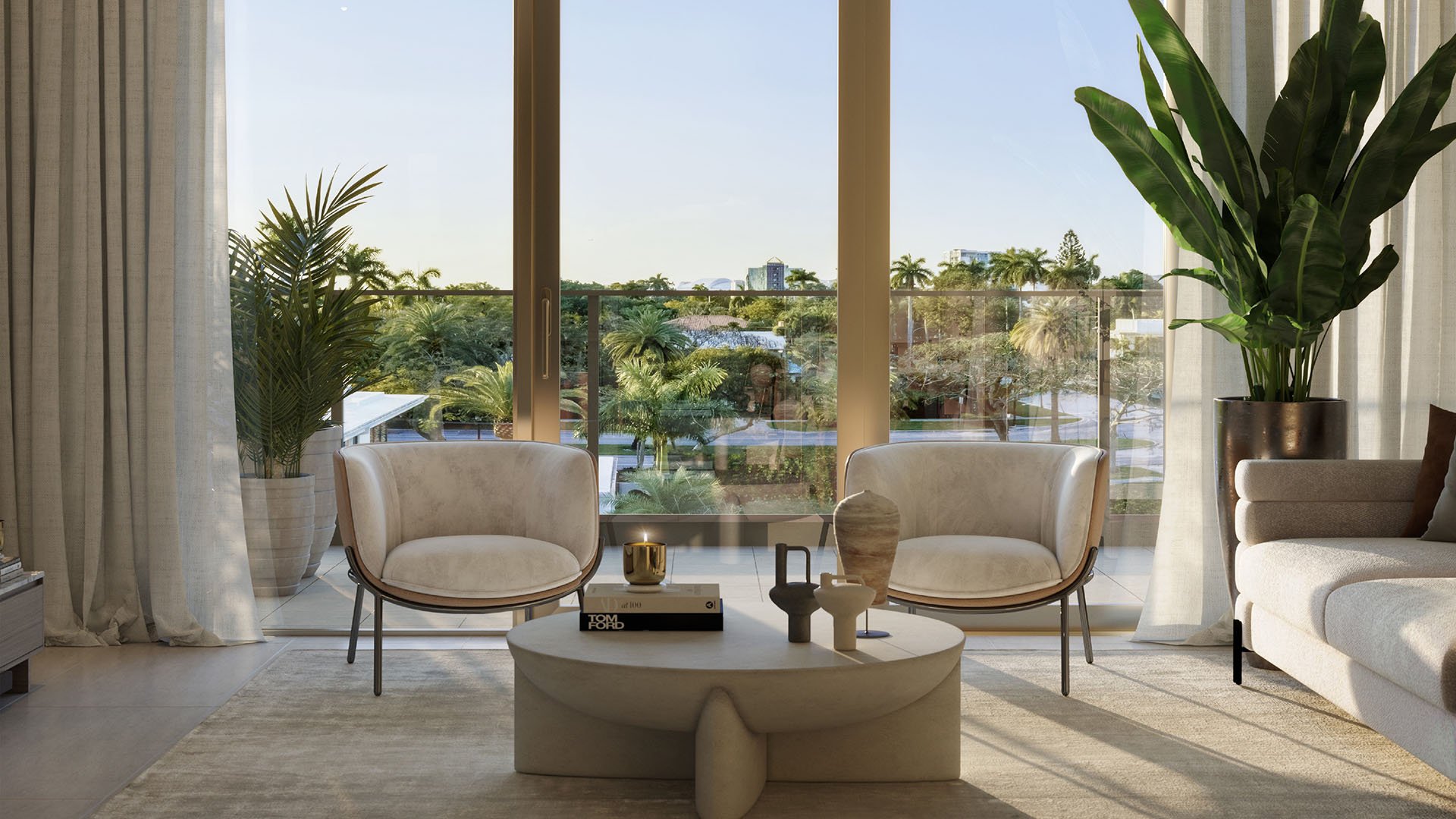
In Brickell, glass, height, water views, skyline exposure, and refined interiors can shape the initial impression of a residence. For an owner assembling or relocating a meaningful collection, however, the more consequential details often lie in mechanical specifications, condominium rules, delivery protocols, and insurance requirements.
A residence can offer generous proportions yet remain difficult for large-format art. Temperature control, stated without a humidity range, monitoring protocol, or backup-power scope, also leaves important questions unanswered. The careful buyer should therefore evaluate a property as both a home and a managed environment.
This is where design and architecture become operational. Wall area, glazing, solar exposure, ceiling construction, service circulation, and mechanical stability should be examined together, ideally before contractual deadlines limit a buyer’s options.
Amenity language demands disciplined interpretation. When evaluating 2200 Brickell, buyers should distinguish residential conveniences from systems designed specifically for the care of fine art.
Terms such as “cold storage,” “temperature controlled,” and “climate controlled” should not be treated as interchangeable. None, by itself, confirms art-grade temperature and humidity management, fire protection, monitoring, security, or specialist handling.
Ask management to define every relevant term in writing. Climate documentation should address temperature and relative-humidity parameters, measurement locations, alarm response, maintenance, power interruption, and the areas actually covered. Marketing shorthand is not a substitute for operating documentation.
Collectors should assess glass exposure as carefully as room dimensions. Broad views can introduce daylight, reflections, and changing solar conditions into display spaces. Before assigning a wall to photography, works on paper, textiles, or other light-sensitive material, study orientation, periods of direct sun, and the practical reach of shades.
Lighting plans deserve equal scrutiny. Request fixture schedules, dimming information, and details on whether decorative systems can be adjusted or supplemented under the building’s rules. Confirm where switches, drivers, and access panels sit relative to proposed installations. A lighting designer and conservator can then assess whether the presentation strategy suits the works.
At The Residences at 1428 Brickell, buyers should apply this review to the specific residence rather than infer performance from a project’s overall positioning. Exposure, interior buildout, and collection needs can vary from home to home.
A canvas that fits a living-room wall may still be incompatible with the loading area, freight elevator, corridor turn, or entry door. Obtain verified dimensions for every stage of the route, including clear openings rather than nominal door sizes. Note ceiling obstructions, protective-padding requirements, and restrictions on elevator reservations.
Buyers considering Cipriani Residences Brickell or another Brickell residence should request current access documents directly from management and compare them with the dimensions of priority works.
Also ask who may perform installations, when work is permitted, which insurance certificates are required, and whether drilling or structural attachment needs approval. For sculpture and other heavy works, qualified professionals should review floor loading, turning radius, and staging space. An installation plan should account for removal as carefully as arrival.
Storage should be assessed as its own managed environment. A secure room or restricted-access area does not automatically provide conservation-grade temperature, humidity, lighting, fire protection, monitoring, or handling.
For a second-home owner, the storage decision can require additional planning because the residence may be unoccupied for extended periods. Any specialist storage provider should be evaluated for environmental documentation, emergency procedures, access controls, handling protocols, and insurer acceptance. Treat off-site storage as a separate diligence exercise rather than an extension of a residential amenity package.
The same discipline applies inside the residence. Confirm whether a proposed storage area shares the home’s mechanical system, whether sensors can be added, who receives alerts, and how authorized personnel can respond when the owner is away.
The central question is not simply whether a tower has air conditioning. It is whether the residence and any approved storage area can support the collection’s documented needs consistently. Ask which systems remain on backup power, how interruptions are communicated, and whether environmental data can be accessed or independently monitored.
At St. Regis® Residences Brickell, as with any premium project, the correct inquiry concerns the exact residence, current condominium documents, and actual operating procedures. A brand name cannot replace technical review.
Before closing, align four records: management’s written specifications, the conservator’s recommendations, the installer’s route plan, and the insurer’s conditions. This discipline creates a clearer basis for deciding which works belong in the home, which require mitigation, and which should remain in specialist storage.
Does cold parcel storage qualify as art storage? No. Cold parcel capability alone does not establish art-grade humidity, lighting, fire protection, monitoring, or handling standards.
Is temperature-controlled wine storage suitable for art? Not on that description alone. Wine storage and fine-art conservation have different requirements and need separate documentation.
What climate information should a buyer request? Request written temperature and relative-humidity parameters, monitoring locations, alarm procedures, maintenance responsibilities, and backup-power coverage.
Why do freight-elevator dimensions matter before closing? A work may fit the residence but not the elevator or approach route. Verify clear openings, cabin dimensions, turns, and loading access.
Should a buyer rely on a project’s general specifications? No. Review the exact residence because exposure, interior construction, mechanical conditions, and access may differ.
How should daylight be assessed? Study orientation, periods of direct sun, glazing, and shade coverage, then ask a conservator to evaluate proposed placements for sensitive works.
Can owners install additional art lighting? Possibly, but condominium rules and existing electrical conditions may limit alterations. Obtain approvals and fixture information before designing the scheme.
What should an insurer review? Provide location, display, storage, environmental, security, and handling details, then confirm any conditions in writing.
Is secure off-site storage automatically conservation grade? No. Security alone does not establish appropriate environmental, emergency-response, monitoring, and handling standards.
Who should join the pre-purchase review? Building management, an art conservator, a specialist installer, the insurer, and relevant design professionals should coordinate before closing.
When you're ready to tour or underwrite the options, connect with MILLION.
If branded residences are on your mind — as a home or as an allocation — we would be glad to share what we are seeing, privately.
Begin a quiet conversation

.jpg&width=700&height=438&fit=cover)