Two branded residences present distinct versions of private hospitality: service-rich urban living in Brickell and boutique oceanfront discretion in Surfside.
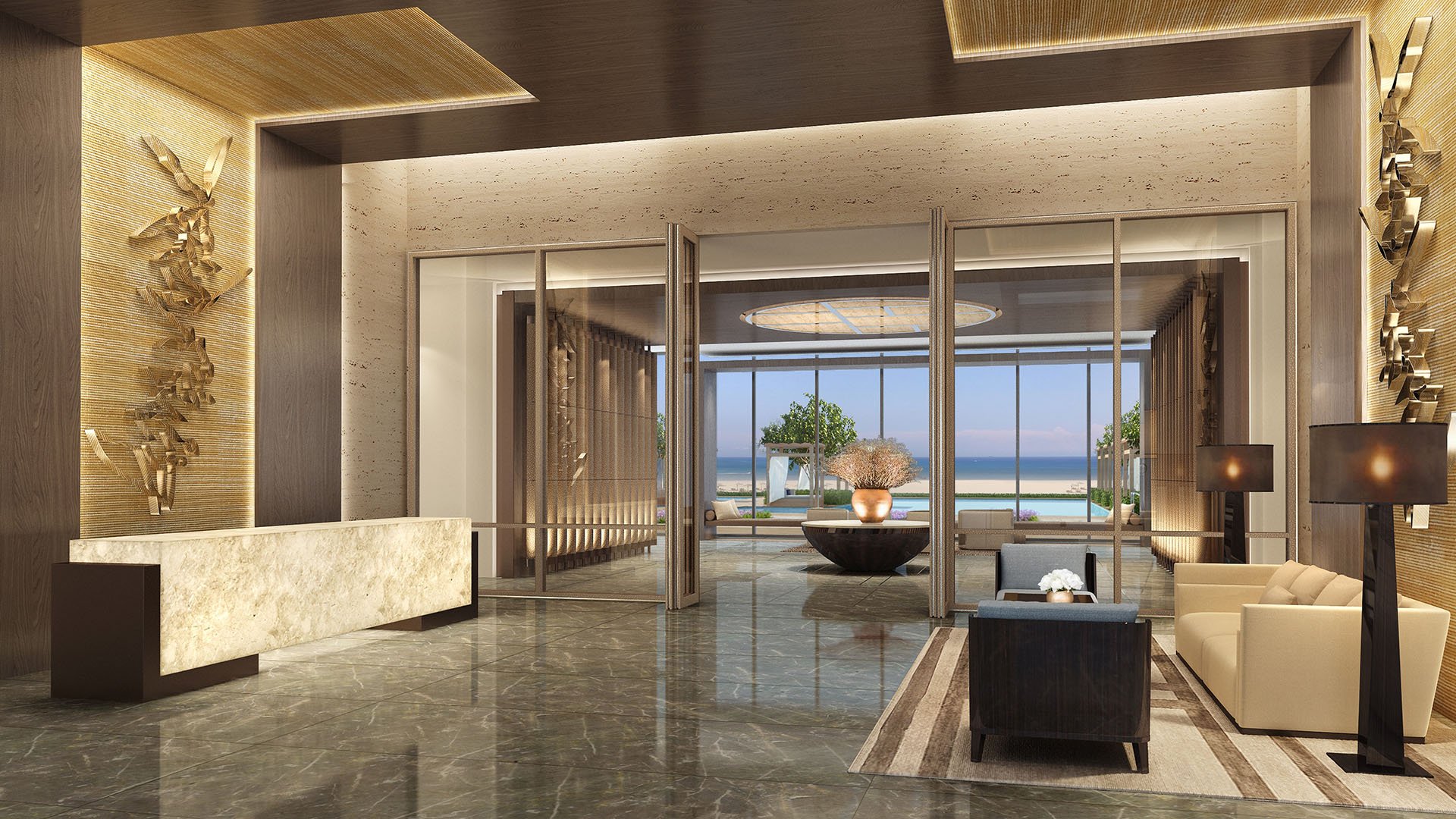
For privacy-minded buyers in 2026, residential hospitality is less about a theatrical arrival than what happens after the door closes. The essential questions are who shares the building, how services enter daily life, whether guest movement feels controlled and how consistently a residence functions as a home.
Through that lens, St. Regis® Residences Brickell and Fendi Château Residences Surfside make for a compelling comparison. Both translate internationally recognized brand identities into privately owned residences, yet they frame discretion through notably different settings. One is vertical, urban and service-intensive; the other is low-rise, coastal and deliberately intimate.
Neither approach equates privacy with isolation. Instead, each treats it as an operating principle shaped by access, service and scale. For buyers comparing branded residences, the distinction is important: hospitality can support privacy, but only when its rhythms align with the owner's preferred way of living.
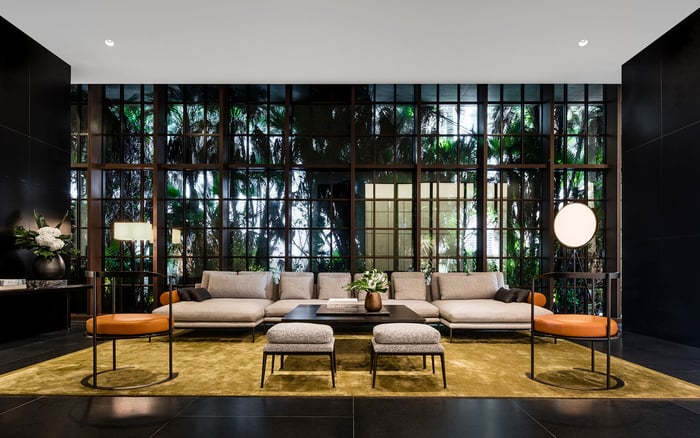
In Brickell, density and connectivity are integral to the proposition. St. Regis applies hotel-style service standards to condominium ownership while remaining planned without a transient hotel component. That separation from nightly hotel guests is central to its residential character.
The result is a model designed to provide extensive support within a residents-focused environment rather than a conventional hotel-condominium setting. Personalized service and controlled residential access coexist with the pace of an urban district. Privacy is not achieved by retreating from the city, but by managing the threshold between city and home.
This format can suit an owner who values continuity. The residence remains private while service is embedded in the building's daily operation. For someone seeking an active Miami base without surrendering the security and consistency of home, that balance may matter more than sheer seclusion.
Brickell buyers may naturally compare this philosophy with other branded or design-led addresses, including Baccarat Residences Brickell. The useful comparison extends beyond brand recognition to how access, visitors and service interactions are likely to feel on an ordinary day.
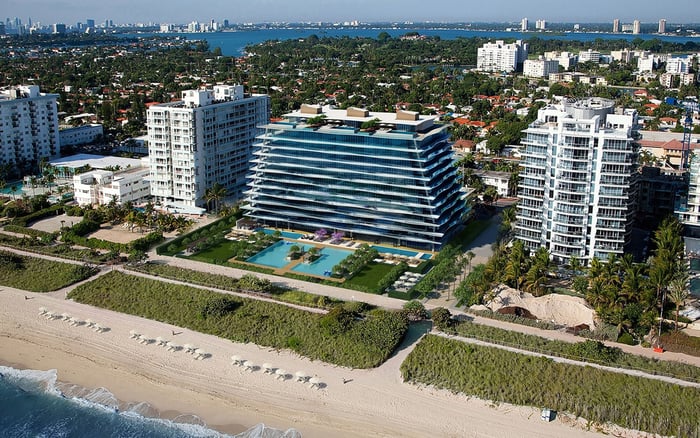
Fendi Château offers a contrasting interpretation in Surfside. Its low-rise, boutique format and oceanfront setting make limited scale and seclusion fundamental to its privacy proposition. Rather than importing the energy of a large hospitality environment, it presents branded living through a quieter residential frame.
The Fendi identity informs the experience, but the property is composed around privately owned homes rather than mass-market hospitality. Owners and their visitors receive a carefully managed, guest-like experience, with exclusivity expressed through discretion and controlled access.
Here, privacy begins with atmosphere. A secluded coastal setting can reduce the sense of exposure before service even enters the equation. The building's intimacy reinforces that quieter pattern of arrival, residence and hosting. For buyers who equate luxury with fewer transitions and a more restrained social field, this may be the more intuitive model.
A Surfside search may also bring Arte Surfside into the conversation. As with any comparison, the decisive issue should be lived experience rather than a logo: how the property handles circulation, recognition, guests and the boundary between assistance and intrusion.
The contrast is best understood as a choice between operational and environmental privacy. St. Regis Brickell emphasizes service depth, residential continuity and controlled access in a connected urban setting. Fendi Château emphasizes intimacy, coastal seclusion and boutique scale.
For a primary residence, buyers may prioritize predictable routines and a stable relationship with those delivering service. For a second home, ease of arrival, guest handling and the ability to step immediately into an orderly residence may carry greater weight. Neither preference automatically points to a specific property, but each clarifies which model deserves closer attention.
The broader lifestyle question is equally personal. Does privacy mean remaining close to the center of business and culture while insulating the home from transient traffic? Or does it mean choosing a calmer oceanfront context where scale itself supports discretion? The answer should precede the brand decision.
A serious evaluation should move beyond amenity descriptions. Buyers should consider the complete sequence of daily life: approaching the property, entering, receiving visitors, requesting assistance and spending time in shared spaces. Privacy is cumulative; a small friction repeated each day can matter more than a singular design gesture.
Service should also be examined as a relationship. The strongest residential hospitality feels available without becoming conspicuous. Buyers can ask how requests are coordinated, how access is controlled and whether the experience remains residential when guests visit. They should also distinguish between privacy promised by physical scale and privacy delivered through operations.
Finally, consider whether the address fits the household's actual calendar. A highly connected vertical residence and a secluded low-rise home can both be private, but they solve different problems. The more precisely a buyer defines privacy, the more meaningful the comparison becomes.
What defines St. Regis Residences Brickell's privacy proposition? It combines extensive service with controlled residential access and no planned transient hotel component.
Does St. Regis Residences Brickell include a transient hotel? No. It is planned without a transient hotel component, separating residents from nightly hotel guests.
How does Fendi Château Residences Surfside create privacy? It relies on boutique scale, controlled access and a secluded oceanfront residential setting.
Is one property inherently more private than the other? Not necessarily. Each addresses privacy differently, so the better fit depends on the buyer's routines and preferred setting.
Which model better suits an urban lifestyle? St. Regis Brickell is framed around connectivity, personalized service and the continuity of a private city home.
Which model favors a quieter coastal experience? Fendi Château places greater emphasis on limited scale, discretion and its secluded Surfside context.
Why does the absence of hotel guests matter? It can preserve a more consistent residential population and distinguish the experience from a conventional hotel-condominium environment.
Does boutique scale guarantee privacy? No. Scale can support intimacy, but buyers should still examine access, circulation, guest handling and service practices.
What should second-home buyers evaluate first? They should consider arrival routines, residence preparation, visitor management and how discreetly services are coordinated.
What is the central choice between these residences? It is a choice between service-intensive urban privacy in Brickell and low-rise coastal intimacy in Surfside.
To compare the best-fit options with clarity, connect with MILLION.
If branded residences are on your mind — as a home or as an allocation — we would be glad to share what we are seeing, privately.
Begin a quiet conversation