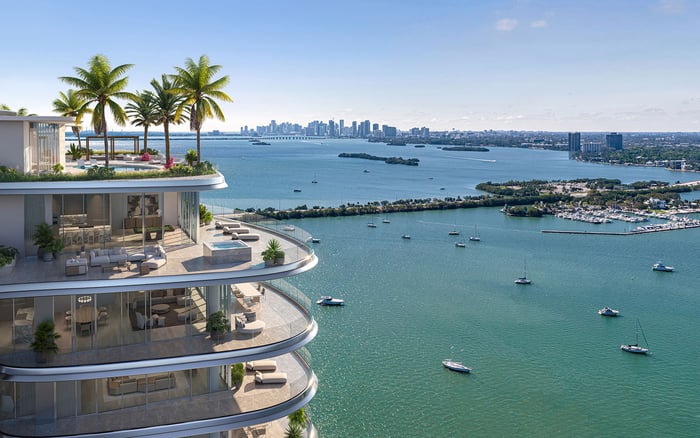
A discreet buyer’s framework for evaluating SIRS materials, reserve posture, milestone inspection history, and their potential influence on condominium ownership in Bay Harbor Islands.

In Bay Harbor Islands, selecting a condominium is not solely an exercise in views, finishes, or floor-plan elegance. A building’s financial preparation and structural documentation can shape the ownership experience long after closing. SIRS materials, reserve information, and milestone inspection records should therefore be reviewed alongside the budget, board minutes, insurance materials, pending contracts, and notices provided for review.
These files serve distinct purposes and should not be reduced to a single reassuring headline. A favorable-looking reserve balance may not resolve every question raised by an inspection. An inspection history may identify work without explaining how it will be funded. A study may outline future needs, while the current budget reveals how quickly the association is preparing for them.
The sophisticated buyer looks for alignment across the documents. The objective is not to eliminate every future expense, which is rarely realistic in shared ownership. It is to understand the likely cadence of costs, decisions, and physical work before determining whether a building suits a preferred standard of privacy and ease.
Begin with the total cost of ownership, not the advertised monthly assessment alone. Review recurring association charges, disclosed special assessments, reserve contributions, and the possibility that planned work could affect future budgets. The essential distinction is between a known obligation and a potential one. They belong in separate columns.
A useful model includes a base case, a higher-cost case, and a disruption case. The base case reflects currently disclosed charges. The higher-cost case introduces a personal contingency for work or funding decisions that remain unresolved. The disruption case considers indirect expenses, such as alternative parking, temporary accommodation, additional housekeeping, or schedule changes if access to part of the property is limited.
Cash and financed buyers may view the same obligation differently, but both should examine timing. A large one-time payment, a series of installments, and a permanent increase in monthly charges have distinct effects on liquidity. Ask counsel, financial advisers, and relevant technical specialists to interpret the materials themselves rather than relying on informal summaries.
For buyers comparing newer Bay Harbor options, Alana Bay Harbor Islands and The Well Bay Harbor Islands can be included in a broader ownership-cost analysis. Each property should still be evaluated through its own current documents, contracts, fee structure, and delivery or operating context.
Structural and capital work is often framed as a financial matter, yet the privacy implications can be equally important. Depending on the scope, residents may encounter workers near exterior areas, protective coverings, equipment staging, controlled access, elevator scheduling, or temporary limitations affecting balconies and shared spaces. Buyers should not assume these conditions will occur, but they should ask whether any are contemplated.
The most revealing questions are operational. Which areas could be accessed, and during what hours? How are contractors supervised? Will notice be provided before entry or work near a residence? How will service elevators, deliveries, guest arrivals, and household staff be coordinated? What procedures protect keys, access credentials, and resident information?
These considerations are especially important for owners who value discreet arrivals, work from home, travel frequently, or maintain the residence as a second home. Privacy is not merely the distance between neighboring terraces. It also reflects the building’s capacity to manage people, schedules, communications, and access with discipline.
A buyer considering Onda Bay Harbor or La Maré Bay Harbor Islands should apply the same privacy questions used in any condominium comparison. Project branding or presentation should never replace document-level review.
Lifestyle fit becomes clearer when due diligence is translated into a calendar. Ask what work is currently planned, what remains under discussion, what has been approved, and what has yet to be scheduled. Then map those distinctions against the months when the residence will be used most intensively.
For a full-time owner, recurring daytime noise or circulation changes may matter more than a brief closure. For a seasonal owner, even a limited project can feel significant if it overlaps with the preferred occupancy period. For households with children, pets, staff, or frequent guests, changes to elevators, parking, pool access, or delivery procedures may require additional planning.
Consider governance fit as well. Read meeting materials for clarity, consistency, and follow-through. Determine how residents receive updates and whom they contact when plans change. A building that communicates precisely can be easier to inhabit during necessary work than one offering incomplete or irregular guidance.
This is where Bay Harbor due diligence, waterfront ownership, lifestyle fit, resale planning, new-construction comparisons, and buyer’s guides converge. The labels matter less than the central question: Does the building’s decision-making culture support the way the buyer intends to live?
Request the complete document set available for review, then organize it by structural matters, funding, operations, and governance. Cross-reference mentions of the same project across studies, minutes, budgets, proposals, contracts, and resident notices. If terminology, cost treatment, or timing appears inconsistent, seek clarification in writing.
Next, separate questions by adviser. Legal interpretation belongs with qualified counsel. Building conditions and scope belong with appropriate technical professionals. Liquidity, financing, and tax implications belong with financial specialists. The buyer’s role is to assemble those answers into a coherent ownership decision.
Finally, compare residences on equal terms. Apply the same time horizon, contingency assumptions, privacy priorities, and desired amenity access to every candidate. A visually compelling home can remain the right choice when its obligations are understood and accepted. The greater risk is not complexity itself, but complexity that has never been translated into cost and lifestyle terms.
What should a buyer review first? Begin with the available study, inspection, reserve, budget, assessment, and meeting materials, then cross-reference them for consistency.
Are SIRS and milestone inspections interchangeable? Treat them as separate diligence files and ask qualified advisers to explain the purpose and implications of each document provided.
Can reserves predict future monthly charges? Reserve information can inform a carrying-cost analysis, but it should be considered alongside budgets, planned work, contracts, and disclosed assessments.
How should a special assessment be modeled? Separate the known amount and payment schedule from personal contingencies for unresolved scope, timing, or indirect expenses.
Why does project timing matter to a second-home owner? Work that overlaps with preferred occupancy can affect the practical value of a seasonal residence, even when its duration is limited.
What privacy questions should buyers ask? Ask about contractor access, supervision, working hours, advance notice, elevator use, key controls, and the protection of resident information.
Could amenity access affect lifestyle fit? Yes. Buyers should clarify whether planned work may alter access to parking, pools, terraces, elevators, or other shared areas.
Should newer and established buildings be compared differently? Their documents and operating contexts may differ, but both warrant the same disciplined review of costs, obligations, access, and governance.
What can meeting materials reveal? They can help a buyer assess how decisions, open items, resident concerns, and project updates are documented and communicated.
Who should interpret technical or legal language? Engage qualified legal, technical, and financial advisers for their respective areas, then integrate their guidance into the purchase decision.
For a confidential assessment and a building-by-building shortlist, connect with MILLION.
If branded residences are on your mind — as a home or as an allocation — we would be glad to share what we are seeing, privately.
Begin a quiet conversation