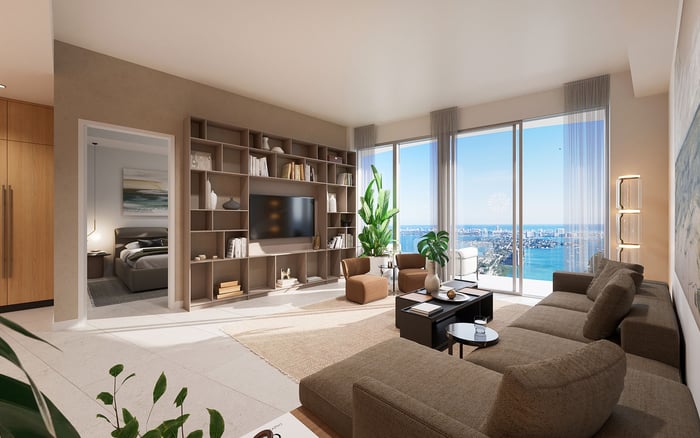
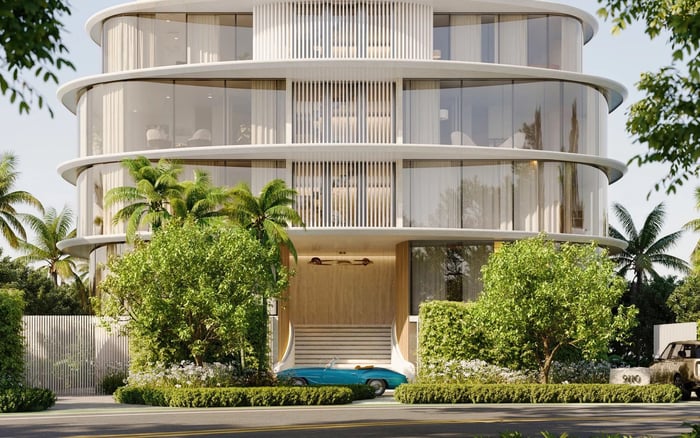
A disciplined buyer framework for evaluating privacy, access, technology, service, and long-term fit when selecting a Hallandale Beach residence.

For Silicon Valley buyers, a productive Hallandale Beach search begins not with a view, floor plan, or amenity deck, but with an operating brief. A primary residence used year-round demands a different balance than a second home visited between board meetings, school calendars, and extended travel.
Document the recurring moments that matter: focused calls, confidential conversations, guest arrivals, family routines, exercise, dining, beach time, and departures with luggage. Then assign each a desired level of privacy and an acceptable degree of friction. This turns an abstract preference for “convenience” into specific, testable conditions.
The distinction between Hallandale and Hallandale Beach also deserves careful attention during a search. Buyers should verify the exact address, access pattern, surroundings, and ownership structure of every candidate rather than infer the experience from a broad area name.
Beach privacy is not simply a matter of facing the water. It is the cumulative result of arrival design, elevator circulation, sightlines, sound control, staff protocols, visitor management, and the relationship between private and shared spaces.
During a tour, observe where a driver waits, how a guest reaches the residence, whether service personnel follow the same paths, and how clearly neighboring doors or terraces can be seen. Ask how deliveries are received, how visitors are announced, and what happens when multiple residents arrive simultaneously. For an oceanfront home, also examine the route between the residence and the shore. A beautiful path may still feel exposed if it crosses active common areas.
Inside the residence, test acoustic separation rather than assume it. Stand near bedrooms, the entry, mechanical spaces, and shared walls. Consider whether a video meeting can take place while family members or guests use adjacent rooms. Privacy is strongest when architecture and operations reinforce one another.
City convenience should be evaluated as a sequence, not a promise. Time the complete journey from the residence to the places that will shape daily life, using the hours when those trips are most likely to occur. Include the elevator, garage exit, vehicle retrieval, building entry, and parking at the destination.
Create three scenarios: an ordinary weekday, a time-sensitive departure, and a weekend with guests. A residence can feel effortless in one scenario and cumbersome in another. Buyers who travel frequently should also model departures with luggage, car-service coordination, and household handoffs.
Do not let a map substitute for lived testing. The relevant question is not whether a destination appears close, but whether the full trip remains predictable enough for the buyer’s schedule and tolerance. That standard helps weigh waterfront privacy against the practical demands of a connected professional life.
A technology-led household should treat connectivity and resilience as due-diligence priorities. Request documentation where available, and engage qualified specialists to evaluate service options, in-residence coverage, electrical capacity, backup arrangements, access controls, and the feasibility of dedicated workspaces.
Test mobile reception in every room and outdoor area where calls may occur. Confirm that the preferred network equipment can be installed without compromising the interiors or violating building rules. Review how smart-home systems are administered, who can access them, and how credentials are transferred after closing.
Cybersecurity and physical security should be considered together. Cameras, entry systems, staff procedures, vendors, and home automation can create a polished experience, but they also demand clear permissions and disciplined maintenance. The best setup is not necessarily the most elaborate. It is the one the owner can understand, control, and update.
Project comparisons are most useful when every candidate is scored against the same criteria. Within Hallandale Beach, buyers can place 2000 Ocean Hallandale Beach and Shell Bay by Auberge Hallandale within the same review framework without assuming their names imply an equivalent lifestyle.
Expand the comparison set only when it clarifies a tradeoff. Auberge Beach Residences & Spa Fort Lauderdale can serve as a Fort Lauderdale reference point, while Armani Casa Sunny Isles Beach offers a Sunny Isles Beach comparison. The objective is not to collect more options, but to determine which setting best resolves the buyer’s particular tension between discretion and access.
Score each residence on arrival privacy, internal circulation, work suitability, outdoor exposure, service model, guest handling, storage, and ownership obligations. Add a separate confidence score for every answer. A strong feature supported only by verbal assurance should not carry the same weight as one confirmed through documents and inspection.
Luxury is partly the freedom to use a home as intended. Before committing, have appropriate legal, tax, insurance, and property professionals review the documents and circumstances relevant to the purchase. Pay close attention to use restrictions, leasing provisions, renovation procedures, pet rules, guest policies, approval processes, fees, reserves, insurance responsibilities, and any pending matters disclosed for the property.
Governance warrants particular attention because it can shape privacy and convenience long after closing. Ask who controls operational decisions, how policies can change, and what notice owners receive. If the property will be managed remotely, identify who may enter the residence, authorize work, receive deliveries, and respond when the owner is unavailable.
A buyer’s-guide mindset is valuable here: separate emotional preference from verified suitability. A compelling terrace may win the first visit, but durable satisfaction usually comes from the quieter details of control, service, and predictable use.
Reduce the shortlist to a small number of serious candidates and grade each from one to five across two columns: privacy and access. Under privacy, include arrival, circulation, acoustics, outdoor exposure, guest management, and digital control. Under access, include recurring trips, vehicle logistics, service responsiveness, household support, and the ease of locking and leaving.
Then identify the nonnegotiables. One buyer might accept a longer routine in exchange for a more discreet arrival but refuse uncertain connectivity. Another may prioritize effortless household management over expansive shared amenities. The correct answer is personal, but the process should be explicit.
Return to the finalists at different times and repeat the essential routines. The winning home should not merely photograph well. It should preserve attention, protect private life, and make the necessary parts of each day feel composed.
What should a Silicon Valley buyer define first? Define how the home will be used, who will use it, and which daily routines require the greatest privacy.
Is a beach view the same as beach privacy? No. Privacy also depends on circulation, sightlines, acoustics, visitor handling, and the route to outdoor areas.
How should convenience be tested? Rehearse complete, recurring journeys at realistic times, including elevators, parking, vehicle retrieval, and entry procedures.
What technology checks belong in due diligence? Evaluate connectivity options, mobile coverage, electrical capacity, access controls, smart-home administration, and backup arrangements.
Should buyers compare properties outside Hallandale Beach? Yes, when a comparison clarifies a specific tradeoff rather than merely expanding the search.
How can buyers assess building privacy? Observe arrivals, elevator use, guest routes, service circulation, delivery procedures, terrace exposure, and neighboring sightlines.
What documents deserve professional review? Review governing documents, financial materials, insurance information, disclosures, use restrictions, and renovation procedures with qualified advisers.
How should a remotely managed home be evaluated? Establish who can enter, approve work, receive deliveries, manage credentials, and respond when the owner is away.
What makes a useful property scorecard? Apply consistent criteria, weight nonnegotiables heavily, and distinguish documented answers from unconfirmed representations.
What should determine the final choice? Choose the residence that best protects attention and private life while keeping essential routines reliably manageable.
For a confidential assessment and a building-by-building shortlist, connect with MILLION.
If branded residences are on your mind — as a home or as an allocation — we would be glad to share what we are seeing, privately.
Begin a quiet conversation