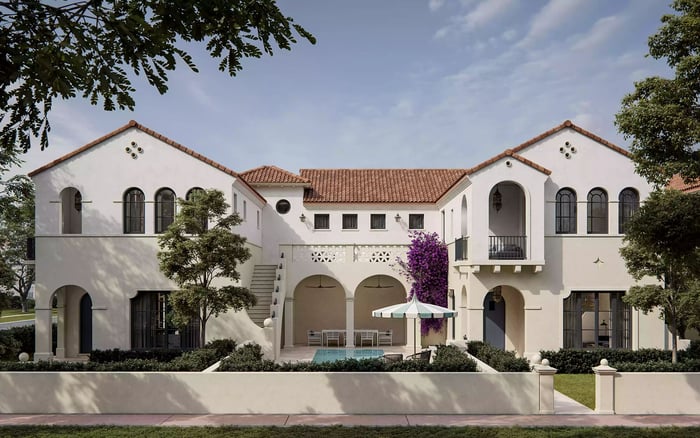
A discreet buyer’s guide to how potential state-income-tax savings influence Coral Gables real estate decisions, from residency planning to property selection.
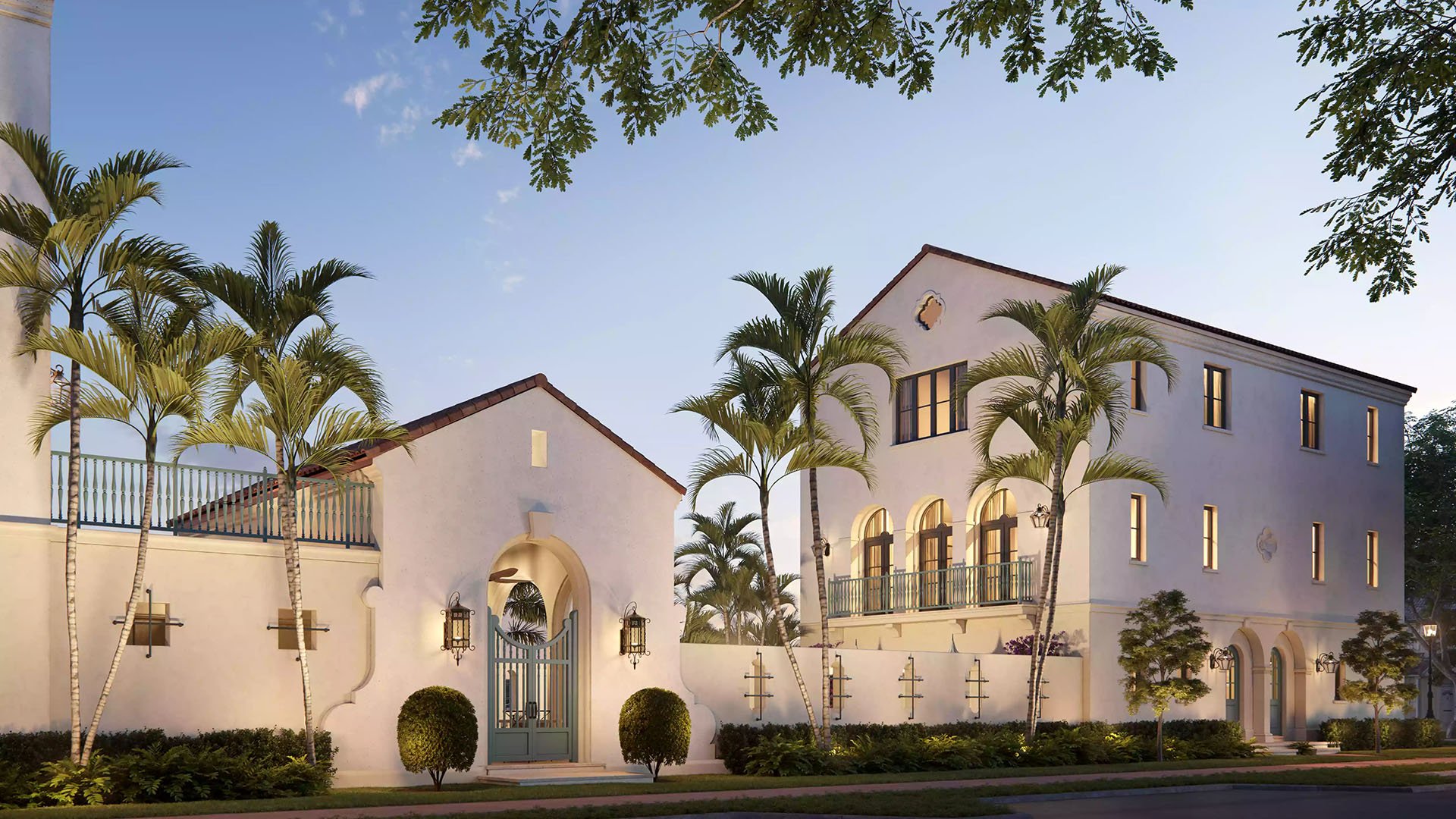
For many high-net-worth buyers considering South Florida, the conversation begins with a deceptively simple question: what could state-income-tax savings mean for the household? In Coral Gables, the answer is rarely treated as a standalone calculation. It becomes part of a broader decision involving residency, family rhythm, privacy, access, long-term ownership, and the intangible value of living somewhere composed rather than transactional.
The most sophisticated buyers do not ask whether a tax advantage alone justifies a purchase. They ask whether potential savings can support a move they would want to make anyway. That distinction matters. A residence in Coral Gables is not merely a line item in a tax strategy. It is a daily environment, a social geography, and often a statement of permanence.
This is why the Coral Gables buyer conversation has become more nuanced. The question is not simply, “Can we save?” It is, “If we reorganize our life around Florida, where would we actually want to live?”
Coral Gables tends to appeal to buyers who want South Florida without surrendering to spectacle. The city’s residential identity is measured, green, and architectural. It offers a different mood than the vertical energy of Brickell or the resort cadence of Miami Beach. For families, executives, founders, and internationally mobile buyers, that restraint can be central to the attraction.
When tax planning is on the table, the real estate brief often becomes more personal. A buyer may be comparing a primary residence, a seasonal base, or a future legacy property. The eventual choice must withstand more than an accountant’s spreadsheet. It must work on a Monday morning, during school weeks, after late flights, and in the quieter months when the novelty of relocation has faded.
That is where projects such as The Village at Coral Gables enter the discussion for buyers who want a residential setting with a sense of neighborhood continuity. Others may look toward Ponce Park Coral Gables when the priority is to remain closely connected to the city’s core while preserving a refined residential tone.
A property purchase does not, by itself, resolve a residency question. Serious buyers understand this, which is why the real estate search often runs in parallel with legal, tax, and estate planning conversations. The home becomes one component in a larger pattern of life. Where will the family spend meaningful time? Where are personal effects kept? Where do business routines, charitable relationships, medical care, and daily habits point?
The best real estate decisions anticipate those questions before a contract is signed. A house or residence should support the intended residency narrative rather than complicate it. If a buyer is pursuing a more Florida-centered life, the property must be easy to use, not merely impressive to own.
This is especially important for families with multiple homes. A Coral Gables residence may need to serve as a primary base, a school-year address, a multigenerational gathering place, or a quieter alternative to denser urban living. Each use case calls for a different property lens.
Potential state-income-tax savings can influence how buyers think about budget, but not always in the obvious way. Some buyers increase their purchase range because the broader financial picture allows it. Others keep the purchase disciplined and view the savings as a cushion for lifestyle, maintenance, philanthropy, travel, or portfolio flexibility.
In the ultra-premium market, the most durable decisions are rarely driven by maximum affordability. They are driven by fit. A buyer may be able to spend more and still choose not to. The right Coral Gables property balances privacy, convenience, design, liquidity, and emotional conviction.
Investment thinking also becomes more refined. Investment is not only about future resale. It is about utility, scarcity of personal fit, and the cost of choosing the wrong base. A residence that is used often, enjoyed consistently, and aligned with a family’s long-term plans can have value beyond conventional metrics.
Coral Gables is often considered alongside Coconut Grove, Brickell, Miami Beach, and waterfront enclaves across Miami-Dade. Each market answers a different version of the relocation question. Brickell can suit buyers who want immediacy, services, and a metropolitan daily pattern. Coconut Grove may appeal to those drawn to mature landscaping, bay proximity, and a village-like atmosphere. Miami Beach and the oceanfront corridor offer a more resort-oriented rhythm.
For a buyer comparing Coral Gables with the Grove, a project such as Four Seasons Residences Coconut Grove may represent a different lifestyle proposition, one that still feels residential but is shaped by another neighborhood’s cadence. For those who want urban proximity and a more vertical environment, St. Regis® Residences Brickell can help frame the contrast between city-center living and the quieter elegance of Coral Gables.
The right answer depends on how the buyer intends to live after the tax conversation is complete. A spreadsheet can identify a financial incentive. It cannot determine whether a family prefers a garden, a private elevator, a club-like condominium, or a street where the evening feels calm.
Before buying in Coral Gables for reasons that include potential tax savings, buyers should pressure-test the practicalities. How often will the residence be occupied? Which airport, school, office, club, or cultural routine matters most? Will guests visit frequently? Is lock-and-leave convenience important, or does the family want the privacy and responsibility of a larger home?
The answers should shape the search. Some buyers gravitate to boutique residences such as Cora Merrick Park because they want a more contained ownership experience. Others prefer single-family privacy, more outdoor space, or a property that can evolve with children and extended family.
The tax discussion may determine urgency, but lifestyle should determine product type. That is the discipline. A buyer who understands both sides is less likely to confuse a financial advantage with a suitable home.
Tax-motivated relocations can be sensitive. They may involve business interests, family transitions, school calendars, estate planning, and the sale or retention of homes elsewhere. In this context, discretion is not simply a luxury preference. It is a practical requirement.
The strongest purchase process is coordinated but quiet. Advisors should be aligned early, financing or liquidity should be clear, and the buyer’s non-negotiables should be defined before the search becomes public. In Coral Gables, where many of the best opportunities may require patience, preparedness can matter as much as speed.
A measured approach also protects the buyer from overreacting to the tax premise. If the numbers are compelling, they will remain part of the case. But the home still needs to satisfy the lived reality of relocation.
For the ultra-premium buyer, state-income-tax savings can be a catalyst. It can accelerate a conversation already forming around weather, family, business flexibility, privacy, and quality of life. But in Coral Gables, the final decision is rarely about tax alone.
It is about whether the buyer can imagine a more complete life in South Florida. It is about whether the residence supports that life elegantly. It is about whether the financial logic and the emotional logic point in the same direction.
When they do, Coral Gables becomes more than a tax-efficient address. It becomes a place to settle into, return to, and perhaps keep for the next generation.
Does state-income-tax planning usually drive the entire Coral Gables purchase decision? No. For sophisticated buyers, it is usually one important factor within a larger lifestyle, residency, and wealth-planning discussion.
Should I buy before speaking with tax and legal advisors? No. Buyers should coordinate advice before committing so the property supports, rather than conflicts with, the intended residency plan.
Can a Coral Gables home help support a Florida-centered lifestyle? It can, if the home is used consistently and fits the buyer’s family, work, school, and social routines.
Is a condominium or single-family home better for tax-motivated buyers? Neither is automatically better. The right choice depends on privacy needs, maintenance preferences, travel patterns, and how the residence will be used.
How should buyers think about budget if tax savings are part of the plan? Budget should remain disciplined. Potential savings may improve flexibility, but they should not replace careful property selection.
Why do some buyers choose Coral Gables over Brickell? Coral Gables may appeal to buyers seeking a quieter residential environment, while Brickell may suit those wanting a more urban daily rhythm.
Is Coral Gables suitable for long-term ownership? It can be, especially for buyers who value neighborhood continuity, privacy, and a residential setting that can support changing family needs.
What should relocating families evaluate first? They should evaluate daily routines, school or office access, travel habits, household staffing, and how often the home will be occupied.
Can a tax-focused move still be emotionally led? Yes. The strongest decisions usually combine financial logic with a genuine desire to live in the chosen place.
What is the main risk of buying only for tax reasons? The risk is choosing a property that makes financial sense on paper but does not support the buyer’s actual life.
For a confidential assessment and a building-by-building shortlist, connect with MILLION.
If branded residences are on your mind — as a home or as an allocation — we would be glad to share what we are seeing, privately.
Begin a quiet conversation