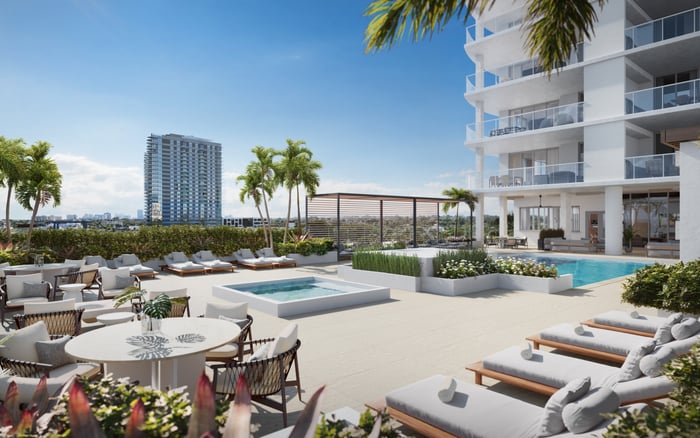
For affluent buyers comparing West Palm Beach and Boca Raton, special-assessment culture is no longer a back-office concern. It shapes how a residence feels to own, how boards communicate, and how confidently buyers underwrite long-term carrying costs.

For years, buyers comparing West Palm Beach and Boca Raton began with lifestyle. West Palm Beach offered a more urban rhythm, with restaurants, cultural energy, waterfront towers, and proximity to Palm Beach. Boca Raton offered a composed residential cadence, with private clubs, polished streetscapes, and the sense of order that many families and seasonal owners prize.
That comparison still matters. Yet today, a more discreet question often determines the better fit: how does each ownership environment handle future capital needs? Special assessments are not merely surprise invoices. They reveal a building’s culture around reserves, transparency, long-term planning, and board discipline. For a luxury buyer, that culture can be as consequential as the view.
The question is not whether one city is inherently safer than the other. It is whether a buyer prefers the energy and renewal of West Palm Beach, where the conversation may center on vertical growth and fresh inventory, or the established residential character of Boca Raton, where the conversation may center on continuity, governance, and predictable stewardship.
West Palm Beach has become a serious consideration for buyers who once looked almost exclusively at Palm Beach, Boca Raton, or coastal Miami. Its appeal is clear: walkability, waterfront living, new restaurants, private-club proximity, and a downtown environment that feels increasingly complete. But momentum also sharpens the questions buyers should ask.
In a fast-evolving market, buyers are often drawn to newer or recently planned residences because they appear to offer cleaner capital stories. Projects such as Alba West Palm Beach speak to that preference for contemporary design, fresh systems, and an ownership experience that begins with fewer legacy unknowns. Nearby, Forté on Flagler West Palm Beach gives buyers another lens on how waterfront living is being reframed for a more discerning Palm Beach County audience.
Still, newer does not mean automatic. Buyers should examine the budget philosophy, reserve posture, insurance discussion, and how the association expects to fund future maintenance. The best West Palm Beach purchase is not simply the most glamorous residence. It is the one where the financial architecture feels as considered as the interior architecture.
For those searching West Palm Beach, the cultural distinction is often pace. West Palm Beach can reward buyers comfortable with change, growth, and a more visible public realm. The assessment conversation therefore becomes a filter: does the building have the discipline to manage that future gracefully?
Boca Raton attracts a different kind of scrutiny. Buyers here are often less interested in being early to an emerging district and more interested in a residential environment that feels settled. Boca’s appeal is not only aesthetic. It is psychological. The city suggests control, routine, manicured privacy, and a slower tempo of decision-making.
That does not remove assessment risk. In fact, established markets can make the governance conversation more important. Older buildings, mature communities, and long-standing ownership groups may have deeply ingrained habits. Some associations may favor gradual maintenance and clear funding plans. Others may defer until a larger decision becomes unavoidable. The buyer’s task is to determine which culture is in place before contract terms harden.
Newer Boca offerings give buyers another route. Alina Residences Boca Raton reflects the appeal of a refined residential setting with contemporary expectations. Glass House Boca Raton brings the discussion closer to boutique, design-forward ownership, where buyers may focus as much on governance scale as on finish level. For some, The Residences at Mandarin Oriental Boca Raton adds the appeal of branded residential service to the evaluation.
For buyers searching Boca Raton, the decision is often about predictability. The city can feel more residentially insulated than West Palm Beach, but insulation is not immunity. A calm building can still carry a demanding capital plan. A prestigious address can still require rigorous review.
Special-assessment culture is best understood through conversation, not documents alone. The documents matter: budgets, minutes, reserve materials, insurance information, engineering-related correspondence, and recent owner communications. But a buyer should also listen for tone.
Does the board communicate early, or only when a project has become urgent? Are owners accustomed to periodic capital planning, or do assessments arrive as emotional surprises? Is the building proud of its maintenance discipline, or defensive when asked about it? Does management explain the relationship between monthly dues, reserves, and possible future work in plain language?
Luxury buyers should also ask how prior assessments, if any, were received. The number itself is less revealing than the process. A well-explained assessment for a clearly defined capital need can be healthier than artificially low dues paired with avoidance. In premium buildings, financial elegance often means fewer surprises, not lower carrying costs.
This is where West Palm Beach and Boca Raton differ less by geography than by temperament. West Palm Beach may ask buyers to underwrite growth and change. Boca may ask buyers to underwrite established expectations and legacy governance. Both can be excellent. Both require sophistication.
A seasonal owner may prefer Boca Raton if the priority is a controlled arrival experience, a familiar residential rhythm, and a building culture that prizes calm administration. That buyer should still review meeting history and reserve planning, but the lifestyle thesis may be straightforward: ease, polish, and continuity.
A buyer who wants dining, walkability, and proximity to Palm Beach without crossing into Palm Beach pricing may find West Palm Beach more compelling. In that case, the ownership question becomes whether the building’s association is prepared for the expectations that accompany a more urban luxury market. The better buildings treat operations as part of the amenity package.
A long-term investor or future resale-minded owner should be particularly sensitive to assessment narratives. Buyers in the next cycle may ask sharper questions than buyers in the last one. A residence with a transparent, well-governed ownership story can become easier to explain. A residence with vague answers may require a discount, even if the lobby is flawless.
New construction does not eliminate due diligence, but it can simplify it. With newer residences, buyers often review a shorter ownership history, more current systems, and governing documents designed for contemporary expectations. That can be especially appealing to buyers who do not want to inherit decades of deferred conversations.
Even so, luxury buyers should resist treating newness as a substitute for governance. The most important issue is whether the building has a credible plan for the first decade of ownership and beyond. How will reserves be funded? How are service levels budgeted? What assumptions sit behind the monthly carrying costs? Are amenities priced realistically, or used as a sales presentation that future owners must reconcile?
In West Palm Beach, this makes newer residences part of a broader urban-luxury thesis. In Boca Raton, it can offer a modern counterpoint to the city’s established residential character. In both cases, the best choice is the one where design, lifestyle, and financial stewardship point in the same direction.
The West Palm Beach versus Boca Raton decision is no longer only a question of personality. It is a question of ownership culture. West Palm Beach may suit buyers who want energy, access, and a rising urban profile, provided the building’s financial governance is equally ambitious. Boca Raton may suit buyers who value composure, privacy, and residential predictability, provided the association’s capital planning is as polished as the setting.
Special assessments should not frighten sophisticated buyers. They should focus them. In a luxury purchase, the most beautiful residence is not always the most secure ownership experience. The stronger choice is the one where the buyer understands not only what the home costs today, but how the building intends to care for itself tomorrow.
Do special assessments matter more in West Palm Beach or Boca Raton? They matter in both markets. The right question is how each building plans, communicates, and funds capital needs.
Should I avoid a building that has had a special assessment? Not automatically. A clear, well-managed assessment can be preferable to deferred maintenance with vague answers.
Are newer condos less likely to face assessments? Newer buildings may have fewer legacy issues, but buyers still need to review budgets, reserves, and governance documents.
What should I ask before making an offer? Ask about reserves, insurance, capital projects, board minutes, recent owner communications, and any pending work.
Is West Palm Beach better for resale-minded buyers? It can be compelling for buyers who value urban momentum, but resale strength also depends on building-level governance.
Is Boca Raton better for buyers seeking predictability? Often, Boca appeals to buyers who want a calmer residential rhythm, but every association still requires close review.
Can high monthly dues be a positive signal? Sometimes. Higher dues may reflect realistic funding, while unusually low dues may warrant deeper questions.
How do branded residences affect assessment concerns? Branding can clarify service expectations, but it does not replace careful review of association finances and obligations.
Should cash buyers care as much as financed buyers? Yes. Assessment culture affects liquidity, resale perception, and the long-term ownership experience regardless of financing.
What is the best way to shortlist comparable options for touring? Start with location fit, delivery status, and daily lifestyle priorities, then compare stacks and elevations to validate views and privacy.
For a discreet conversation and a curated building-by-building shortlist, connect with MILLION.
If branded residences are on your mind — as a home or as an allocation — we would be glad to share what we are seeing, privately.
Begin a quiet conversation