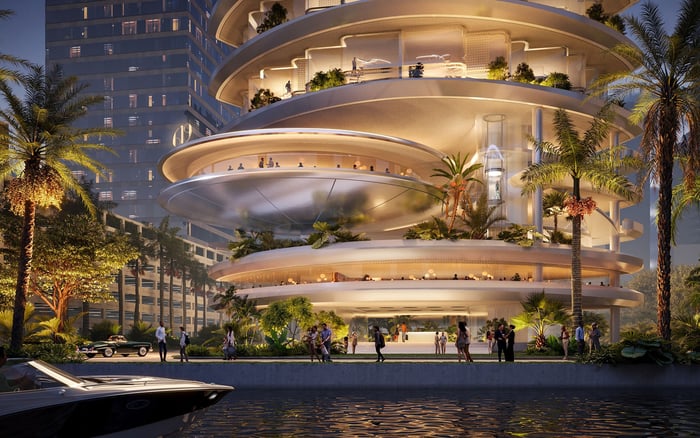
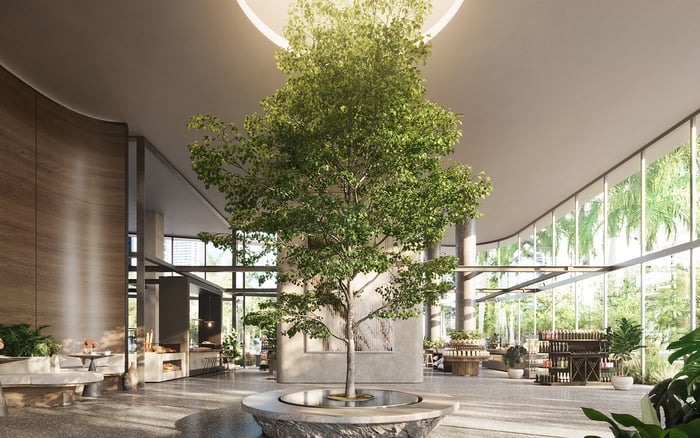
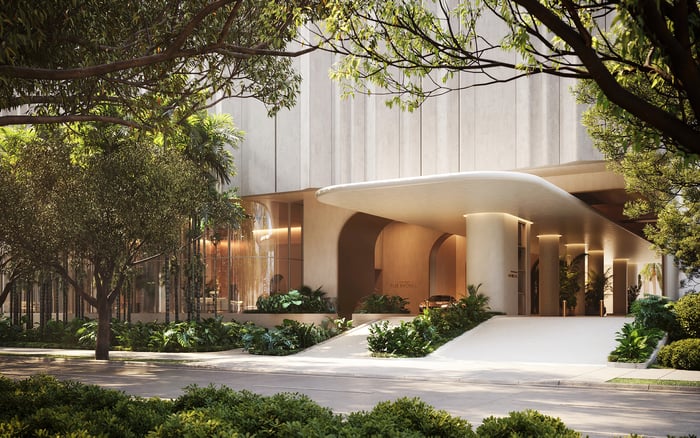
ORA by Casa Tua Brickell reframes the branded residence as a vertical village, pairing hospitality, dining, art, and social programming with the privacy and controlled access expected by luxury buyers in Brickell.
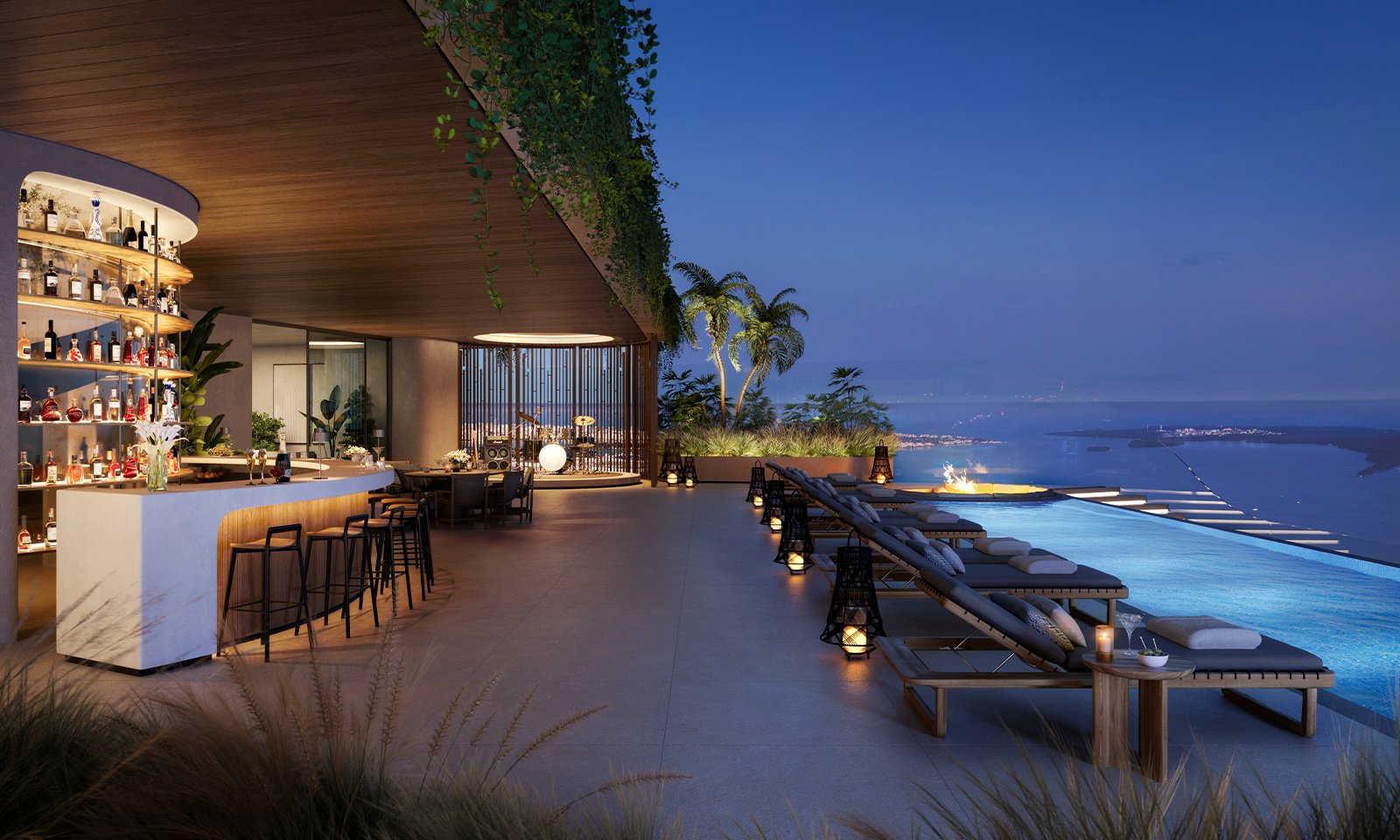
Brickell has become one of South Florida’s clearest tests of whether urban luxury can feel both culturally connected and personally protected. The neighborhood’s identity is no longer defined only by finance, office towers, and weekday momentum. It now sits inside a denser luxury-lifestyle conversation, where buyers want energy close at hand while still expecting the discretion of a private residential address.
That is where ORA by Casa Tua Brickell becomes especially relevant. The project is not positioned as a conventional standalone condominium tower. It is framed around the idea of a vertical village: a layered environment where residential living, hospitality, dining, art, and social programming coexist inside a controlled building ecosystem.
For luxury buyers, that distinction matters. Cultural access is often associated with leaving home, crossing the city, securing a table, finding the right room, and deciding how public the evening should become. ORA proposes a different model: social and cultural engagement within the residential environment itself, shaped by a hospitality brand known for curation and atmosphere.
The phrase vertical village may sound social first, but at ORA it also functions as a privacy strategy. Instead of sending residents outward for every meaningful experience, the building concept draws selected elements inward. Dining, art, hospitality, and programming become part of the everyday residential setting, without erasing the need for boundaries.
The key is control. ORA’s cultural-access proposition is paired with an emphasis on privacy, discretion, and controlled resident access. That combination separates the model from a purely public lifestyle venue. The aim is not simply to create more activity. It is to curate activity within a framework that still treats residential privacy as a core luxury value.
This is an important nuance for Brickell. Buyers drawn to the neighborhood may want proximity to restaurants, social rooms, galleries, events, and waterfront-adjacent urban life, but they are not necessarily seeking constant exposure. ORA’s appeal rests on that tension. It speaks to buyers who want the city’s cultural charge without surrendering the composure of a high-end home.
Casa Tua’s identity is central to ORA’s positioning. The brand gives the project a hospitality-driven, culturally curated angle, increasingly valuable in a market where many towers can offer beautiful residences, service, views, and amenities. The differentiator is less about adding another feature and more about creating a recognizable mood.
In Branded Residences, the most persuasive brands do not merely lend a name. They shape expectations around taste, service, atmosphere, and social rhythm. ORA uses Casa Tua as a cultural signal, positioning the residence as a place where hospitality is embedded into the lifestyle rather than separated from it.
That helps explain why ORA belongs in the same broader Brickell discussion as Cipriani Residences Brickell and Baccarat Residences Brickell. Each project reflects the larger South Florida movement toward experience-rich, hospitality-led residential living. ORA’s specific contribution is the Casa Tua lens, with culture and curated experiences foregrounded as part of the building’s core identity.
The strongest luxury buildings in urban locations increasingly understand that access alone is not enough. A resident can live near everything and still find the experience fragmented, too public, or too dependent on outside venues. ORA’s concept addresses this by positioning social and cultural life as something that can be programmed within the building environment.
That does not mean the residence becomes a stage. In fact, the opposite is the more interesting reading. ORA’s promise is strongest when understood as selective access. Residents can participate in dining, hospitality, art, and social programming while retaining the ability to withdraw into a private residential world. The building is meant to offer layers, not one continuous public condition.
This is especially relevant for buyers who divide time between cities, entertain selectively, or prefer culturally fluent spaces that do not require constant planning. A building with a curated social atmosphere can reduce friction. It can make a weekday dinner, a hosted conversation, or a quiet encounter with art feel close, familiar, and discreet.
Brickell luxury buyers are not all seeking the same version of privacy. Some prioritize quiet, elevated residences with a more traditional amenity structure. Others want brand affiliation, service language, and a clear lifestyle identity. ORA falls into the latter category, but with a nuanced promise: it is social, yet not indiscriminate.
That places it in conversation with other Brickell projects that speak to sophisticated urban buyers, including St. Regis® Residences Brickell and 888 Brickell by Dolce & Gabbana. The shared backdrop is Brickell’s evolution into a dense luxury lifestyle neighborhood, but ORA’s angle is particularly tied to cultural programming and hospitality as daily residential infrastructure.
For a buyer comparing these addresses, the question is not only which building has the most impressive amenity package. It is which lifestyle feels most natural. ORA asks whether the buyer wants a residential world where dining, art, and social connection are part of the organizing idea, not merely features placed around the edges.
Design & Architecture in this category is not just about form. It is about choreography: how residents move between home, hospitality, dining, social space, and retreat. ORA’s vertical village model suggests that these experiences are intentionally layered. The building concept depends on transitions, from public-facing energy to controlled resident access, from social rooms to private residences, from cultural engagement to calm.
This choreography is central to the Lifestyle value of the project. Luxury is not only what is offered, but how easily it can be accessed and how elegantly it can be avoided when desired. ORA’s relevance comes from treating both impulses as legitimate. Residents can engage without overexposure, and retreat without feeling disconnected from the urban life that drew them to Brickell.
For New-construction buyers, that balance is increasingly important. A residence is judged not just by finishes or services, but by whether its entire ecosystem reflects the way affluent residents actually live: mobile, selective, social when they choose, private when they do not.
ORA is likely to resonate with buyers who see culture as part of daily life rather than a scheduled luxury. They may value restaurants, art, conversation, hospitality, and the subtle prestige of a well-curated room. At the same time, they do not want the residential experience to feel porous or overly exposed.
That buyer is not simply purchasing access to Brickell. They are purchasing a filtered version of access. The Casa Tua association gives ORA a differentiated identity in a crowded branded-residence and luxury-condo market, but the deeper value is the proposition behind it: a home that connects to cultural energy while maintaining the discipline of privacy.
In that sense, ORA by Casa Tua Brickell is less about choosing between city life and retreat. It is about making both possible in the same address, with enough curation to make the public feel personal and enough discretion to make the personal feel protected.
What is ORA by Casa Tua Brickell? ORA by Casa Tua Brickell is a branded residential project in Miami’s Brickell neighborhood with a hospitality-driven identity.
Why is ORA described as a vertical village? It is framed as a layered building concept where residences, hospitality, dining, art, and social programming coexist.
How does ORA approach cultural access? ORA foregrounds culture and curated experiences as part of its core residential identity, rather than treating them as secondary amenities.
Does ORA emphasize privacy? Yes. Its cultural-access proposition is paired with discretion, privacy, and controlled resident access.
Who is the likely ORA buyer? The project speaks to luxury buyers who want urban cultural engagement without giving up the privacy expected in high-end residential settings.
How does Casa Tua influence the project? Casa Tua gives ORA a hospitality-led, culturally curated positioning that helps distinguish it in Brickell.
Is ORA part of the Branded Residences trend? Yes. ORA fits the broader South Florida movement toward experience-rich, hospitality-led Branded Residences.
Why is Brickell important to ORA’s positioning? Brickell’s shift into a dense luxury lifestyle neighborhood makes ORA’s mix of culture, service, and privacy especially relevant.
Is ORA only about amenities? No. ORA presents cultural programming, dining, hospitality, and art as part of the building’s central concept.
What is the best way to shortlist comparable options for touring? Start with location fit, delivery status, and daily lifestyle priorities, then compare stacks and elevations to validate views and privacy.
If you'd like a private walkthrough and a curated shortlist, connect with MILLION.
If branded residences are on your mind — as a home or as an allocation — we would be glad to share what we are seeing, privately.
Begin a quiet conversation