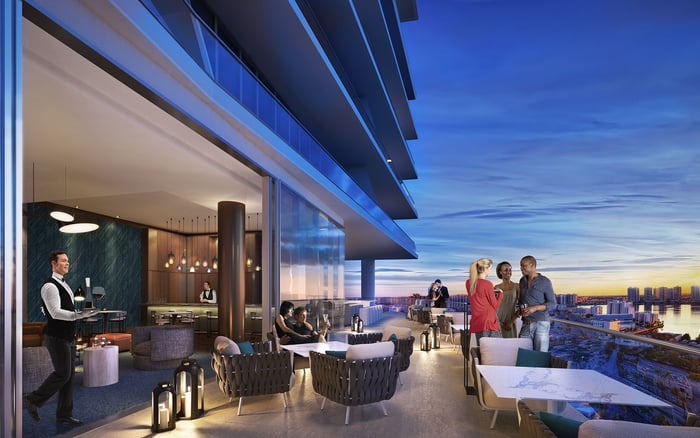
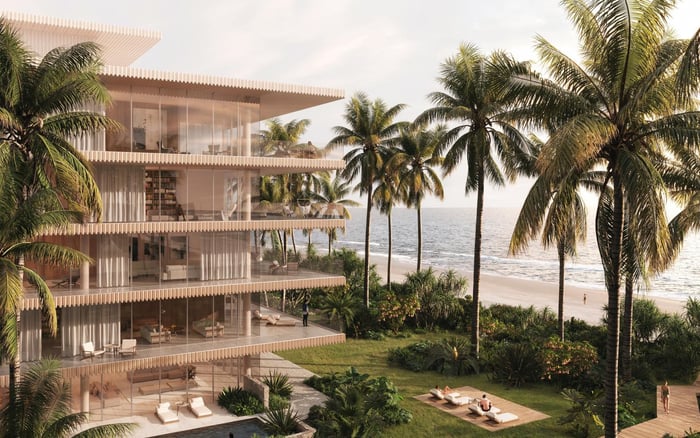
For privacy-minded buyers, the decisive distinction is not branding but circulation: who enters, where vehicles queue, how guests arrive, and whether residential life remains separate from hospitality activity.
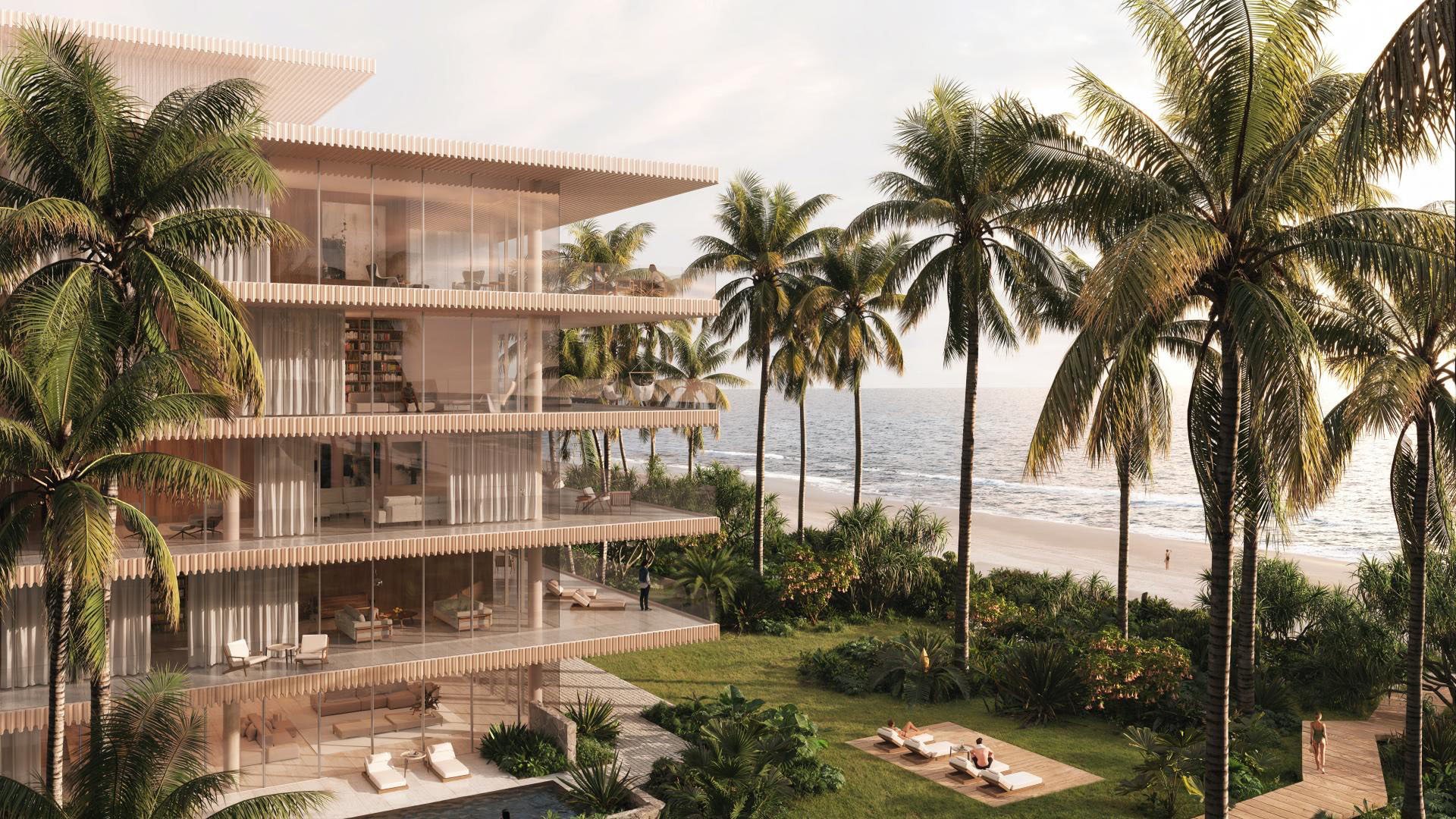
For buyers whose South Florida calendar revolves around private dinners, club engagements, cultural evenings, and frequent houseguests, privacy is not an abstract promise. It is a sequence of daily movements: where the car pauses, who shares the lobby, how visitors are received, and whether a resident can reach an amenity without entering a public-facing environment.
That distinction becomes especially important when evaluating residences associated with hospitality. A celebrated name may imply polish and service, but it does not, by itself, explain circulation. Buyers focused on avoiding hotel traffic should look beyond the brand story and study the property’s choreography. The most persuasive luxury proposition is often the one that makes discretion feel effortless.
This is a lifestyle decision as much as a real-estate decision. Private-club season simply sharpens the lens, revealing whether a home can remain composed when the owner’s social calendar is most active.
“Hotel traffic” can mean several things. One buyer may wish to avoid public lobby activity. Another may be comfortable with a shared address but unwilling to share elevators, porte-cochère space, amenity routes, or guest reception. A third may care primarily about event arrivals and the visibility they create around the entrance.
Before touring, buyers should define their threshold. Is the goal complete residential separation, limited overlap, or simply a predictable arrival? Then divide the property into practical zones: vehicle approach, valet or garage access, lobby, elevators, amenities, service areas, and guest path. Evaluate privacy at every transition rather than inferring it from a single private entrance.
Timing matters, too. A serene midday presentation may not reveal how arrival feels when multiple residents are hosting. A second visit at the hour the buyer expects to use the home can expose operational friction that finishes and views cannot offset.
In Miami Beach, the threshold between home and destination deserves close attention. Buyers often want proximity to dining, culture, and social life while preserving a distinctly residential return. That makes the first few minutes of arrival particularly consequential.
A residence such as The Perigon Miami Beach can serve as a useful comparison point when assessing how an ocean-oriented address fits a privacy brief. The purpose is not to rely on category or image, but to examine the actual route from street to residence and the degree of control it affords.
Tour with real scenarios in mind. Where does a driver wait? How is an unaccompanied guest received? Can family members enter without crossing an active social space? Does the route home feel residential at every step? These questions turn discretion from an aesthetic preference into a testable condition.
Brickell buyers may value immediate access to an urban schedule, but convenience should not require constant exposure. In a vertically organized residence, privacy depends on disciplined transitions between curb, parking, lobby, elevator, and home.
When comparing an option such as The Residences at 1428 Brickell, buyers should map those transitions rather than focus solely on the residence. The most important detail may be encountered before the front door: a protected drop-off, a clear guest protocol, or an elevator journey with limited ambiguity.
This is also where branded residences require careful reading. Branding and hotel operation are not interchangeable. A buyer should determine which services are residential, which spaces are shared, and which parts of the experience depend on public activity. The objective is not to reject hospitality, but to secure service without surrendering calm.
Palm Beach buyers can apply the same framework, even when the desired atmosphere differs from Miami. A property’s sense of reserve should be confirmed through access, staffing, visitor handling, and the relationship between residential and social spaces.
Palm Beach Residences offers a point of reference for buyers assembling a local comparison set. The useful exercise is to ask identical questions at every property. Consistency prevents architecture, branding, or presentation from obscuring the operating model.
For buyers considering a wider regional search, The Residences at Six Fisher Island can provide a Miami-area counterpoint. Comparing different residential contexts helps clarify whether the buyer values geographic seclusion, controlled building access, service depth, or some combination of the three.
Begin with a circulation diagram. Request a clear explanation of resident, guest, staff, delivery, and service routes. Note every point at which those paths intersect. If separation is central to the purchase decision, ask how it is maintained operationally, not merely how it appears on a plan.
Next, test the guest experience. A private home should allow visitors to arrive graciously without creating unnecessary visibility for the owner. Understand identification, waiting, parking, elevator access, and after-hours procedures. For households with staff or security, confirm how those teams coordinate with building personnel.
Finally, consider seasonality in personal terms. A second home used during the owner’s busiest social months may require a more rigorous privacy standard than an occasionally occupied pied-à-terre. The right residence is the one whose operations match the buyer’s actual pattern of use.
Privacy should also withstand ordinary complications: simultaneous arrivals, deliveries, maintenance visits, and hosted evenings. The strongest review is scenario-based. Walk through the property as an owner, guest, driver, and staff member. Luxury becomes credible when every route feels intentional.
What does hotel traffic avoidance mean for a luxury buyer? It means limiting unwanted overlap with public arrivals, shared lobbies, event guests, or hospitality operations.
Is a private entrance enough to ensure discretion? No. Buyers should also inspect vehicle access, elevators, amenities, guest routes, and service circulation.
Should buyers avoid all hospitality-associated residences? Not necessarily. The relevant issue is whether residential operations and public activity are separated to the buyer’s preferred degree.
How should a buyer evaluate arrival privacy? Visit at realistic hours and trace the complete route from the street or garage to the residence.
Why does private-club season influence the brief? A fuller social calendar can make guest handling, driver coordination, and discreet movement more important to daily life.
What should buyers ask about elevators? Ask who can access them, how guests are authorized, and whether residential and public routes intersect.
How can staff affect the privacy assessment? Household staff need practical access that remains coordinated with building security and service procedures.
Does a branded residence always operate like a hotel? No. Buyers should confirm the specific operating structure, shared spaces, and service model of each property.
What is the best way to compare Miami and Palm Beach? Apply the same circulation, access, guest, staffing, and amenity criteria to every residence.
Which privacy feature deserves the most attention? Focus on the complete operating sequence, since discretion can fail at any transition between arrival and home.
When you're ready to tour or underwrite the options, connect with MILLION.
If branded residences are on your mind — as a home or as an allocation — we would be glad to share what we are seeing, privately.
Begin a quiet conversation