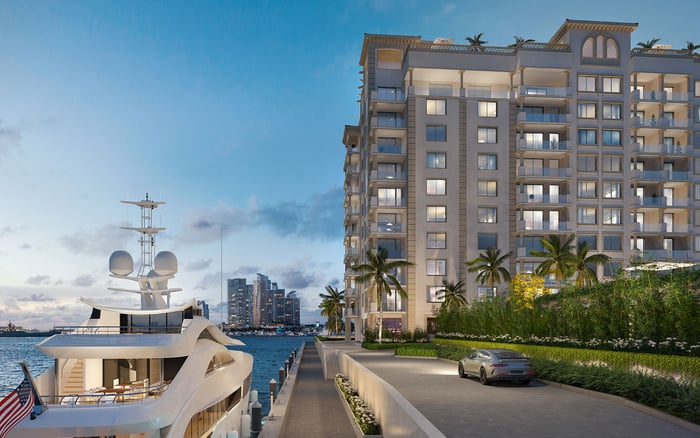
Miami’s private-club season can frame how seasonal buyers compare residences across Miami and Palm Beach. A disciplined search considers privacy, service, location, arrival logistics, and social routines without assuming that club proximity creates a price premium or guarantees membership.

For a seasonal buyer in South Florida, a residence can be evaluated as the base for an entire routine rather than as an isolated property. Private-club plans may affect preferred locations, transportation needs, entertaining patterns, and the balance between visibility and privacy.
That lifestyle context should inform a search without replacing property-level diligence. Club proximity alone does not establish value, secure access, or prove that a residence will suit the owner when social commitments are lighter.
A useful comparison begins with how the owner expects to arrive, depart, host guests, work, exercise, dine, and manage the home while away. Buyers can test routes at relevant times, examine the transition from vehicle to residence, and assess whether building operations support discreet and efficient use.
Service also merits close review. Staffing, security, maintenance, guest procedures, delivery handling, residence preparation, and absence management can materially affect the experience of a lock-and-leave home. These considerations should be evaluated through building documents, professional advice, and direct observation rather than assumptions about a brand or address.
Miami Beach and Brickell can support different seasonal routines. A buyer focused on Miami Beach may weigh waterfront orientation, privacy, and access to preferred social plans, while a Brickell buyer may prioritize an urban base and straightforward connections to business, dining, and private gatherings.
For a Miami Beach comparison, Shore Club Private Collections Miami Beach can be considered within the buyer’s broader review of residence design, service, and daily logistics. In Brickell, Cipriani Residences Brickell can be assessed against the same ownership criteria rather than on branding alone.
The objective is not to identify one universally superior setting. It is to determine which location and operating model best support the buyer’s particular schedule, privacy expectations, and pattern of use.
A Palm Beach search should likewise separate the residential decision from any private-club objective. Buyers should independently confirm membership requirements, availability, timing, and other relevant terms directly with the institution under consideration.
Palm Beach Residences may be included in a Palm Beach comparison focused on the home itself, its services, and its fit with the owner’s intended routine. The residence should remain compelling even if a preferred social arrangement changes or takes longer than expected.
Dining, wellness, guest plans, waterfront preferences, transportation, and household support can therefore be reviewed as distinct parts of the ownership strategy. This approach helps keep the property decision grounded in durable personal utility.
Before committing, buyers can visit a residence under conditions that resemble actual use and examine privacy from arrival through the front door. They can also review building governance, financial materials, insurance considerations, maintenance responsibilities, renovation rules, guest procedures, and the process for preparing the home before each stay.
Professional legal, tax, insurance, and property-management advice may be appropriate for the buyer’s circumstances. Any private-club application or membership decision should proceed through its own diligence process, separate from the real-estate transaction.
The strongest choice is the residence that supports the owner’s South Florida routine while remaining attractive on its own merits. Social access can be part of the lifestyle analysis, but it should not substitute for careful review of the property, building, and ownership structure.
How can private-club plans influence a seasonal-home search? They can help a buyer define preferred routes, privacy needs, entertaining patterns, and service expectations.
Does living near a private club guarantee access? No. Property ownership and club access should be treated as separate decisions requiring independent confirmation.
Should club proximity be treated as a guaranteed price premium? No. Buyers should not assign an unsupported premium and should instead assess the residence’s personal utility and underlying merits.
What should buyers compare between Miami Beach and Brickell? They can compare daily travel patterns, privacy, waterfront or urban preferences, building operations, and access to their intended activities.
How should a Palm Beach buyer approach club-related planning? The buyer should confirm membership matters directly with the relevant institution while evaluating the residence independently.
What matters for lock-and-leave ownership? Security, maintenance, guest procedures, delivery handling, absence management, and pre-arrival preparation all warrant review.
Why should buyers test transportation routes? Testing routes under realistic conditions can show whether a location supports the owner’s expected schedule and commitments.
Are branded residences automatically suitable for seasonal use? No. Buyers should verify the actual services, rules, privacy, costs, and operating model of each residence.
What professional advice may support a seasonal purchase? Depending on the buyer’s circumstances, legal, tax, insurance, and property-management guidance may be useful.
What is the central test for a seasonal residence? It should function well for the owner’s intended routine and remain compelling without relying on assumptions about social access.
For a confidential assessment and a building-by-building shortlist, connect with MILLION.
If branded residences are on your mind — as a home or as an allocation — we would be glad to share what we are seeing, privately.
Begin a quiet conversation