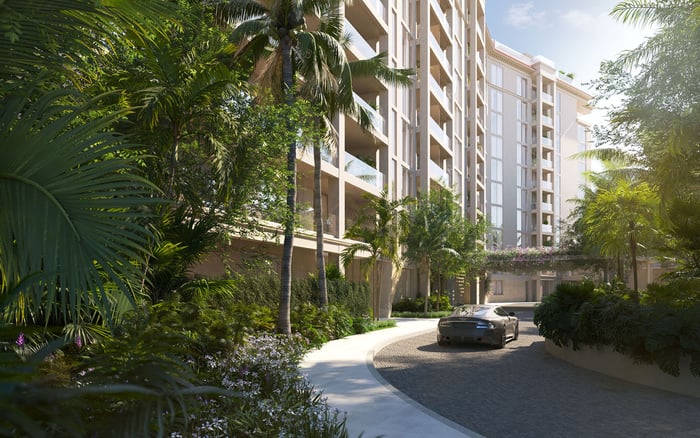
A primary-residence comparison of Miami Beach and Palm Beach should focus on how each candidate home supports privacy, school logistics, household staffing, guest access, and recurring service needs.

A primary home asks more of its location than a seasonal retreat. Privacy must work during ordinary routines, school access must remain practical across the family calendar, and residential service must support the household without adding unnecessary friction. For buyers comparing Miami Beach and Palm Beach, the useful question is not which destination carries greater prestige. It is which candidate residence best fits the way the family actually lives.
The comparison should begin with household patterns rather than broad market assumptions. Buyers can map who enters and leaves each day, which trips recur, what support the home requires, and where delays or shared access could become inconvenient. The same residence may feel exceptionally private to one owner and overly complicated to another.
For a primary residence, privacy is valuable only when it works with the household's daily rhythm.
Privacy can mean physical separation, controlled circulation, discreet service, limited shared space, or direct authority over the residence. A detached home may appeal to a buyer who wants greater control over the property and its routines. A managed condominium may suit an owner who prefers more of the arrival and service process to occur within a professionally operated residential setting.
Neither structure should be treated as automatically superior. Estate living can provide autonomy, but the household may need to coordinate employees, vendors, deliveries, maintenance, and guests directly. Managed living may consolidate some of those functions, although residents should understand every shared threshold and applicable operating procedure before deciding whether the arrangement fits their expectations.
In Miami Beach, buyers exploring managed residences can begin property-specific diligence with The Ritz-Carlton Residences® Miami Beach and The Perigon Miami Beach. These links are starting points for comparison, not substitutes for confirming current access, staffing, parking, guest, delivery, and service arrangements directly.
A privacy review should follow the full path from the public realm to the interior of the home. For a detached residence, that can include the neighborhood approach, property entrance, driveway, parking position, primary doorway, service entry, and outdoor areas. For a condominium, the review can include vehicle arrival, valet or parking circulation, lobby access, elevators, residential corridors, service routes, and the final private threshold.
Buyers should repeat the exercise for each person who regularly uses the home. Children, caregivers, household employees, drivers, guests, maintenance teams, and delivery personnel may follow different paths. A system that feels seamless for the owner may be less practical for the people supporting the household.
The same analysis should cover irregular situations. Consider late arrivals, simultaneous guests, vendor appointments, large deliveries, temporary staff, and periods when the owner is away. Privacy is not only about limiting access; it is also about making authorized access predictable and discreet.
For buyers considering an island setting, The Residences at Six Fisher Island can be evaluated through this same operational lens. The essential task is to verify how the property's current access model works with school mornings, employee schedules, visitors, appointments, and recurring household needs.
School access is too consequential to reduce to a neighborhood label or a single map estimate. The intended campus, academic calendar, activity schedule, household drivers, and exact candidate address all affect the plan. Buyers should test the morning departure, afternoon return, extracurricular trips, and at least one backup scenario.
A useful review begins by listing every recurring school-related movement during a typical week. If children attend different campuses or maintain separate activity schedules, overlapping trips should be considered. The plan should also account for caregivers, backup drivers, vehicle availability, weather, appointments, and changes to the household routine.
Privacy and school convenience can also pull in different directions. An arrival sequence that supports separation may introduce additional steps into each departure. A centrally managed residence may streamline some aspects of vehicle or visitor coordination, but buyers should verify the actual process at the property rather than assume how it works.
The objective is not to identify a theoretically perfect route. It is to determine whether the complete system remains workable when the day is busy, plans change, or more than one family member needs transportation at the same time.
Primary-residence service is broader than hospitality. It includes the recurring procedures that keep the household functioning: admitting approved visitors, receiving packages, coordinating vendors, handling maintenance, managing parking, supporting employees, and responding when the owner is unavailable.
A buyer should identify which responsibilities remain with the household and which, if any, are handled by the property. Those boundaries should be confirmed directly. The review can cover staffing scope, hours, visitor procedures, delivery handling, vendor requirements, parking routines, service circulation, emergency contacts, and after-hours response.
The preferred balance depends on how the owner lives. A household that entertains frequently may prioritize guest processing and discreet service movement. A family with domestic staff may focus on predictable entry procedures and practical work areas. An owner who travels often may place greater value on reliable oversight while away. Another buyer may prefer to retain direct control rather than rely on a shared operating structure.
In Palm Beach, Palm Beach Residences can be assessed against that household-specific checklist. Buyers should confirm how the residence currently addresses access, guests, deliveries, employees, parking, maintenance, and absences before judging whether its service structure matches full-time use.
A disciplined comparison applies the same questions to every candidate in both markets. Start with privacy: identify who controls each threshold, where circulation is shared, and how the home handles authorized access. Continue with education: test the intended school plan using realistic weekly schedules and backup arrangements. Finish with service: assign responsibility for every routine task and identify potential points of friction.
A written scorecard can help keep the decision grounded. Buyers may rate each property for owner arrival, child and caregiver circulation, employee access, guest handling, deliveries, vendor coordination, parking, time away, and school-day resilience. The ratings should reflect verified property details and the family's own priorities rather than generalized expectations about Miami Beach or Palm Beach.
Trade-offs should be made explicit. More household control may require more direct management. A larger service layer may reduce certain tasks while introducing procedures the owner must accept. Greater separation can support privacy while affecting routine travel. The right answer is the configuration whose compromises feel sustainable throughout the year.
Before making a decision, buyers should walk through a normal weekday from the first departure to the last arrival. They should then repeat the exercise for a busy evening, a weekend with guests, a maintenance appointment, and a period when the owner is traveling. This reveals whether privacy, school access, and service reinforce one another or compete for attention.
The strongest primary residence is not simply the most secluded or the most heavily serviced. It is the home whose access, education plan, staffing requirements, and daily procedures align with the household's actual rhythm. For confidential guidance on South Florida's finest residences, connect with MILLION.
If branded residences are on your mind — as a home or as an allocation — we would be glad to share what we are seeing, privately.
Begin a quiet conversationBegin with the household's daily routine and define what privacy, school access, and residential service need to accomplish.
No. Estates and managed residences organize control, access, and service differently, so the better fit depends on the household.
Trace the route from the public approach to the private interior for owners, children, employees, guests, vendors, and deliveries.
The candidate address, intended campus, schedules, drivers, activities, and backup routes all affect daily practicality.
Model morning departures, afternoon returns, extracurricular trips, overlapping schedules, and at least one backup plan.
Review visitor admission, deliveries, vendor access, maintenance coordination, employee procedures, parking, and after-hours response.
Owners who travel often should determine how the home is monitored, maintained, and accessed by authorized people during an absence.
They should confirm entry procedures, parking, service circulation, schedules, work areas, and vendor coordination at each property.
Apply the same household-specific checklist to each candidate and rely on verified property details rather than broad assumptions.
A suitable home aligns privacy, school logistics, staffing, guests, maintenance, and recurring service with the household's normal rhythm.