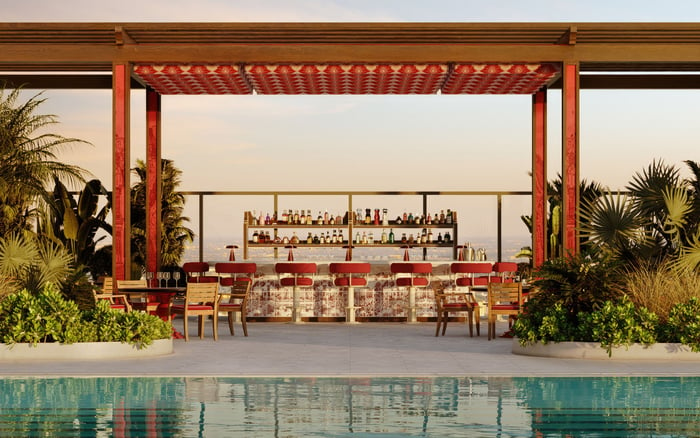
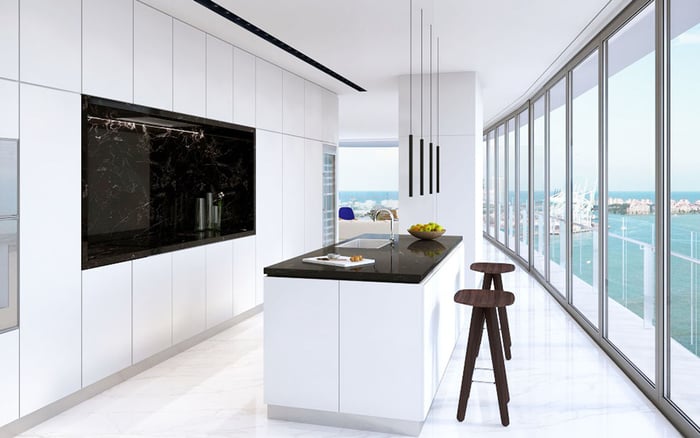
The Miami International Boat Show offers South Florida luxury-home buyers a useful lens for assessing guest registration, layered security, and circulation through shared residential spaces.
The Miami International Boat Show can give luxury real estate buyers a useful way to think about how complex destinations receive and guide guests. Registration, security, and movement are not merely operational details. Together, they influence first impressions, privacy, and the sense of calm that distinguishes a well-managed environment.
That perspective is particularly relevant when evaluating South Florida waterfront residences. A property may feel serene during a private appointment, but a more complete picture emerges when residents, invited guests, drivers, vendors, and service personnel use shared areas at overlapping times. Buyers can therefore look beyond finishes and consider how the entire arrival sequence performs under ordinary pressure.
The most persuasive welcome is one in which control feels considered rather than conspicuous.
A thoughtful guest experience starts before someone reaches the entrance. Buyers should consider whether hosts have a clear way to authorize visitors, whether guests receive practical arrival instructions, and whether the reception or security team has the information needed to complete the welcome efficiently.
The distinction between invitation and authorization is important. Social recognition establishes that a guest is expected, while access authorization allows the property team to manage entry. A well-designed process connects those functions without forcing residents or visitors to repeat the same information at multiple checkpoints.
Technology can help, but it should support hospitality rather than replace it. Digital registration, arrival notifications, and access credentials are most useful when they reduce uncertainty for both guests and staff. Buyers should ask how the system handles a changed arrival time, an additional passenger, or a visitor who needs assistance without turning a simple welcome into an administrative exercise.
At Five Park Miami Beach or The Ritz-Carlton Residences® South Beach, this lens can be applied to the complete sequence from vehicle arrival and confirmation to elevator access and departure. The key question is whether each handoff feels connected to the next.
Visible personnel are only one element of residential security. Buyers should also examine how access changes according to the user, destination, and time of day. Residents, dinner guests, household employees, contractors, delivery teams, and event vendors may each require a distinct level of authorization.
A strong system should make those distinctions legible without making the property feel institutional. Buyers can ask who approves each category of visitor, how that approval reaches the arrival team, and what happens when circumstances change. An orderly exception process is often as revealing as the standard procedure.
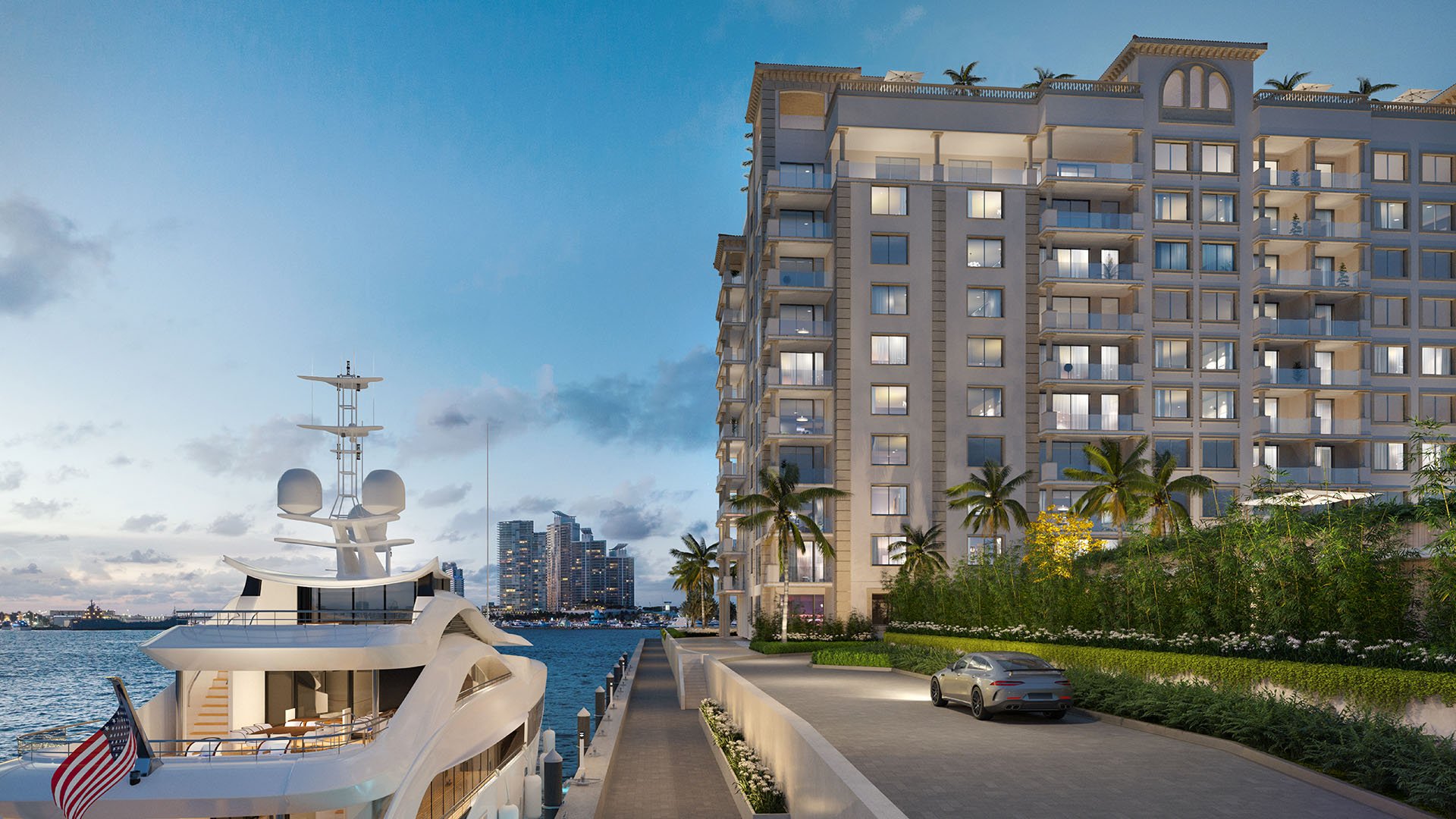
Waterfront properties add another dimension. Marinas, docks, seawalls, tender arrivals, and waterside amenity areas can affect how a residence defines its perimeter. At The Residences at Six Fisher Island, buyers can consider how land and water arrivals relate to privacy, guest reception, and movement across the broader residential setting.
Security should also be evaluated as a continuous service rather than a single checkpoint. The most effective approach coordinates personnel, access systems, cameras, lighting, and circulation while preserving a welcoming atmosphere in resident-facing spaces.
Large events make wayfinding especially noticeable because visitors must understand where to enter, where to pause, and where to go next. The same principle applies to residential public areas. A guest should not need repeated verbal directions to move from the curb to reception, from reception to an amenity, or from a shared space to the correct elevator.
Circulation is therefore part of service design. Buyers can watch where visitors hesitate, whether drivers have a clear waiting point, and whether staff can guide arrivals without leaving another checkpoint unattended. The placement of doors, desks, elevators, seating, and signage can either clarify the journey or create avoidable friction.
Service circulation deserves equal attention. Deliveries, maintenance activity, event setup, and staff movement should be considered in relation to the primary resident and guest routes. Complete separation may not always be possible, but predictable crossings and clear operating procedures can help shared areas maintain their composure.
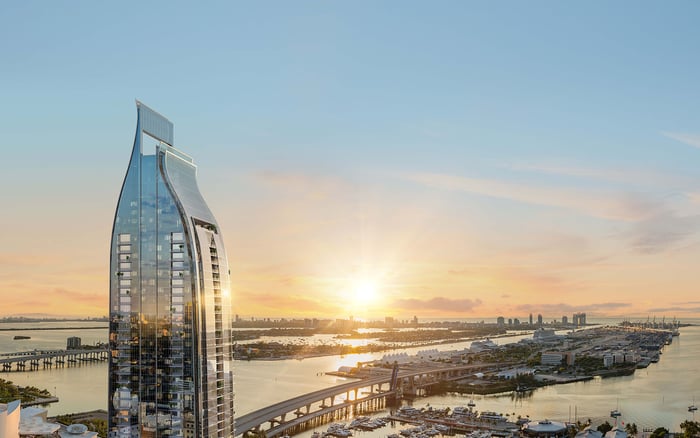
At Aston Martin Residences Downtown Miami, the useful question is not simply whether the public areas make a strong visual impression. It is whether movement through those spaces remains intuitive when several types of arrival and departure occur at once.
An in-person tour can reveal operational qualities that are difficult to judge from plans or photographs. Buyers can note whether guests gather around one desk, whether vehicles can load and unload without blocking the principal route, and whether the next step after check-in is immediately apparent.
It is also helpful to separate capacity from composure. A generous lobby can still feel unsettled if queues and handoffs are poorly arranged. A more compact space may perform elegantly when every zone has a clear purpose and the staff can see and respond to arrivals without creating congestion.
Buyers should consider visiting at different times when possible. A quiet appointment offers insight into design and service, while a busier period can reveal how the property manages simultaneous resident movement, guest arrivals, deliveries, and amenity use. The goal is not to seek perfection at every moment but to understand whether the operating plan remains coherent as conditions change.
Questions for the property team can be practical and specific. How are recurring visitors distinguished from one-time guests? Where do drivers wait? How are private events handled? What route does a delivery follow? Who resolves an access issue when the usual contact is unavailable? Clear answers can indicate that procedures are established rather than improvised.
The boat-show lens changes the buyer’s view by making normally invisible systems easier to recognize. Registration indicates whether the property is prepared for an arrival. Access control shows how privacy and hospitality are balanced. Wayfinding reveals whether architecture and operations work together. Circulation demonstrates whether shared spaces can remain calm while serving different users.
For South Florida buyers, these considerations belong alongside views, materials, amenities, and residence layouts. A convincing ownership experience aligns design, personnel, technology, and movement so guests feel expected, residents feel protected, and public areas retain a sense of order.
To evaluate South Florida residences through this more exacting lens, connect with MILLION.
If branded residences are on your mind — as a home or as an allocation — we would be glad to share what we are seeing, privately.
Begin a quiet conversationIt highlights how registration, security, wayfinding, and circulation influence the guest experience in a complex destination.
They should review how visitors are authorized, informed, and recognized by the arrival team.
An invitation establishes that a guest is expected, while authorization gives the property team a clear basis for granting access.
Technology should reduce uncertainty and repetition while allowing staff to maintain a personal welcome.
It means applying appropriate access procedures to different users, destinations, and circumstances rather than relying on one visible checkpoint.
Changes and unexpected arrivals reveal whether the property has an orderly response or depends on improvised decisions.
Docks, marinas, and waterside amenities can extend the area that a property must consider when managing privacy and arrivals.
Successful circulation gives residents, guests, staff, and drivers clear routes with minimal hesitation or conflict.
They should watch for guest clustering, vehicle conflicts, unclear handoffs, service-route crossings, and confusing elevator access.
Different conditions can show how the property manages overlapping arrivals, deliveries, amenity use, and resident movement.