A buyer-focused look at why Miami International Boat Show season can sharpen the argument for a better-positioned Key Biscayne pied-à-terre, from water access and privacy to long-term lifestyle fit.
Miami International Boat Show season has a way of clarifying priorities. For the global buyer who already understands South Florida, the event is less spectacle than calibration: how close one wants to be to the water, how easily one moves among island, marina, airport, club, and dinner, and whether a residence truly supports the rhythm of a second life in Miami.
That is where Key Biscayne becomes more than a beautiful address. A better-positioned pied-à-terre is not simply a smaller residence in a desirable building. It is a precision asset, chosen for arrival, privacy, view orientation, storage, staffability, and the ability to host without making life feel complicated. Boat show week compresses those questions into a few days. The buyer sees traffic, water movement, guest patterns, and the difference between a residence that is beautiful on paper and one that performs under pressure.
For a Key Biscayne brief, the central question is not whether the island is quieter than the mainland. It is whether that quiet becomes a functional advantage. In a market where many luxury buyers already own elsewhere, that advantage can be decisive.
Key Biscayne offers a rare combination in the Miami conversation: a residential island atmosphere with proximity to the city’s business, cultural, and dining core. During major event periods, this balance matters. The best pied-à-terre is close enough to participate and far enough to retreat.
For boating families, the island also encourages a more disciplined lifestyle evaluation. A buyer may begin with the yacht, the tender, the marina relationship, or the club calendar, then work backward to the residence. That sequence often leads to more intelligent real estate decisions. Boat-slip access, tender logistics, valet reliability, elevator flow, and guest parking can matter as much as finishes. Marina adjacency is not a luxury if it is central to how the owner actually lives.
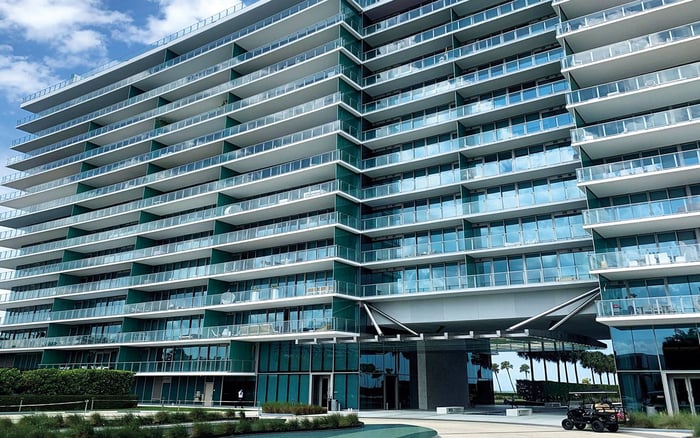
This is why a building such as Oceana Key Biscayne enters the conversation naturally for buyers who want the island’s residential calm without abandoning a high-design condominium framework. The appeal is not only the name on the building. It is the ability to establish a refined home base in a setting where morning water, beach proximity, and low-friction departures become part of the ownership logic.
A South Florida pied-à-terre should be judged differently from a primary residence. The question is not, “Can this home hold everything?” It is, “Can this home make every arrival effortless?” The best examples feel prepared before the owner lands. They are easy to lock, easy to service, easy to open for guests, and easy to leave without residual stress.
During boat show season, flaws surface quickly. If the lobby is overwhelmed, if valet becomes a point of friction, if luggage and provisioning feel improvised, the residence has failed the test. Conversely, a slightly more restrained home in the right position can outperform a larger, louder address. This is the heart of the second-home equation in South Florida. Utility is elegance.
Buyers should also be honest about frequency. Some will use Key Biscayne for long weekends, school breaks, boating weekends, and winter escapes. Others will treat it as a recurring base for Miami events, business dinners, and family gatherings. The better the use case is defined, the easier it becomes to choose between an island condominium, a mainland bayfront tower, or a beach residence with more resort energy.
Key Biscayne’s strength becomes clearer when set against nearby alternatives. Brickell offers vertical energy, restaurants, offices, and a highly urban cadence. For buyers who want financial-district convenience and dramatic bayfront presence, Una Residences Brickell represents a different kind of pied-à-terre logic: city-forward, design-conscious, and connected to the mainland’s daily pace.
Coconut Grove and Grove Isle introduce another register. They suit buyers who want mature greenery, bay orientation, and a softer residential feel while remaining close to Miami’s core. Vita at Grove Isle belongs in that comparison for clients who like the idea of a private-feeling waterfront setting without crossing fully into island seclusion.
Miami Beach, by contrast, remains the choice for buyers who want a more social resort environment, oceanfront identity, and immediate beach culture. The Ritz-Carlton Residences® Miami Beach can make sense for those who want hospitality-coded living and a recognizable Miami Beach address. The comparison is not about better or worse. It is about temperament. Key Biscayne rewards the buyer who wants Miami nearby, not constantly in the room.
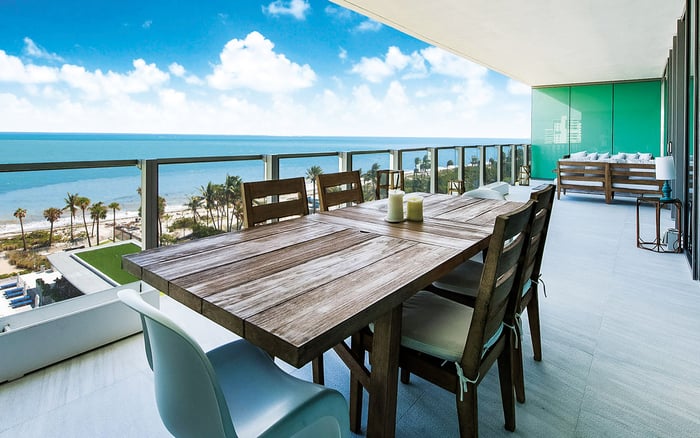
The most persuasive Key Biscayne pied-à-terre is not necessarily the most conspicuous. It should deliver a controlled arrival sequence, protected privacy, meaningful outdoor space, and a view or orientation that keeps the owner connected to the water. It should also support the practical details of boating life: storage for gear, ease of provisioning, dependable access for guests, and a building culture comfortable with seasonal use.
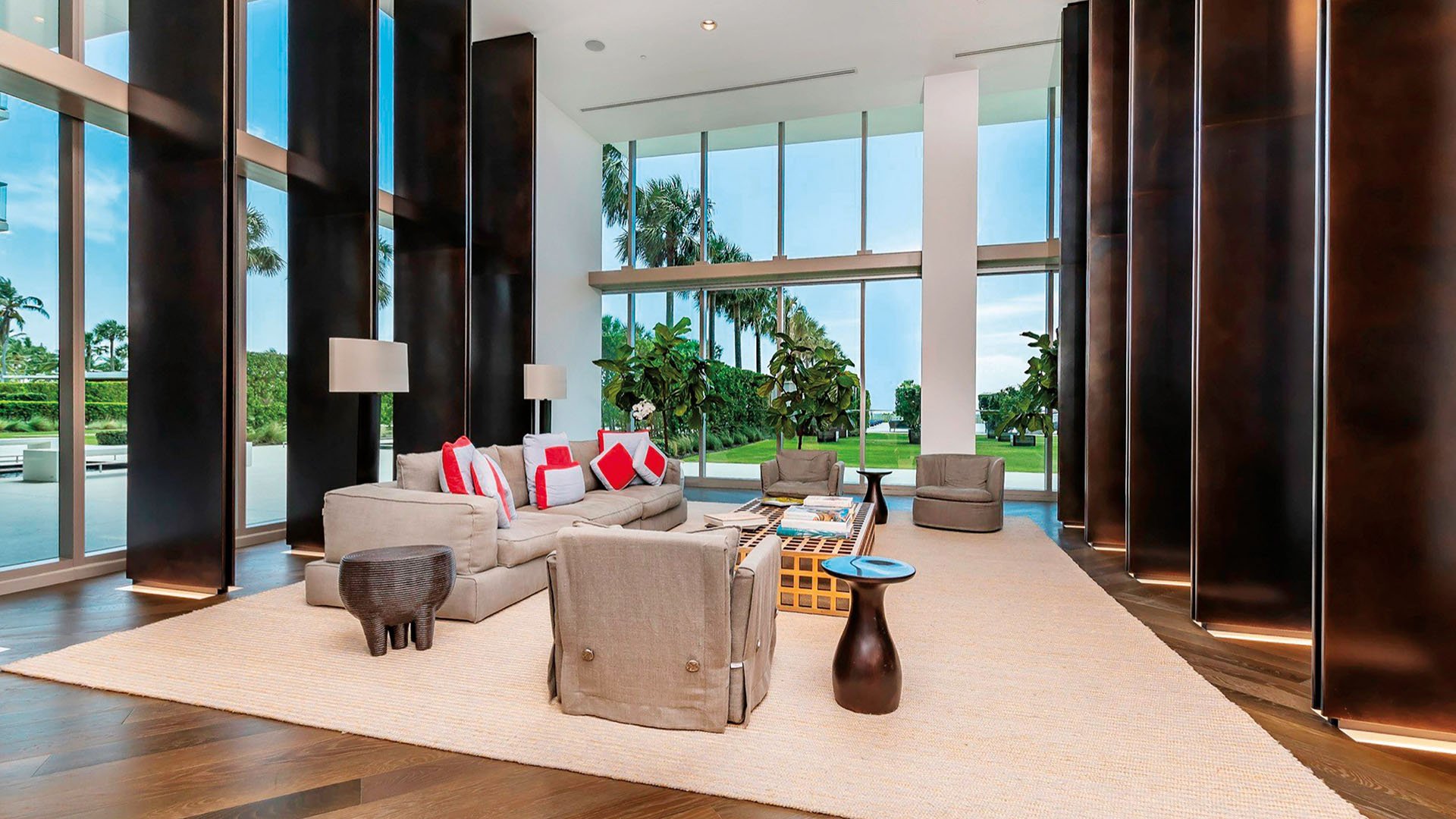
A strong residence should feel equally composed on a quiet Tuesday and during a major Miami event. That balance is difficult to fake. It depends on the building’s circulation, staff discipline, parking logic, and neighborhood fit. A buyer who pays attention during boat show week may notice how differently buildings perform when demand rises.
There is also a portfolio argument. Key Biscayne can serve as the calm Miami base while other holdings fulfill other roles: the primary residence in the Northeast, the mountain home, the European apartment, the yacht itself. In that context, the pied-à-terre is not competing for scale. It is competing for usefulness, pleasure, and ease of repeat use.
The word investment should be handled with restraint in ultra-prime real estate. Lifestyle often leads, and financial performance follows only when the original thesis is durable. For Key Biscayne, that thesis is privacy, scarcity of island living, access to water, and proximity to Miami without the full-time intensity of Miami’s most urban districts.
A better-positioned pied-à-terre should be acquired with a clear exit narrative. Who is the next buyer? A boating family? A Latin American owner seeking a secure Miami base? A Northeast family wanting a warm-weather residence with beach and bay proximity? The stronger the future buyer pool, the more resilient the ownership case may feel.
Boat show season helps sharpen that narrative because it brings the water-oriented buyer into focus. The owner who values boating, privacy, and a polished but understated lifestyle can quickly understand why Key Biscayne belongs on the shortlist.
Why does Miami International Boat Show matter to a Key Biscayne buyer? It concentrates attention on water access, arrival logistics, and how a residence performs during a high-demand Miami moment.
Is Key Biscayne better for a pied-à-terre than Brickell? It depends on lifestyle. Key Biscayne favors privacy and retreat, while Brickell favors urban convenience and business access.
What should buyers prioritize in a Key Biscayne pied-à-terre? Prioritize ease of arrival, privacy, water orientation, building service, storage, and a floor plan that works for short stays.
Does a pied-à-terre need to be large to feel luxurious? No. The best pied-à-terre often wins through precision, not scale, especially when it is easy to maintain and use often.
How important is marina access for boating buyers? It can be central if boating shapes the owner’s routine, guest calendar, and weekend plans.
Should buyers compare Key Biscayne with Coconut Grove? Yes. Both can offer a softer waterfront lifestyle, but Key Biscayne feels more island-oriented and retreat-driven.
Is Miami Beach a substitute for Key Biscayne? Not exactly. Miami Beach offers a more social resort rhythm, while Key Biscayne is typically more discreet and residential.
Can a Key Biscayne home work as a seasonal base? Yes, provided the building supports lock-and-leave ownership, reliable service, and easy guest coordination.
What makes a residence better positioned during major events? Strong circulation, parking, staff readiness, and a calm arrival sequence become especially valuable when Miami is busy.
How should buyers think about resale? Focus on enduring lifestyle fundamentals: privacy, water proximity, service quality, and a clear future buyer profile.
If you'd like a private walkthrough and a curated shortlist, connect with MILLION.
If branded residences are on your mind — as a home or as an allocation — we would be glad to share what we are seeing, privately.
Begin a quiet conversation