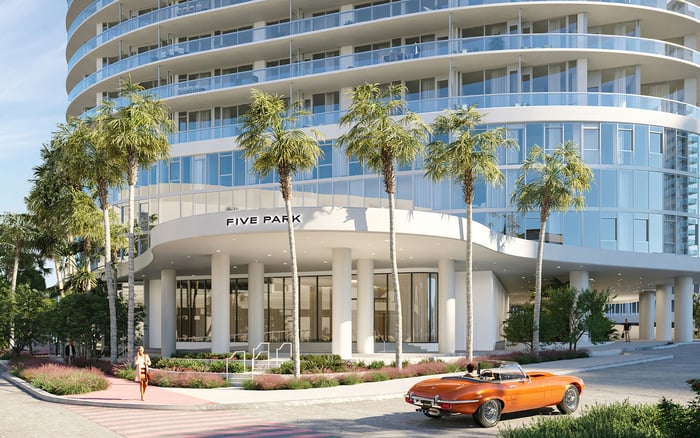
A disciplined framework for family offices coordinating multiple South Florida purchases, separating closing estimates from contractual deadlines, recording milestones, and the reserves needed to protect residential continuity.

For a family office acquiring several South Florida residences, the objective is not simply to close quickly. It is to preserve choice while coordinating capital, household transitions, and contractual obligations. A principal residence, a seasonal apartment, and accommodation for extended family should not share a single, undifferentiated completion date.
The essential distinction is between an estimate, a contractual deadline, and an operational milestone. An estimate supports budgeting. A deadline carries consequences defined by the agreement. An operational milestone determines whether the household can proceed with its plans. Treating them as interchangeable creates avoidable exposure, even when the acquisition itself is straightforward.
Begin with a property-specific calendar showing contract execution, diligence, funding readiness, scheduled closing, negotiated outside date, recording follow-up, and intended occupancy. Assign an owner to each dependency. The recommendations below are planning tools, not statutory requirements or rights that arise automatically from a purchase.
For a financed South Florida purchase, 30-45 days from contract execution to closing is a useful planning estimate when appraisal, underwriting, title, insurance, and association matters do not introduce material delays. The clock does not begin with the initial offer. Negotiation belongs in a separate preliminary phase.
A clean cash purchase may close in 7-21 days, provided title, inspections, survey, insurance, entity documentation, funds, and required association materials are ready. Cash removes the financing dependency, not every other condition. Neither range is a guaranteed deadline.
For a family office evaluating 2200 Brickell, the useful question is not whether a Brickell acquisition can be accelerated in principle. It is whether the specific residence and purchaser file are ready to support the proposed schedule.
Where construction completion is relevant, keep that estimate separate from the closing estimate. These transaction ranges are not forecasts for an unfinished residence. Counsel should identify the delivery provisions and amendments governing the purchase before the office commits household plans to a target date.
An outside date should answer a practical question: how long is the family office prepared to remain committed if the expected schedule slips? The answer may differ for a primary home and a discretionary residence. No universal outside-date interval is established here.
Ask counsel to define the scheduled closing date, permitted extensions, any negotiated cap, notice mechanics, and the consequences of reaching the outside date. Specify how that date interacts with force majeure; do not assume the label makes it absolute. The applicable agreement should state the termination mechanism and deposit treatment explicitly.
A Miami Beach residence under consideration at The Perigon Miami Beach should have its own timing analysis. This is not a statement about that project's delivery schedule or contract terms. It illustrates why the family office should evaluate each agreement independently, even when several acquisitions serve one residential plan.
Portfolio coordination is a management decision. When contractual linkage is intended, the documents should reflect it. Do not assume that a delay on one purchase allows another to be deferred.
Independent closings can preserve flexibility: one residence may proceed while another encounters an unresolved condition. Linked closings may suit a tightly coordinated relocation, but counsel should define the triggers and consequences expressly. Neither structure should rest on an informal understanding among the acquisition team.
For an office considering Andare Residences Fort Lauderdale alongside a Miami acquisition, maintain separate funding and document-readiness checks. A shared dashboard can connect the Fort Lauderdale and Miami files without treating their contractual obligations as interchangeable. Across Broward and Miami-Dade, confirm county-specific procedures rather than applying one recording assumption to every transaction.
Standard G in the residential contract language discussed here addresses qualifying events that prevent performance or essential closing services. Examples include hurricanes, floods, extreme weather, fire, unusual transportation delays, war, and terrorism. The operative issue is prevention of performance-not mere inconvenience or a preference to postpone.
Under this language, the extension is automatic when a qualifying event prevents performance or closing. Affected contractual periods, including the closing date, extend for a reasonable time, up to seven days after the event no longer prevents performance. This is not a blanket seven-day extension beginning when a storm arrives.
If the qualifying event continues to prevent performance more than 30 days beyond the scheduled closing date, either party may terminate by written notice under the provision, with the deposit returned to the buyer. Termination is not automatic on day 30.
The language also addresses interference with essential services, insurance, or required approvals. Qualifying utility unavailability or inability to obtain hazard, wind, flood, or homeowners’ insurance can trigger Standard G extensions. Confirm the form edition and negotiated amendments before applying these rules; do not assume a bespoke development agreement contains identical language.
Signing, disbursement, and deed recording are distinct steps. The title company handles recording and disbursement after signing, but the office should obtain transaction-specific confirmation of their timing. A signature appointment is not proof that every milestone is complete.
In Miami-Dade, electronically submitted documents may take approximately 1-3 business days, excluding weekends and holidays, for review and public availability. This is not a guaranteed submission-to-recording deadline. Same-day electronic recording is not guaranteed; in-person recording is recommended for time-sensitive documents.
Build a recording buffer into the administrative calendar and ask the closing team to confirm submission and recording status. Keep possession and move-in arrangements in a separate column, governed by the applicable agreement and practical readiness. Do not extrapolate Miami-Dade's processing estimate to Palm Beach or other counties.
An interim-housing reserve should be distinct from purchase funds. A useful planning formula combines expected temporary-accommodation costs over the anticipated delay period, associated storage, moving, and household-transition costs, and one contingency month of those recurring costs. This is a recommendation, not a standard requirement or a validated dollar amount.
For a West Palm Beach acquisition under consideration at Alba West Palm Beach, size the reserve around the household's intended arrival, not an assumed project delivery date. Review it as milestones change, and avoid counting the same reserve twice across overlapping relocations.
The most resilient plan keeps each contract precise, each milestone visible, and housing continuity funded without depending on the most optimistic outcome.
Explore South Florida residences with MILLION to shape a portfolio around both lifestyle and disciplined acquisition planning.
If branded residences are on your mind — as a home or as an allocation — we would be glad to share what we are seeing, privately.
Begin a quiet conversationThe planning ranges begin at contract execution, not the initial offer. Allow separately for negotiation before execution.
A planning estimate is 30–45 days from contract execution, assuming no material appraisal, underwriting, title, insurance, or association delays.
A clean cash purchase may close in 7–21 days if the required documents, diligence, insurance, funds, and association materials are ready. This is an estimate, not a guarantee.
No. Construction completion and transaction closing should be tracked separately, with delivery obligations assessed under the particular purchase agreement.
No universal interval is established here. Negotiate property-specific dates, extension limits, notice requirements, and consequences with counsel.
Do not assume it does. Any intended linkage between closings should be expressly addressed in the applicable agreements.
When a qualifying event prevents performance, affected periods extend for a reasonable time, up to seven days after the event no longer prevents performance. Confirm the contract edition and amendments.
Either party may terminate by written notice if the qualifying event prevents performance more than 30 days beyond scheduled closing. The provision requires the deposit to be returned to the buyer.
No. Electronic documents may take approximately 1–3 business days for review and public availability, and in-person recording is recommended for time-sensitive documents.
As a planning recommendation, cover expected accommodation and transition costs plus one contingency month of recurring costs. This is not a standard requirement or a validated dollar amount.