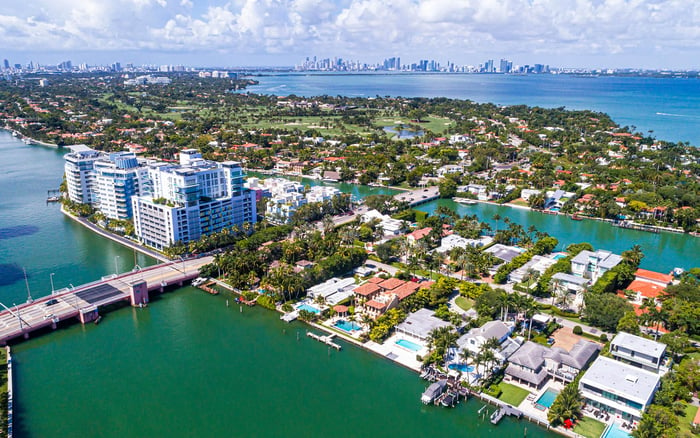
Miami Art Week gives luxury buyers a practical lens for evaluating how residences in Miami and Palm Beach support guests, entertaining, privacy, security, and seasonal service.

Miami Art Week can prompt luxury buyers to consider a residence as both a private home and an operating environment. Views, layouts, finishes, and location remain important, but households planning to entertain may also examine how a property handles visitors, vendors, household staff, drivers, and security.
Guest management becomes especially relevant when an owner expects overlapping arrivals, dinners, private appointments, or extended stays. The key question is not simply whether a building offers services. Buyers should determine how those services work when several demands arise at once and whether the experience remains discreet for residents and guests.
For second-home owners moving between Miami and Palm Beach, that review can extend beyond a single occasion. A residence should support the household’s broader South Florida schedule without making privacy or daily routines dependent on improvised arrangements.
A private showing may emphasize the residence itself, while an operational review focuses on movement and coordination. Buyers can ask how visitors are authorized, where drivers wait, how deliveries are received, which routes vendors use, and whether service activity remains separate from private arrival areas.
At The Perigon Miami Beach, a prospective buyer can use that framework to look beyond the presentation of the home. The review may include arrival procedures, guest access, staff communication, housekeeping coordination, and the practical relationship between private and shared spaces.
The same approach applies in Brickell. When considering The Residences at 1428 Brickell, buyers can ask how building management, household employees, and outside vendors would coordinate during a busy hosting schedule. Clear responsibilities matter because a polished guest experience depends on execution rather than an amenity list alone.
A residence intended for hosting should be assessed room by room and route by route. Buyers can examine the separation between guest suites and private bedrooms, the path from the kitchen to entertaining areas, luggage handling, coat and tableware storage, acoustics, terrace access, and the location of service entrances.
Art ownership adds another layer to the review. Rather than assuming a home is suitable for a collection, buyers should ask qualified professionals about installation access, environmental requirements, security planning, and insurance coordination for their specific works. These questions are property- and collection-specific and should be resolved before purchase or installation.
Near the Design District, Kempinski Residences Miami Design District may be considered through this combined lens of residence, guest experience, and cultural access. Buyers should still verify how the service model aligns with their own staffing, privacy, and entertaining expectations.
An owner considering rentals should not assume that event-related interest automatically makes a residence suitable for short stays. Applicable building rules, lease procedures, guest registration, management responsibilities, insurance, security, housekeeping, maintenance, and local requirements all need independent verification.
The operating plan should identify who screens guests, controls credentials, inspects the residence, manages inventory, handles urgent repairs, and documents the condition of furnishings and art. Buyers should also distinguish between personal hosting needs and rental operations because the staffing, access, and risk controls may differ.
No single event should substitute for a broader property assessment. Buyers can evaluate the residence, building operations, neighborhood fit, ownership costs, and intended use together, with professional guidance where appropriate.
Palm Beach belongs in the discussion when a household’s South Florida schedule includes time in both Palm Beach County and Miami-Dade. The relevant issue is not whether the two markets operate identically, but whether each residence can support the owner’s expected pattern of family visits, advisers, friends, staff, and service providers.
At Palm Beach Residences, buyers can apply the same operational review while accounting for their Palm Beach routines. Questions may cover household staffing, driver coordination, catering access, security procedures, maintenance coverage, guest-suite readiness, and how the home is prepared between visits.
Sellers can support this evaluation by presenting clear, property-specific information about service arrangements and access procedures. Buyers should verify those details rather than relying on staging or broad hospitality language.
Before committing to a residence, buyers should identify who controls visitor credentials, how vendors enter, where deliveries are held, and which team handles after-hours issues. They should also clarify how household staff communicate with building management and who has authority during a security or maintenance incident.
Inside the home, the review can cover guest privacy, bedroom separation, luggage storage, entertaining flow, acoustics, lighting controls, kitchen support, outdoor access, and secure storage. Buyers planning frequent gatherings may also want to test whether the layout allows service to remain efficient without intruding on private areas.
The strongest plan is tailored to the owner. A household that hosts family for extended stays may need different systems from one organizing dinners, collecting art, or dividing time between Miami and Palm Beach. Defining those needs early helps buyers compare residences on operational fit as well as appearance.
Why does Miami Art Week matter to luxury home buyers? It offers a useful context for considering how a residence would support guests, entertaining, privacy, and coordinated service.
What does guest management include? It can include visitor access, staffing, housekeeping, transportation, catering, maintenance, security, and communication with building management.
Why should buyers review arrival procedures? Arrival procedures affect privacy, guest convenience, vendor access, and the separation of service activity from resident spaces.
How can buyers assess a building’s service model? They can request property-specific details about staffing, responsibilities, access controls, after-hours coverage, and coordination with household employees.
What should buyers examine inside a residence? They should consider guest-suite separation, storage, acoustics, kitchen-to-entertaining circulation, luggage handling, and secure areas for personal property.
Are amenity lists enough to evaluate guest readiness? No. Buyers should verify how services are delivered and whether the procedures align with their household’s actual needs.
What should art collectors consider? They should seek qualified guidance on installation access, environmental requirements, security, insurance coordination, and the needs of specific works.
Can an Art Week rental strategy be assumed to work? No. Buyers must independently verify building rules, local requirements, insurance, management capability, and the residence’s suitability for the intended use.
How does Palm Beach fit into this analysis? Palm Beach buyers can evaluate how a residence supports guests and household operations when their South Florida schedule also includes Miami.
What is the goal of effective residential guest management? The goal is a private, composed experience supported by clear procedures and discreet coordination behind the scenes.
For a tailored shortlist and next-step guidance, connect with MILLION.
If branded residences are on your mind — as a home or as an allocation — we would be glad to share what we are seeing, privately.
Begin a quiet conversation