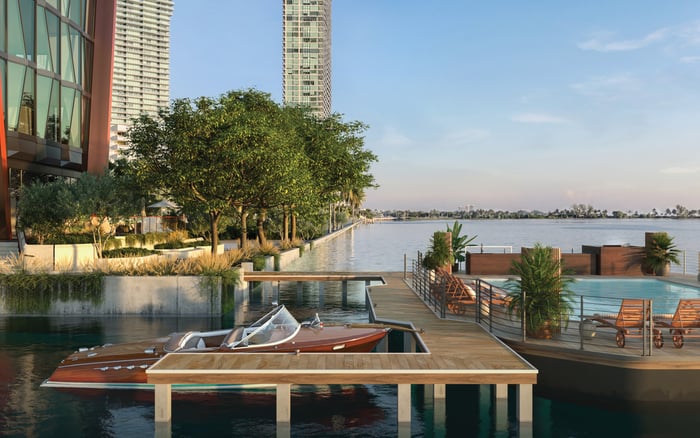
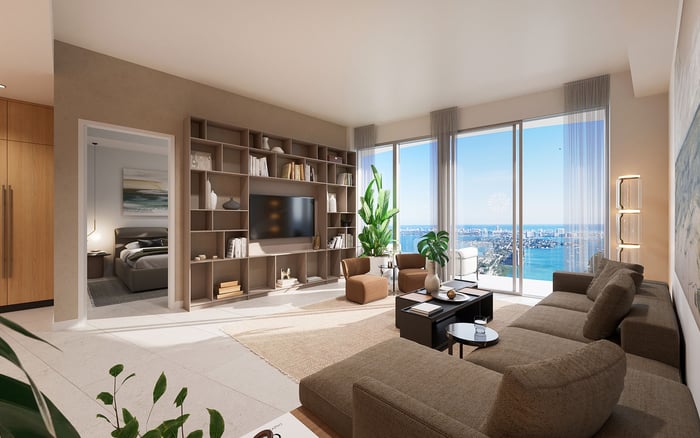
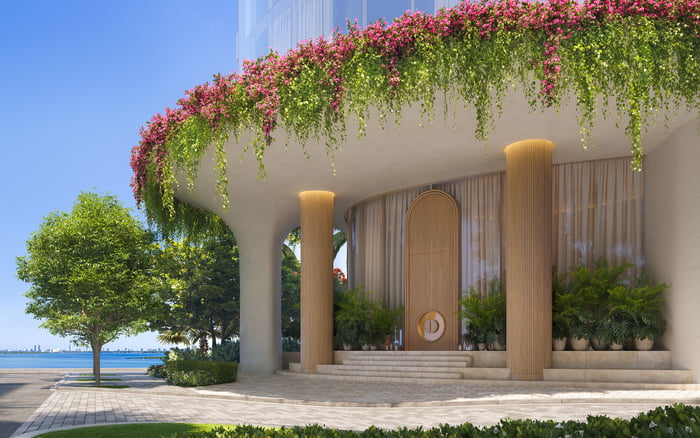
At Villa Miami, the value of a view depends not only on elevation and direction, but also on what neighboring land could support. Buyers should distinguish direct bay exposure from diagonal views across private parcels, then test each residence against parcel-level zoning and plausible future construction.
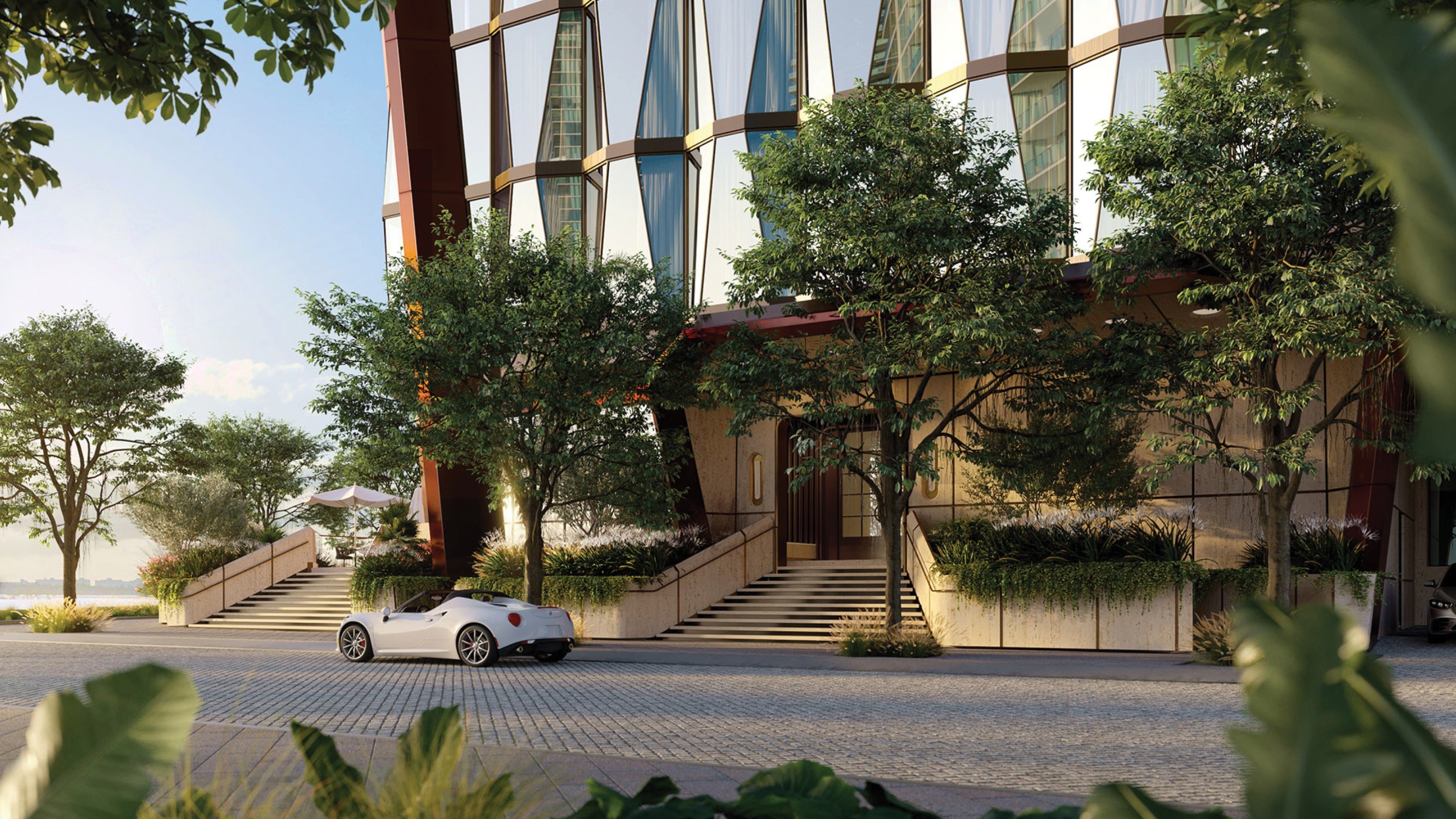
At Villa Miami, a buyer evaluating a view premium should look beyond the scene shown in current photography or renderings. The lasting value of an outlook depends partly on what may eventually be developed on surrounding sites.
In a high-rise neighborhood such as Edgewater, a low building, parking area or vacant parcel should not automatically be treated as permanent open space. Each may have redevelopment potential that requires parcel-specific review.
The strongest view premium is attached to exposure that does not depend on someone else’s land remaining underbuilt.
This is a central issue in a pre-construction purchase. Elevation, orientation and window geometry shape the experience inside a residence; zoning, setbacks and neighboring ownership help determine how durable that experience may be.
Not all water views carry the same development risk. A residence looking directly toward Biscayne Bay may be less dependent on diagonal openings across adjacent private property. Side- and corner-facing homes can still offer compelling panoramas, but portions of those views may rely more heavily on gaps between buildings or across neighboring parcels.
A buyer should identify which part of a panorama is direct bay exposure, which part crosses another property and which part could be filtered by a future podium or tower. Ceiling height, floor level and expansive glass may enhance the outlook, but they do not replace a parcel study.
This framework applies across Edgewater. Buyers comparing Aria Reserve Miami or EDITION Edgewater should evaluate view geometry rather than rely only on labels such as bayfront, corner or high floor. Two residences with broad water exposure today can present different long-term risks when one looks principally over open water and the other depends on a lateral gap.
A broad zoning label is not enough to establish what may be built on a neighboring parcel. Buyers and their advisers should verify the exact designation and review the rules that apply to the individual site, including lot dimensions, frontage, setbacks, permitted massing and any process that could affect development capacity.
These controls can influence where a podium begins, where a tower may rise and how building mass is distributed across a site. They may shape separation and the street wall, but they should not be treated as a private guarantee that a particular condominium stack will retain a broad lateral view.
A serious analysis should examine more than one plausible development case rather than assume the smallest apparent building form is the only possible outcome. Any planning provision involving vistas or corridors should also be reviewed carefully and not mistaken for a recorded private right protecting the view from a specific residence.
The prudent assumption is that a view crossing private land remains exposed to lawful redevelopment unless parcel-specific documents establish otherwise.
Edgewater’s setting along Biscayne Bay and its collection of residential towers make water exposure central to the neighborhood’s appeal. That same development context means an underbuilt neighboring site deserves careful attention before a buyer assigns a lasting premium to an open gap.
This does not make a particular neighboring tower inevitable. The exact zoning, approvals and buildable envelope of each adjoining parcel must be verified through current records and professional review. The practical lesson is that today’s open space should not be valued as permanent unless enforceable documents support that conclusion.
The same discipline applies when considering alternatives such as The Cove Residences Edgewater. Building scale alone does not answer the view question. The relevant inquiry is how each residence relates to the bay, its immediate lot lines and the potential massing of nearby sites.
Begin with the parcels immediately north, south and west of Villa Miami. For each one, verify current ownership, exact zoning, applicable land-use controls, lot boundaries and waterfront conditions. Then review pending development applications, approvals and permits. The absence of a current application does not eliminate longer-term redevelopment potential.
Next, commission a three-dimensional view study from the specific residence and principal seating positions, not merely from a nominal floor elevation. The model should test plausible neighboring development, including podium depth, setbacks, tower width, orientation, mechanical areas and rooftop elements. More than one configuration may be needed because a site can sometimes support different compliant layouts.
The modeled eye level should be reconciled with the residence’s final slab elevation, ceiling height, balcony depth and actual window geometry shown in the controlling plans. Small differences in viewpoint can materially change whether a neighboring structure clips, filters or fully blocks part of a panorama.
Request the analysis in writing and preserve its assumptions. It should identify the date of the zoning information, the parcels reviewed and the development scenarios considered. This is not a prediction of what neighboring owners will build; it is a disciplined way to understand a range of plausible outcomes before assigning a premium.
A rational offer separates the residence’s intrinsic qualities from the portion of its value attributable to an uninterrupted outlook. Direct exposure over Biscayne Bay may justify more confidence than diagonal water, skyline or sunset views that cross private parcels. Development-sensitive views warrant a larger risk adjustment, particularly when nearby sites appear underbuilt relative to what a current review determines may be possible.
Floor height helps, but it is not absolute protection. A future tower can affect higher sightlines, while a broad podium may alter outlook, privacy and light at lower elevations. Tower orientation may preserve one angle while narrowing another. The goal is not to eliminate uncertainty, but to avoid paying the same premium for views with fundamentally different levels of durability.
For buyers, the most valuable view is not necessarily the widest one today. It is the view supported by the strongest geographic, legal and parcel-level context, with each residence judged on its own geometry.
For discreet guidance on Villa Miami, waterfront opportunities and South Florida view-risk diligence, connect with MILLION.
If branded residences are on your mind — as a home or as an allocation — we would be glad to share what we are seeing, privately.
Begin a quiet conversationViews directed principally over Biscayne Bay may be less dependent on neighboring private parcels than diagonal or lateral views. Each residence still requires an individual sightline review.
No. Future tower massing may affect higher sightlines, while podiums can change light, privacy and lower-floor outlooks.
The development potential of a site depends on parcel-specific controls and conditions. Buyers should verify the exact designation and applicable rules.
Yes. Testing several plausible podium and tower configurations can reveal how different lawful outcomes may affect a residence.
No. General planning provisions should not be treated as a private right protecting the view from a particular residence.
The immediate north, south and west parcels are logical priorities. Other sites within important sightlines may also warrant review.
It should consider podium depth, setbacks, tower width, orientation, rooftop elements and the viewpoint from key areas inside the residence.
An open gap in a high-rise neighborhood may depend on a neighboring parcel remaining underbuilt. That possibility affects how confidently a buyer can price the view.
No. Potential redevelopment should not be confused with an approved or inevitable project.
The offer should separate intrinsic residence value from the premium assigned to an uninterrupted outlook. Views dependent on private parcels generally merit a larger risk adjustment.