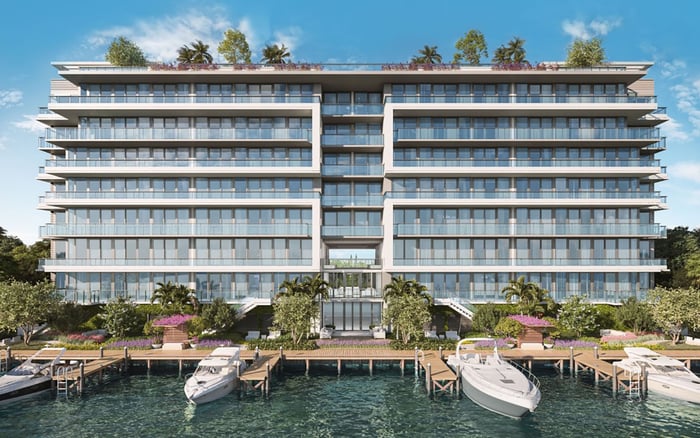
A comparison of three Bay Harbor Islands residential projects through the lens of discretion, with emphasis on how buyers can evaluate privacy claims without treating design or marketing as proof of demand.
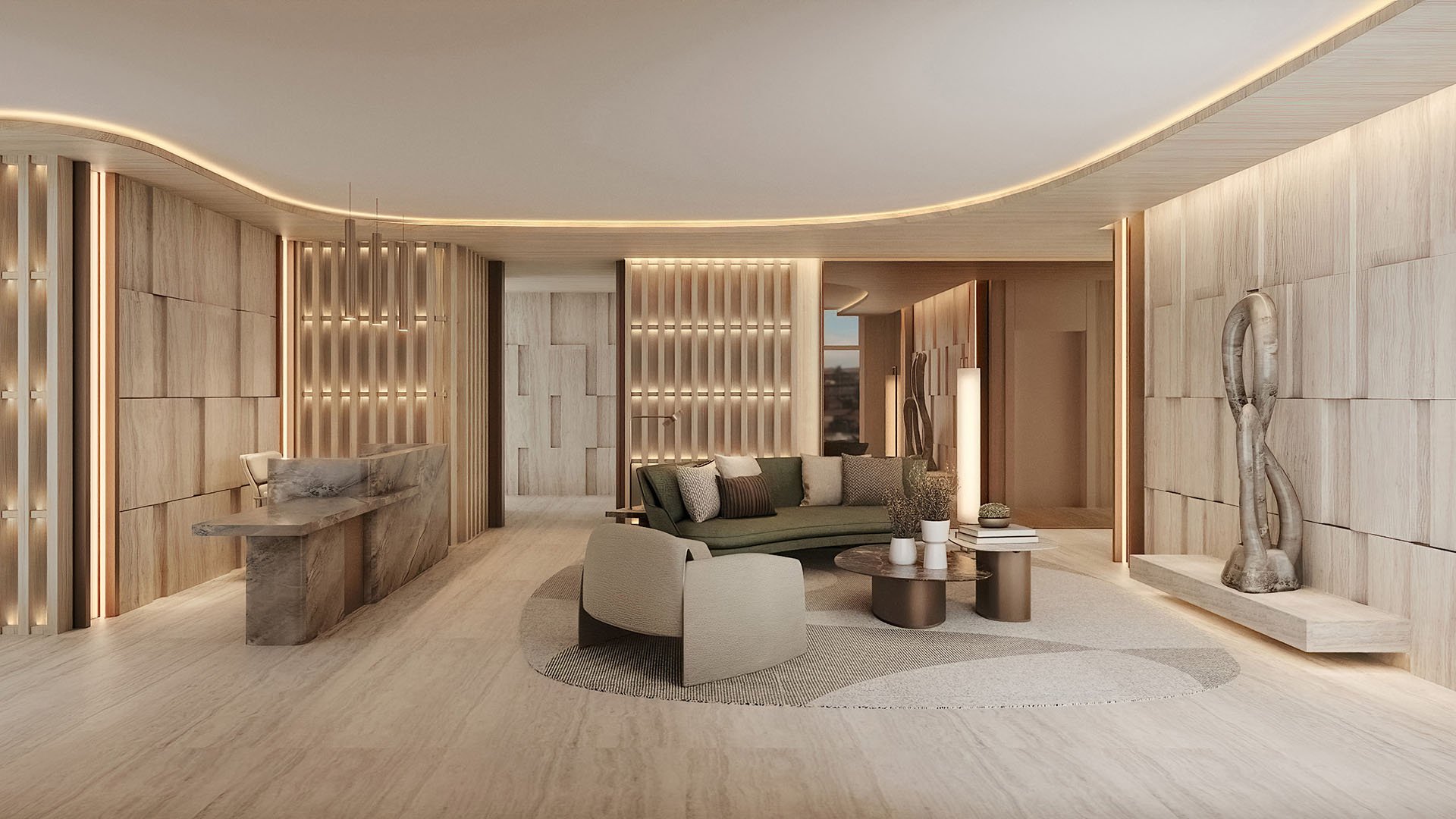
Residential discretion is broader than a single privacy feature. Buyers may consider how arrival, circulation, shared spaces, guest access, outdoor exposure, and the relationship between a residence and common areas shape everyday life.
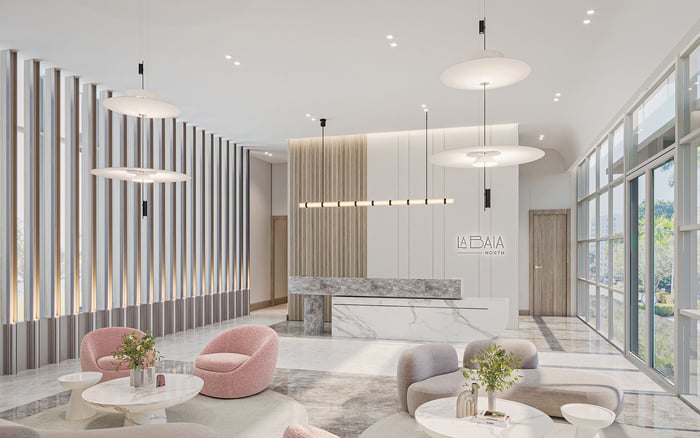
This framework can be applied when comparing La Baia North Bay Harbor Islands, La Maré Bay Harbor Islands, and The Well Bay Harbor Islands. Their positioning may help buyers identify relevant questions, but it should not be treated as direct evidence of buyer demand or as confirmation of specific conditions.
A development’s presentation can indicate which residential qualities it intends to emphasize. References to privacy, boutique living, waterfront access, wellness, or retreat may be useful starting points, yet each claim requires project-specific verification.
The more important issue is whether the proposed experience remains consistent from the building entrance to the individual residence. A privacy-oriented concept can feel different depending on unit placement, neighboring sightlines, routes to shared spaces, guest procedures, and the operation of amenities.
The three Bay Harbor Islands projects invite comparison through a shared question: how does each translate discretion into the resident experience? Rather than assuming that one project is inherently more private, buyers can examine how each addresses access, movement, recreation, entertaining, and retreat.
The comparison should remain residence-specific. Conditions can vary within the same development, and a broad project narrative may not describe every home equally. Floor level, orientation, adjacency, and circulation can materially affect how secluded or connected a residence feels.
A careful review begins with plans and project documents, followed by direct questions about access and operations. Buyers can ask how residents, guests, staff, and service providers move through the property; which areas are shared; and whether any use rights or procedures apply to particular amenities.
It is also useful to evaluate the residence at different scales. At the building level, consider entry sequences and common-area circulation. At the floor level, consider elevator access and neighboring doors. Within the residence, review window exposure, terrace relationships, entertaining areas, and separation between public and private rooms.
Any representations about features, availability, dimensions, access, or operating policies should be confirmed through current official materials and appropriate professional review. That verification is especially important when discretion is central to the purchase decision.
Project design and positioning can reflect an effort to address privacy-conscious buyers, but they do not independently establish market demand. Without supporting buyer data, the sound conclusion is narrower: residential discretion is a useful lens for comparing how these developments present the living experience.
For buyers, that lens turns an abstract preference into practical due diligence. The goal is not simply to find a project described as private, but to understand whether the specific residence, access pattern, and shared environment align with the desired level of separation and control.
What is residential discretion? It is a way of evaluating privacy, control, and exposure throughout the residential experience rather than relying on one feature or label.
Do these projects prove that buyers demand more privacy? No. Project positioning may suggest a focus on discretion, but it does not substitute for buyer data.
Why compare these three Bay Harbor Islands projects? Comparing them provides a structured way to examine how different residential concepts address privacy-conscious priorities.
Should buyers rely on a project’s privacy claims? Buyers should treat those claims as a starting point and verify the details through current project documents and professional review.
Why does residence orientation matter? Orientation can affect sightlines, exposure, and the relationship between indoor and outdoor living areas.
What should buyers review about circulation? They should examine how residents, guests, staff, and service providers move between entrances, elevators, shared areas, and individual homes.
Can privacy vary within the same development? Yes. A residence’s floor, placement, neighboring conditions, and proximity to shared spaces can change the experience.
How should shared amenities be evaluated? Buyers should verify access rules, operating procedures, adjacency, and how movement to and from the amenities affects privacy.
What documents may help with due diligence? Current plans, disclosures, governing materials, and other official project documents may clarify proposed access, use, and operating conditions.
What is the central question for a privacy-focused buyer? The key question is whether the specific residence and the building’s daily operation provide the desired degree of separation, control, and ease.
For a discreet conversation and a curated building-by-building shortlist, connect with MILLION.
If branded residences are on your mind — as a home or as an allocation — we would be glad to share what we are seeing, privately.
Begin a quiet conversation