A discreet buyer-focused view of how Frida Kahlo Wynwood Residences can balance Wynwood's cultural energy with the privacy expected in a refined South Florida home.
For many South Florida buyers, luxury has moved beyond simple separation toward controlled proximity. A waterfront address, guarded island, or private elevator still carries weight, but a growing segment of sophisticated owners also wants access to galleries, restaurants, design conversations, and the spontaneous rhythm of a creative district. The question is not whether to live near energy. The question is whether that energy can be edited.
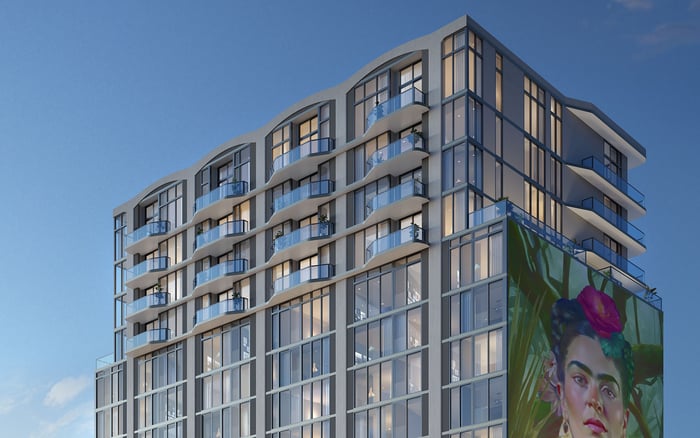
That is where Frida Kahlo Wynwood Residences becomes an interesting part of the Wynwood conversation. Its name places the project in a cultural frame, while its residential purpose raises a more exacting question: can a home participate in a neighborhood’s identity without making the resident feel permanently exposed to it?
In Wynwood, access is rarely the challenge. Privacy is the test. The best residential interpretations of the district do not try to imitate a secluded estate. They create layers instead: a public city outside, a managed arrival sequence inside, then a quieter domestic realm above or beyond the street. For the right buyer, that can feel more relevant than isolation.
Privacy in an urban cultural district should not be confused with withdrawal. The most compelling city residences allow owners to choose when to engage. A morning coffee walk, a private dinner, an art opening, or a quiet evening at home should all be possible without changing addresses.
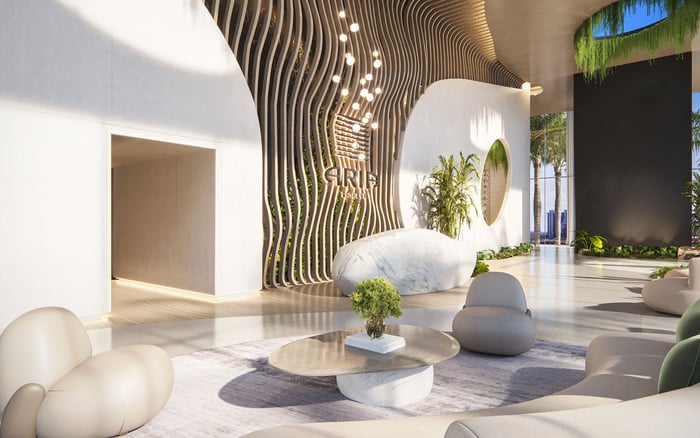
That balance depends on design discipline. Buyers should evaluate how a residence handles entry, lobby visibility, elevator access, package flow, guest control, and the transition from street to home. These details are less glamorous than a skyline view, but they determine whether a building feels calm after a long day. In a district like Wynwood, they are central to the ownership experience.
Boutique can be especially powerful in this setting when paired with serious operational thinking. Boutique does not have to mean informal. It can mean fewer moving parts, a more legible resident experience, and a stronger sense of recognition at the threshold. The goal is not anonymity. The goal is discretion.
The project’s positioning suggests a broader evolution in Miami residential taste. Branded hospitality and waterfront spectacle remain important, but cultural identity has become its own form of capital. A buyer may now value a building that feels connected to art, design, and place as much as one that relies on height or scale.
That distinction matters in Wynwood. A residence here should not feel interchangeable with Brickell, Miami Beach, or Edgewater. It should understand the district’s creative vocabulary while protecting the daily life of its residents. The name Frida Kahlo brings expectations of character, emotion, and visual memory. Translating that into a livable condominium setting requires restraint as much as expression.
For buyers comparing neighborhoods, this is a different proposition from a more corporate urban address such as 2200 Brickell, or a bayfront design-forward option like EDITION Edgewater. Those projects sit within their own lifestyle narratives. Wynwood asks for a more curated relationship with culture at street level.
A buyer considering Wynwood should walk through the privacy sequence in practical terms. Where does a resident arrive by car? How visible is the entrance? Does the lobby feel like a social stage or a calm filter? How are visitors handled? Are amenity spaces positioned to enhance daily life, or do they create unnecessary exposure?
Sound is equally important. Cultural districts are active by nature, so residence quality is shaped by glazing, setbacks, interior planning, and the separation between public-facing spaces and sleeping areas. A beautiful home that cannot deliver nighttime quiet will lose its luxury quickly.
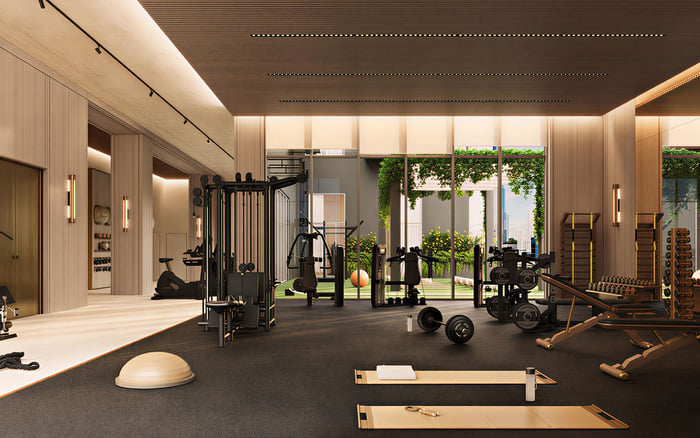
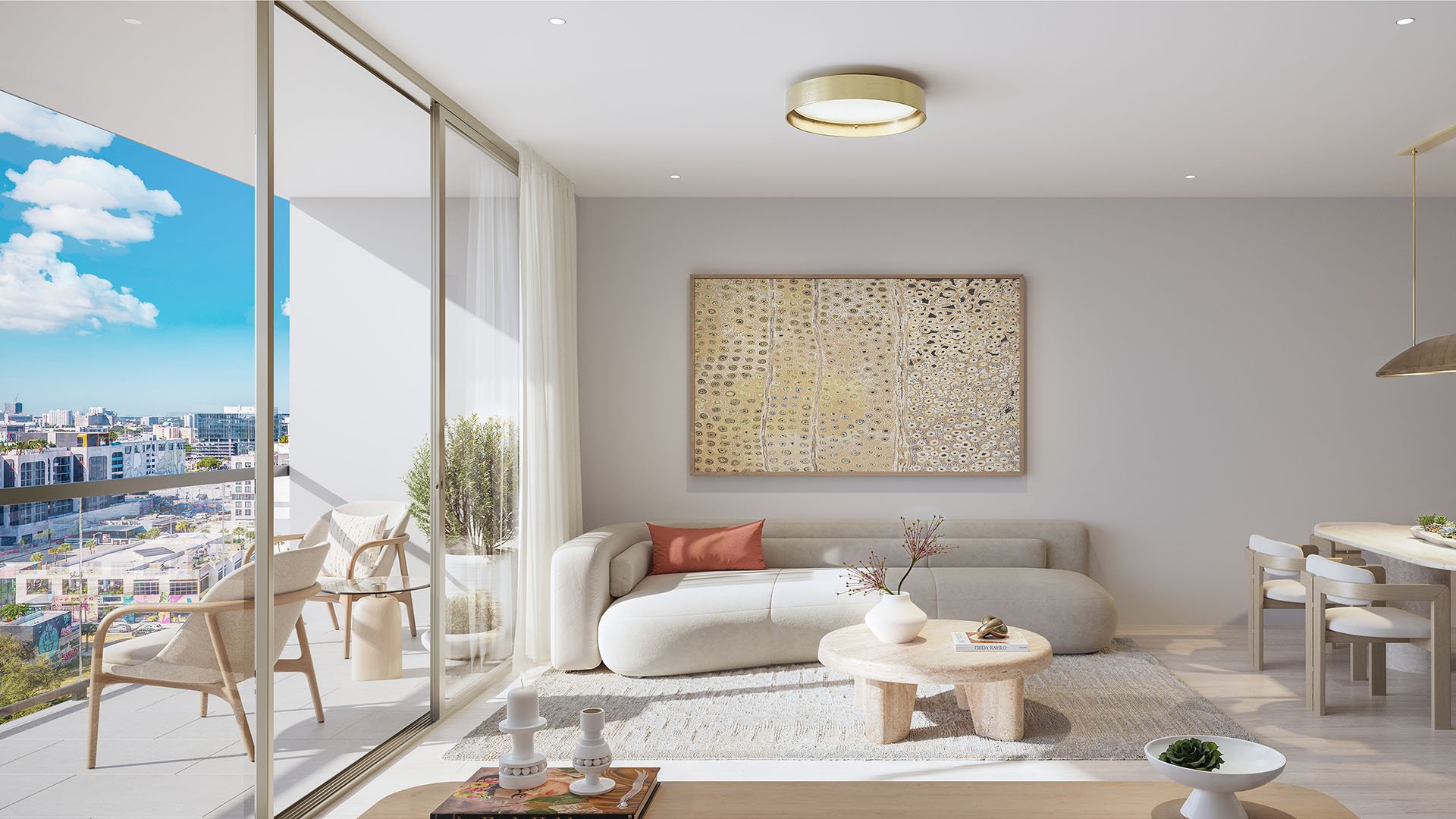
Outdoor space should also be judged carefully. A terrace can be a powerful extension of the home when it feels protected rather than performative. In Wynwood, the most desirable terraces are likely to provide air, light, and atmosphere without making the owner feel like part of the public realm.
New-construction buyers should ask direct questions about access control, amenity scheduling, service routes, and the long-term management culture of the building. Pre-construction buyers should go further, studying floor plan logic and asking how the project intends to separate resident privacy from neighborhood participation.
The strongest argument for Wynwood is optionality. Owners can live near culture without making every day a public occasion. They can invite guests into a neighborhood that feels distinct from more conventional luxury enclaves, then return to a residence that is quiet, composed, and personal.
This is why the comparison set should be broad rather than narrow. A buyer who likes Wynwood may also be drawn to the design orbit around Miami Design Residences Midtown Miami or the refined neighborhood adjacency of Kempinski Residences Miami Design District. These are not identical choices. They help define how much cultural proximity, brand identity, and residential privacy a buyer truly wants.
Investment logic also enters the conversation, although it should not overwhelm the personal use case. A culturally legible address can have emotional durability when the building itself is well managed and the residence lives comfortably. Buyers should resist treating neighborhood excitement as a substitute for private livability. The premium is earned when both coexist.
Frida Kahlo Wynwood Residences will likely resonate most with buyers who see a home as more than a retreat. They may collect art, entertain selectively, work in design or media, divide time between cities, or simply prefer neighborhoods with a sense of authorship. They are not looking for the quietest possible address. They are looking for a home that can be quiet when needed.
That distinction is important. Wynwood is not for every luxury buyer, and it does not need to be. Its appeal is strongest for those who value immediacy, visual texture, and a more contemporary interpretation of Miami life. The right residence must answer that lifestyle with privacy, not dilute it with overexposure.
In that sense, the project belongs to a larger South Florida discussion: the move from luxury as distance to luxury as control. The best homes no longer ask owners to choose between culture and calm. They allow both, with boundaries designed into the experience.
Is Wynwood a privacy-first neighborhood? Wynwood is better understood as an access-first neighborhood, so buyers should focus on how a specific building creates privacy within an active setting.
Why is Frida Kahlo Wynwood Residences relevant to cultural buyers? Its identity places it within a cultural conversation, making it especially relevant for buyers who want a home connected to artful urban energy.
What should buyers study first in an urban residence? Arrival, lobby control, elevator access, sound protection, and amenity management should be reviewed before finishes become the focus.
Can cultural access and privacy coexist? Yes, when the building creates clear transitions between the public street, shared spaces, and the private residence.
Is a Boutique building always more private? Not automatically. Boutique scale helps only when operations, access control, and resident circulation are carefully considered.
How should terraces be evaluated in Wynwood? Terraces should offer light and atmosphere while preserving a comfortable sense of separation from the street and neighboring activity.
What makes New-construction important in this discussion? New-construction can address modern expectations for access, acoustics, services, and amenity planning from the beginning.
What should Pre-construction buyers ask? They should ask how privacy, guest flow, resident circulation, and building management are intended to work once the property is occupied.
Is Wynwood mainly an Investment decision? It can be, but the strongest decision should still begin with livability, privacy, and personal alignment with the neighborhood.
Who is the ideal buyer for this type of residence? The ideal buyer wants cultural proximity, design identity, and the ability to retreat into a controlled private home.
To compare the best-fit options with clarity, connect with MILLION.
If branded residences are on your mind — as a home or as an allocation — we would be glad to share what we are seeing, privately.
Begin a quiet conversation