A discreet framework for family offices assessing energy dashboards in South Florida residences, with emphasis on governance, lifestyle continuity, operating visibility, and long-term asset stewardship.

For family offices, a South Florida residence is rarely a simple lifestyle purchase. It may be a principal home, a seasonal retreat, an intergenerational gathering place, an art-filled environment, a hospitality platform, or part of a broader investment strategy. In that context, an energy dashboard should not be treated as a decorative smart-home screen. It is an operating interface for one of the family’s most visible private assets.
The most useful dashboards answer practical questions: how the residence consumes power, when loads rise, which systems drive volatility, whether comfort is being maintained, and how the property team can intervene before a minor inefficiency becomes a recurring cost or service issue. The goal is not to turn principals into facility managers. It is to give the family office, house manager, property engineer, or trusted adviser a clearer view of performance.
In South Florida, where residences often combine glass, water, terraces, balcony living, pools, wellness areas, elevators, wine storage, kitchens, spas, and sophisticated climate systems, energy behavior can be complex. A dashboard worth relying on should simplify that complexity without flattening it. It should provide enough depth for technical review and enough clarity for executive reporting.
A strong energy dashboard is not merely a chart of consumption. Family offices should ask what decisions the interface helps them make. Can it identify abnormal use? Can it distinguish routine seasonal variation from a system that needs service? Can the property team compare operating patterns across occupied and unoccupied periods? Can alerts be routed to the right person without disturbing the principal?
The best residential dashboards are designed around roles. A principal may want only a refined summary, if anything at all. A house manager may need daily exceptions, comfort readings, and equipment status. A family office may need monthly reporting, vendor accountability, and evidence that operating protocols are being followed. A mechanical contractor may need temporary diagnostic access, limited in scope and time.
If the dashboard cannot serve these different audiences, it may become another underused layer of technology. The family office should evaluate not only the data captured but also the decisions enabled: adjust, investigate, defer, replace, schedule, or verify.
Energy-dashboard review should begin before closing, substantial completion, or handover, not after the first operating surprise. In a new-construction residence, the family office should ask how the dashboard is integrated with the building systems, which equipment is monitored, and whether the interface will remain serviceable as vendors change. In a resale residence, the questions shift toward documentation, access rights, system age, and whether existing controls have been customized in ways that only one technician understands.
A disciplined review should cover metering hierarchy, user permissions, alert logic, data retention, reporting format, remote access, cybersecurity posture, and vendor support. The family office should understand whether the system measures whole-home consumption only or can isolate major loads. Granularity matters because a single aggregate number rarely explains the problem.
Equally important is ownership of the data. The family should know who can see the dashboard, who can export reports, who receives alerts, and what happens when a vendor relationship changes. In ultra-private residences, energy data can reveal occupancy patterns, staffing routines, and lifestyle habits. Access should be intentional, documented, and reviewed periodically.
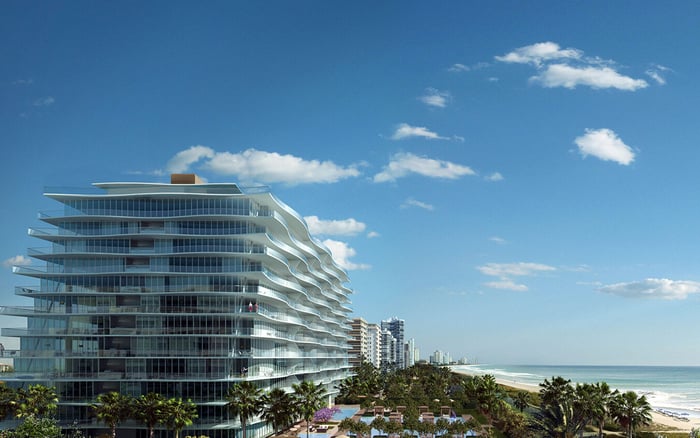
The South Florida luxury market places special demands on residential operations. In Brickell, a high-rise residence may rely on building-wide systems as well as private controls. In an oceanfront home or condominium, comfort expectations often meet exposure, humidity, and large expanses of glass. A second home may sit unoccupied for stretches and then need to perform flawlessly for family arrivals, guests, or events.
A useful dashboard helps bridge the gap between absence and arrival. It should allow the property team to confirm that systems are stable before the family lands, that climate conditions are appropriate for interiors and collections, and that unusual consumption is flagged early. For residences with art, wine, wellness suites, or specialty materials, energy performance is not only a utility concern. It is part of preservation.
Family offices should resist judging a dashboard by visual polish alone. A beautiful interface can still be shallow. Conversely, a technical platform can be powerful but unusable for household staff. The right solution combines legibility, disciplined alerts, practical reporting, and a clear service model.
Energy dashboards become valuable when they are governed. That means someone is responsible for reviewing them, exceptions have defined pathways, and recurring findings are discussed as part of property operations. Without governance, the dashboard becomes a passive archive. With governance, it becomes a stewardship tool.
For a family office, governance may include a monthly property-performance packet, a quarterly review with the house manager, and an annual assessment of major systems. The dashboard can support questions such as whether service contracts are adequate, whether staff protocols are effective, whether equipment is short cycling, or whether upgrades deserve consideration.
This is where discretion matters. Principals generally do not want to be burdened with operational noise. They do want the residence to feel effortless. The family office’s role is to convert technical signals into quiet competence: fewer surprises, better-prepared arrivals, more accountable vendors, and a property that behaves as intended.
Several warning signs should prompt deeper review. One is a dashboard that cannot clearly explain what it measures. Another is a system dependent on a single installer with limited documentation. A third is excessive alerts, which can train staff to ignore the very warnings that matter.
Family offices should also be cautious when access permissions are informal. Shared passwords, broad vendor access, and undocumented remote-control rights are not consistent with serious private-asset management. A dashboard attached to climate, lighting, shades, battery systems, or other critical components should be treated as part of the residence’s operational infrastructure.
Another red flag is the absence of handover training. If the household team cannot interpret the interface, export a basic report, or identify when to call a specialist, the system has not been fully delivered. The family office should require practical training, current documentation, and a named support path.
The family office does not need a long technical memo every month. It needs a clear executive summary that separates normal variation from actionable items. A concise dashboard report might include overall consumption trend, notable exceptions, comfort stability, open service items, vendor actions, and recommendations.
The language should be plain. Instead of overwhelming principals or advisers with raw charts, the report should answer: Is the property operating normally? What changed? What requires approval? What has already been handled? What should be watched?
For multi-residence families, this reporting discipline is especially useful. It allows assets in different neighborhoods, building types, and use patterns to be compared without forcing false equivalence. A waterfront estate, a condominium pied-à-terre, and a primary residence will not behave the same way. The dashboard should help explain those differences rather than obscure them.
In the most refined residences, technology disappears into the experience. Rooms feel calm, systems respond, arrivals are prepared, and the family is not asked to manage the machinery behind the comfort. Energy dashboards support that standard when they serve the people entrusted with the residence.
For South Florida buyers, the question is no longer whether a property has smart systems. The better question is whether those systems can be understood, governed, secured, and maintained over time. A serious dashboard should help protect comfort, privacy, operating discipline, and long-term value. That is why energy visibility belongs beside architectural quality, amenity programming, and service culture in the family-office review.
Should principals personally monitor the energy dashboard? Usually no. The dashboard should support the property team and family office, with principals receiving only refined summaries when useful.
Is a beautiful interface enough? No. Visual design matters, but the system must provide actionable data, clear alerts, and practical reporting.
When should the dashboard be reviewed? Ideally before acquisition, completion, or handover, when documentation, access, and service expectations can still be clarified.
What is the most important governance issue? Defined responsibility. Someone must review exceptions, coordinate vendors, and translate findings into decisions.
Can energy data create privacy concerns? Yes. Consumption patterns may suggest occupancy and routines, so permissions and remote access should be tightly controlled.
Does this matter for a second home? Yes. Intermittent occupancy makes pre-arrival verification and exception alerts especially valuable.
What should a monthly report include? It should summarize trends, exceptions, comfort stability, service items, and recommendations in plain language.
How does this apply in Brickell condominiums? The review should distinguish private residence controls from building-managed systems and clarify who manages each layer.
Why is oceanfront exposure relevant? Coastal residences often require careful attention to comfort, humidity, and system performance across changing conditions.
Should new-construction buyers ask about dashboards early? Yes. Early review helps confirm integration, documentation, permissions, and training before the residence is fully handed over.
For a tailored shortlist and next-step guidance, connect with MILLION.
If branded residences are on your mind — as a home or as an allocation — we would be glad to share what we are seeing, privately.
Begin a quiet conversation