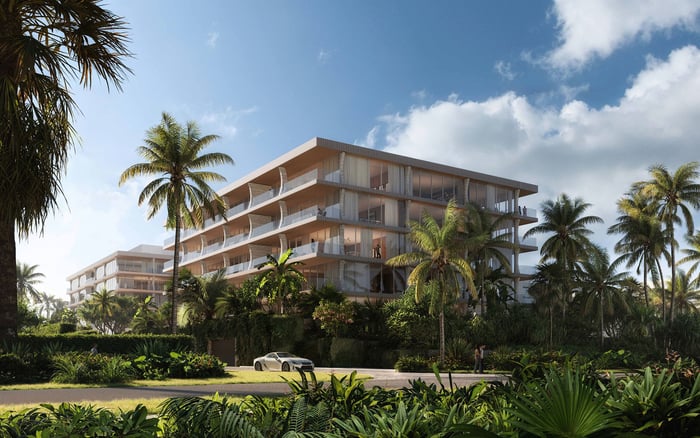
For families considering West Palm Beach, waterfront value should be assessed alongside storm procedures, insurance, access, backup power, storage, and the realities of everyday household life.

A West Palm Beach waterfront purchase is not simply a choice of view, floor plan, or architectural expression. For a family, it is also a decision about how the household will function when weather, travel, school schedules, pets, staff, and visiting relatives converge.
The most useful approach is to document the family’s actual routines before touring. Who will occupy the residence throughout the year? Who makes decisions when the principals are away? Must the home accommodate young children, older relatives, a live-in caregiver, or multiple vehicles? A primary residence and a second home can require very different levels of oversight.
This is the practical premise behind thoughtful buyer’s guides: the right property is not merely beautiful during a presentation. It remains manageable when the family’s attention is elsewhere.
Waterfront ownership has an emotional clarity that is difficult to replicate. Yet the water view should be evaluated alongside the property’s preparation plan, not as a separate lifestyle benefit.
Ask for a step-by-step account of what happens before, during, and after severe weather. The response should explain who communicates with residents, who secures shared areas, how access is controlled, what residents must do inside their homes, and how reopening is managed. Families should also determine how instructions reach owners who are traveling or living abroad.
The objective is not to eliminate uncertainty, but to define responsibility. In a condominium, management may coordinate common areas while the owner remains responsible for the residence and its contents. With estates and single-family ownership, the family may gain greater control while assuming more direct responsibility for preparation, vendors, landscaping, drainage, and post-event inspections.
A polished interior can distract from the operational questions that matter most. During due diligence, assess windows and exterior doors, terraces, potential water-entry points, mechanical equipment, utility locations, parking, elevators, communications, and storage. Qualified inspectors and appropriate specialists should evaluate conditions and documents rather than rely on visual impressions.
Storage warrants particular attention. Families may need designated space for terrace furniture, children’s outdoor equipment, bicycles, pet supplies, luggage, and preparation materials. Determine whether these items can be moved quickly and whether building rules affect timing, elevator use, or vendor access.
Prospective buyers comparing Alba West Palm Beach with Forté on Flagler West Palm Beach should apply the same operational questionnaire to each opportunity. A project presentation can begin the conversation, but documents, professional inspections, insurance review, and direct answers should complete it.
For families, storm preparation extends beyond the structure. It includes the ability to receive information, reach vehicles, care for children or pets, and make decisions without unnecessary ambiguity.
Ask how the property addresses backup power, life-safety systems, elevator availability, garage access, deliveries, water interruptions, and resident communications. Do not accept a broad assurance that a building is prepared. Request precise explanations of what is covered, what is not, and what an owner must arrange independently.
This is particularly important when considering new construction, where buyers should distinguish proposed procedures and specifications from completed, tested operations. A family evaluating Shorecrest Flagler Drive West Palm Beach and The Ritz-Carlton Residences® West Palm Beach can use these questions to compare the fit among the residence, management framework, and household expectations without assuming every property operates identically.
Insurance should enter the conversation early, not after a preferred residence has been selected. Give an insurance adviser the property-specific information needed to discuss potential coverage, exclusions, deductibles, personal property, temporary living arrangements, vehicles, valuables, and household staffing considerations.
Condominium buyers should examine the relationship between association-level coverage and the owner’s policy. Single-family buyers should address the home, site, exterior features, and any separate structures. In either case, clarify which documentation may be required, which assumptions are being made, and which costs remain the owner’s responsibility.
The goal is a realistic picture of ownership. A family should understand not only whether coverage may be available, but also how the proposed structure aligns with its balance sheet, risk tolerance, and preferred level of self-insurance.
Storm readiness is inseparable from ordinary mobility. Drive the routes the family expects to use at relevant times, considering school runs, medical appointments, airport trips, household staff, service providers, and guests. Then assess how those routines might change during a weather event or building closure.
For a high-rise, examine the route from the residence to the elevator, parking area, lobby, and street. For a private home, consider gates, garages, exterior storage, vendor entry, and the logistics of securing the property when no family member is present.
A successful waterfront purchase should feel composed on an ordinary Tuesday as well as on a perfect weekend. Convenience, preparation, and beauty are not competing priorities. For family buyers, they are the components of durable luxury.
Before committing, create a concise property file containing inspection findings, insurance discussions, building or association materials, emergency procedures, key contacts, vendor responsibilities, and the family’s own departure checklist. If the residence may be unoccupied, assign decision-making authority in advance.
Finally, compare properties by friction, not finishes alone. Which home requires the fewest improvised decisions? Which management model suits the family’s preferred level of involvement? Which residence makes storage, communication, access, and preparation easiest to understand? The strongest choice is often the one whose operational demands are clear before ownership begins.
Should storm preparation be reviewed before making an offer? It should be considered early enough to inform property selection, due diligence, insurance discussions, and contract advice.
Is a condominium automatically easier than a single-family home? Not necessarily. A condominium may centralize certain responsibilities, while a private home can provide greater direct control.
What should families ask building management first? Request a clear explanation of resident communications, shared-area preparation, access, backup systems, and reopening procedures.
Why does storage matter in a waterfront residence? Storage affects how quickly outdoor furnishings, family equipment, valuables, and preparation supplies can be secured.
When should an insurance adviser become involved? Involve an adviser before emotional commitment, using details specific to the residence and intended ownership pattern.
What should absentee owners plan for? They should establish local contacts, decision-making authority, inspection arrangements, communication protocols, and a written preparation checklist.
How should families evaluate backup power? Ask precisely which systems and areas are supported, for what operational purpose, and what remains the owner’s responsibility.
Do higher floors remove storm-related concerns? Floor height does not replace a review of access, glazing, terraces, utilities, elevators, communications, and building procedures.
What documents deserve professional review? Appropriate advisers should review relevant contracts, association materials, insurance information, inspection findings, and property procedures.
What is the best final comparison between properties? Compare how clearly each option supports the family’s routines, preparation responsibilities, risk tolerance, and desired level of oversight.
When you're ready to tour or underwrite the options, connect with MILLION.
If branded residences are on your mind — as a home or as an allocation — we would be glad to share what we are seeing, privately.
Begin a quiet conversation