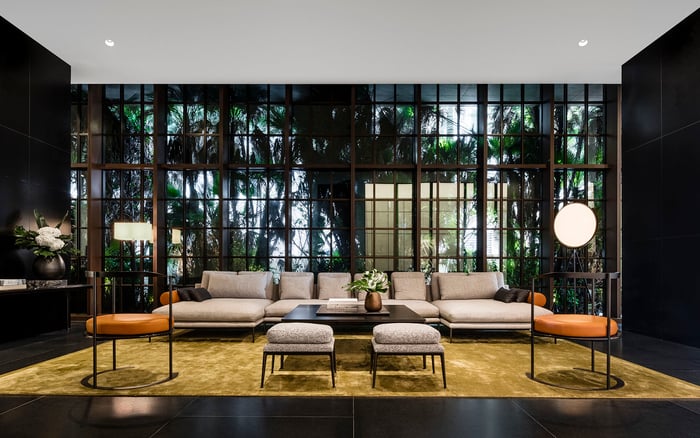
Arte Surfside offers resident-only rooftop tennis in an adjacent amenity building, not within the residential tower. For buyers who play regularly, the route, reservation rules and court condition deserve as much attention as the residence itself.
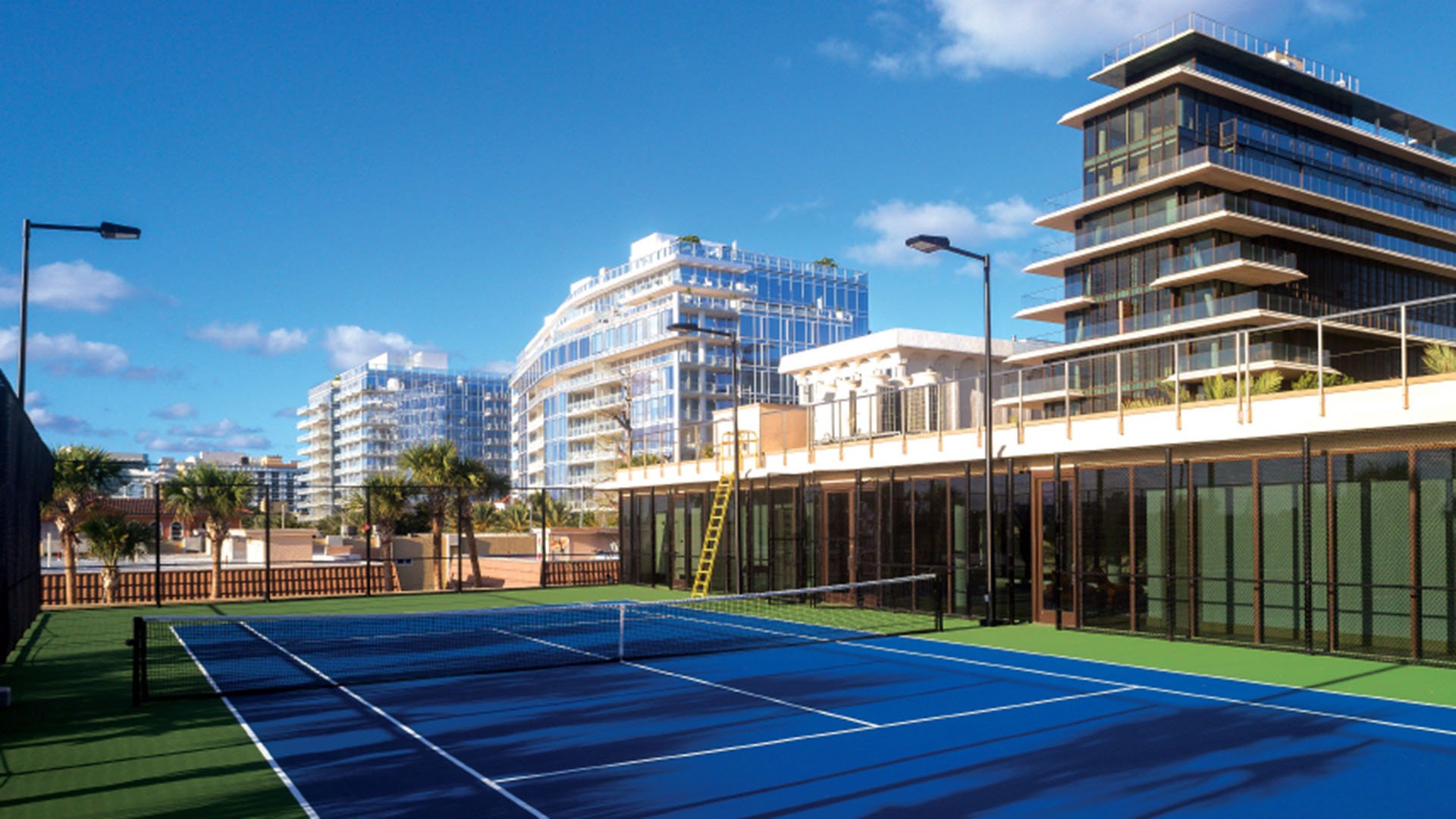
For a buyer who plays regularly, a tennis court is more than an entry on an amenity list. It shapes the morning routine, the practicality of a lesson and the ease of fitting a match between commitments. At Arte Surfside, the distinction is architectural: the rooftop tennis court occupies a separate building adjacent to the residential tower, not the tower itself.
That arrangement deserves a precise reading. Arte offers resident-only tennis in an adjacent amenity structure-not a court reached entirely within the residential tower or a facility immediately outside an apartment. For buyers who define luxury through effortless daily use, the route matters as much as the amenity.
The question is not whether a separate building is inherently better or worse. It is whether the configuration supports the way a household intends to live.
Arte is an oceanfront condominium at 8955 Collins Avenue in Surfside, Florida 33154. Completed in 2020, the development contains 16 residences. That scale establishes its boutique character, but says nothing about how frequently residents play tennis or how readily a preferred reservation will be available.
The adjacent resident-use building brings together the rooftop court, premium car parking, concierge services and a golf simulator. Locker rooms also accompany the rooftop tennis amenity. These are meaningful components of the offering, but their presence does not explain the journey from a specific residence to the court.
For a prospective owner, the separate structure is best treated as a distinct part of the property experience. Examine how it works rather than assuming “adjacent” guarantees a particular walking time, covered connection or accessibility arrangement. None of those practical details should be left to imagination.
A showing should include the full journey from the residence under consideration to the tennis court. Begin at the apartment door, not the amenity building entrance. Follow the actual resident route, noting each transition, including doors, level changes and access procedures.
Consider the journey with a racquet bag, after a workout and at the hour you would normally play. Ask whether the connection is covered and how access works in wet weather. If mobility or step-free circulation matters to the household, verify the entire route rather than relying on a general property description.
The return deserves equal attention. One buyer may find a separate destination appealing for the clear distinction it creates between home and recreation. Another may prioritize the shortest possible trip. Neither preference is more sophisticated; what matters is recognizing which will govern actual use.
Do not assign a convenience premium until you have experienced that sequence yourself.
Exclusivity and availability answer different questions. The adjacent building is designed for resident use, but that does not establish the court’s booking system, permitted playing hours or rules for guests and instructors. Those details can determine whether tennis becomes a regular pleasure or an occasional compromise.
Request the current reservation policy and ask how recurring bookings, cancellations and competing requests are handled. Clarify whether guests may play, whether outside coaching is permitted and whether conditions apply to lessons. Confirm lighting arrangements, evening use and weather-closure procedures rather than assuming a rooftop court accommodates every preferred schedule.
The 16-residence count is not a reliable proxy for low demand. A small ownership group can still share the same preferred morning window. Buyers with a fixed playing routine should focus on that window, recognizing that past availability cannot guarantee future access.
The rooftop setting warrants a practical inspection. Confirm the current surface and operating condition, and assess wind exposure at a time relevant to your routine. Ask how weather affects play and what procedures apply when conditions change. The court’s existence is established; its suitability for an individual player requires a closer look.
Maintenance deserves the same scrutiny. Request information about routine upkeep, planned work and how future court-related expenses are funded. Review applicable condominium materials with the appropriate professional advisers, particularly if tennis is a decisive reason for purchasing.
Separation from the residential tower should not be treated as proof of reduced noise. If sound transmission or activity near the home matters, assess the specific residence and its relationship to the amenity structure. Architectural separation is a layout fact, not a measured acoustic result.
Tennis sits within a broader offering. Arte includes a 75-foot indoor lap pool with travertine decking and onyx accents, an outdoor swimming pool, and spa amenities comprising a sauna, steam room and meditation pond. A fitness center and yoga studio extend the exercise options, while a residents’ lounge and children’s playroom support other household routines.
Direct beach access with dedicated chairs and service adds another dimension. For a household balancing a serious tennis habit with swimming, fitness and time by the ocean, the purchase decision should account for the complete week, not only the match schedule.
If Fendi Château Residences Surfside is also on your shortlist, apply the same discipline to its amenity tour: establish what is offered, where it sits and how access works. Project identity alone is no substitute for testing daily convenience.
A comparison that includes Eighty Seven Park Surfside should begin with the household’s priorities, not an assumption of equivalent facilities. Build a consistent set of questions for every residence under consideration, then evaluate each property on its own verified arrangements.
For Arte, the distinction is clear: resident-only rooftop tennis occupies an adjacent building. The best-fit buyer is not necessarily someone who sees that separation as an advantage. It is someone who has walked the route, understood the rules and decided the arrangement suits a preferred way of living.
Before committing, resolve three essentials: the physical journey, the operating rules and the court’s current condition. Weigh those findings alongside the residence and the wider amenities. This gives tennis its proper importance without allowing one attractive feature to substitute for full purchase diligence.
For a discreet assessment of how Arte fits your residential priorities, connect with MILLION.
If branded residences are on your mind — as a home or as an allocation — we would be glad to share what we are seeing, privately.
Begin a quiet conversationArte Surfside is an oceanfront condominium at 8955 Collins Avenue, Surfside, Florida 33154.
No. The rooftop tennis court is in a separate building adjacent to the residential building.
Yes. The adjacent structure is designed exclusively for resident use; buyers should separately confirm current guest and coaching rules.
The adjacent building also accommodates premium car parking, concierge services and a golf simulator. Locker rooms accompany the rooftop tennis amenity.
Arte contains 16 residences. That count does not establish court demand or guarantee preferred reservation times.
Arte Surfside was completed in 2020.
Buyers should verify whether the connection is covered during a showing. Walk the complete route from the specific residence and confirm accessibility arrangements.
Confirm reservations, playing hours, guest access, coaching, lighting and weather closures. Inspect the court’s condition and ask about maintenance funding.
Arte offers a 75-foot indoor lap pool, an outdoor pool, a sauna, a steam room and a meditation pond. Residents also have a fitness center and yoga studio.
Yes. The property offers direct beach access with dedicated chairs and service.