A buyer-focused shortlist of Miami residences that pairs marketed water views with a closer look at terrace design, exposure and sightline due diligence. Four branded addresses lead the selection, with Una included as a waterfront comparator.
A water view earns its place in a Miami residence by enriching ordinary hours: breakfast beside the glass, an afternoon outdoors, dinner with the bay beyond the table. For a discerning buyer, the question is not simply how much water appears in a rendering. It is what the selected residence sees, what could interrupt that outlook and whether its balcony suits the way its owner lives.
This shortlist distinguishes architectural promise from purchase-level assurance. The order reflects five different propositions, beginning with Waldorf Astoria’s height-led appeal; it is not a measured ranking of obstruction risk. Una takes the fifth position as a waterfront luxury comparator, rather than an established externally branded residence.
None should be treated as offering guaranteed protected views. Height, shoreline position and terrace design deserve attention, but the decisive assessment must address the particular residence.
1. Waldorf Astoria Residences Miami: the height-led Downtown selection
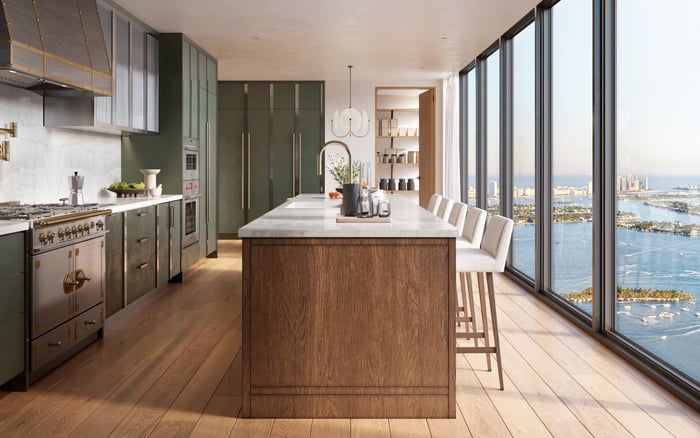
At 300 Biscayne Boulevard in Downtown Miami, Waldorf Astoria is marketed as a 100-story tower with 360 branded residences. Its advertised panoramas encompass Downtown Miami, Miami Beach and the Atlantic Ocean. Floor-to-ceiling windows reaching up to 11 feet emphasize the experience from inside the home.
Its first-place position reflects that vertical ambition, not a finding that its views are safer from obstruction. Buyers should distinguish the appeal of a high-floor interior outlook from the performance of the selected balcony. Confirm outdoor-space configuration, orientation and sightlines before treating this as a terrace-led choice. Its Downtown address should not be confused with direct shoreline frontage.
2. Missoni Baia: the strongest documented terrace-shading proposition
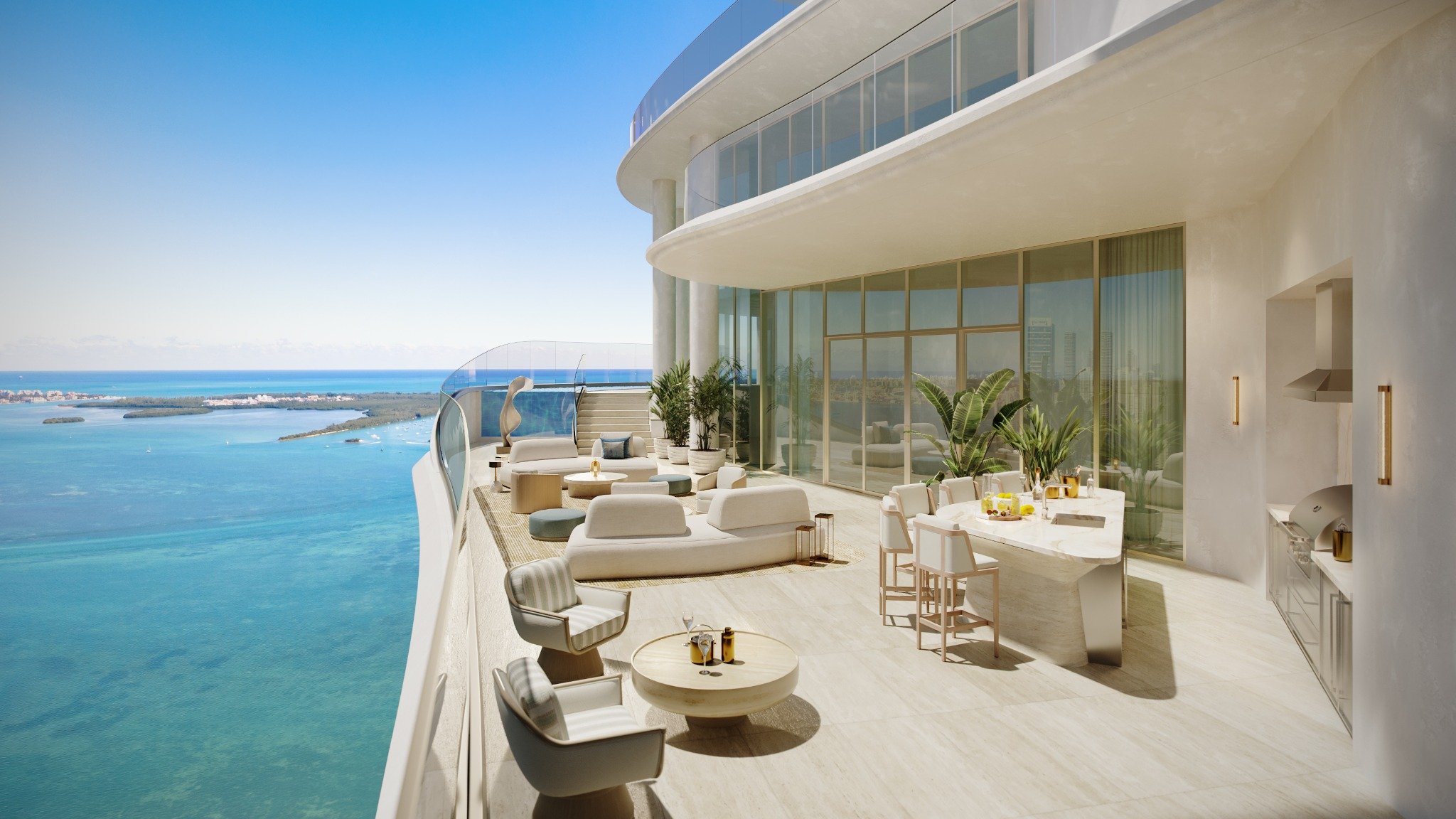
Missoni Baia rises 57 stories along approximately 200 feet of Biscayne Bay frontage in Edgewater. The fashion house’s first ground-up residential collaboration in the United States combines a waterfront setting with shaded terraces described as open-air rooms. That emphasis on shading is a meaningful distinction for buyers who value time outdoors as much as a view through glass.
Floor-through layouts are described as offering multiple exposures, including city, bay, Miami Beach and ocean perspectives. The attraction is the possibility of different outlooks within one home, not a promise that every residence shares them. Verify the selected plan, usable terrace dimensions and the hours when its seating area receives shade.
3. St. Regis Residences Miami: the South Brickell bayfront option
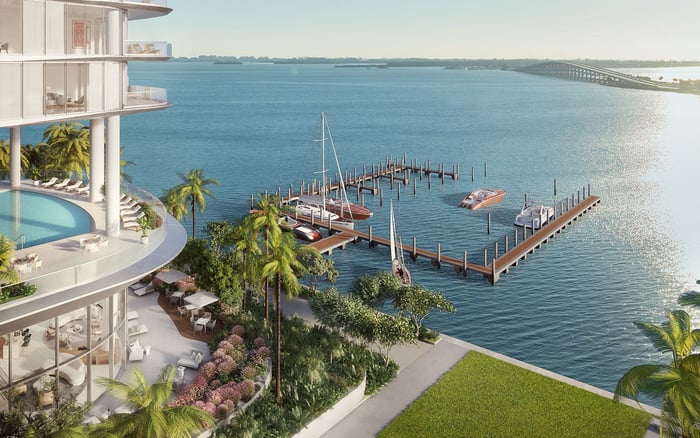
St. Regis occupies a bayfront site at 1809 Brickell Avenue. Its marketed Biscayne Bay and Atlantic Ocean panoramas are framed by floor-to-ceiling windows and private terraces. The advertised waterfront amenity deck, with a resort-style pool and private cabanas overlooking the bay, extends the water-oriented experience beyond the residence.
For a buyer seeking a private terrace in a bayfront setting, this is a compelling candidate to investigate. The essential distinction is between the building’s broader waterfront identity and the view from a specific living room or outdoor chair. Neither amenity-deck views nor tower-wide marketing establishes an individual home’s outlook.
4. Aston Martin Residences: bay and skyline in one composition
The 66-story waterfront development at 300 Biscayne Boulevard Way is marketed with Biscayne Bay and Miami skyline views, floor-to-ceiling windows and spacious balconies. Its design is presented as an extension of the automotive brand’s elegance and craftsmanship, giving the address a distinct identity beyond its outlook.
The buyer’s task is to determine how the selected residence balances water and city. “Spacious” is a qualitative description, not a furniture plan. Request dimensions and assess the view from a seated position, along with the relationship between balcony doors, dining arrangements and circulation. Branding and height do not settle those practical questions.
5. Una Residences: the balcony-focused waterfront comparator
At 175 SE 25th Road in Brickell, Una brings a curved silhouette and floor-to-ceiling glazing to its Biscayne Bay setting. Advertised outdoor features include expansive terraces, glass balcony railings and floor-to-ceiling lift-and-glide doors. Together, these details make it a useful comparison for buyers prioritizing the transition between interior rooms and outdoor living.
Una belongs here for that architectural proposition, not for a confirmed external luxury-brand affiliation. Its terraces merit examination alongside the branded candidates, but “expansive” should remain a description, not an assumed measurement. Confirm clear dimensions, door operation and actual exposure before assigning a premium to the outdoor experience.
The comparison between Waldorf Astoria Residences Downtown Miami and Aston Martin Residences Downtown Miami begins with different stated strengths: height-led advertised panoramas at the former, and a waterfront setting with spacious balconies at the latter.
Neither proposition answers the obstruction question on its own. Ask for an assessment tied to the exact floor and residence orientation. It should distinguish existing buildings from potential development on relevant parcels and separate the central water outlook from peripheral skyline views. Where a protected-view claim is made, request the documents that establish its scope rather than relying on a sales description.
Evaluate indoor and outdoor sightlines separately. A panorama through tall glazing and the view from a balcony chair are different purchasing considerations, even within the same residence.
At St. Regis® Residences Brickell, the private terrace sits within a broader bayfront offering. At Una Residences Brickell, glass railings and lift-and-glide doors provide specific architectural details to examine. These are useful starting points, not substitutes for a plan-level comparison.
Bring the same furniture brief to both: the dining table you expect to use, the lounge seating you want and the clear route between them. Request dimensioned terrace plans and clarify which measurements represent genuinely usable space. Test the intended arrangement rather than assuming a marketing adjective guarantees a comfortable fit.
Missoni Baia’s shaded-terrace description gives outdoor-focused buyers a concrete feature to investigate. Elsewhere, “private,” “spacious” or “expansive” terraces establish an outdoor offering without establishing comparable shade performance.
Ask for compass orientation, seasonal shadow information and any available wind assessment for the selected residence. Where access is possible, visit during the hours you expect to spend outside. Where it is not, request unit-specific visual material and a clear explanation of what remains illustrative. Do not infer all-day comfort from a waterfront address.
The strongest purchase is the home whose outlook, dimensions and exposure support your routine. Keep three decisions distinct: whether you value the brand, whether the water view satisfies you and whether the terrace works. A residence should earn its premium through those particulars, not borrow certainty from the tower’s name.
For a considered approach to Miami’s water-view residences, explore MILLION.
If branded residences are on your mind — as a home or as an allocation — we would be glad to share what we are seeing, privately.
Begin a quiet conversationWaldorf Astoria Residences Miami leads for its advertised 100-story height and panoramic outlook. That position is not a finding of lower obstruction risk.
Missoni Baia’s terraces are described as shaded open-air rooms overlooking Biscayne Bay. Buyers should still verify shade at their intended hours of use.
No protected-view guarantee is established here. Buyers should request residence-specific sightline analysis, relevant parcel reviews and documentation for any protection claim.
Its stated location is 300 Biscayne Boulevard in Downtown Miami. Its marketed panoramas should not be interpreted as evidence of direct shoreline frontage.
St. Regis occupies a bayfront site at 1809 Brickell Avenue and markets Biscayne Bay and Atlantic Ocean views with private terraces. Its advertised waterfront amenity deck also overlooks the bay.
Aston Martin Residences markets Biscayne Bay and Miami skyline views with floor-to-ceiling windows and spacious balconies. The precise balance of water and city requires a residence-specific review.
Una is included as a waterfront luxury comparator, not as a confirmed externally branded residence. Its expansive terraces, glass railings and lift-and-glide doors make it relevant to balcony-focused buyers.
Those terms are qualitative descriptions rather than verified measurements. Request dimensioned plans and test the usable area against your intended furniture arrangement.
Multiple exposures are associated with its described floor-through layouts. Confirm the selected plan rather than assuming every residence has city, bay, Miami Beach and ocean perspectives.
Review usable dimensions, compass orientation, seasonal shade, wind information and seated sightlines. Assess the exact residence instead of relying on building-wide imagery.