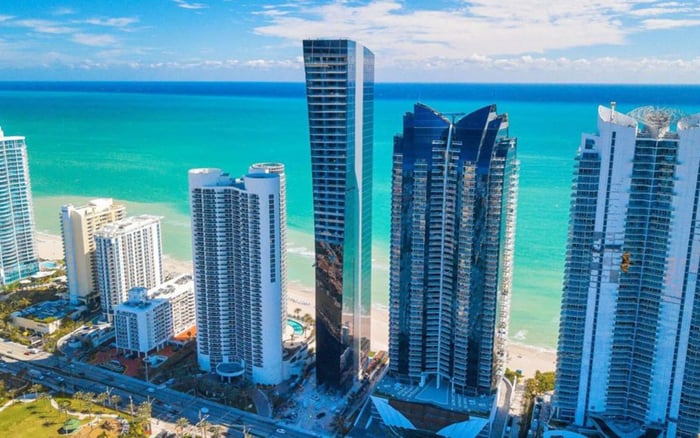
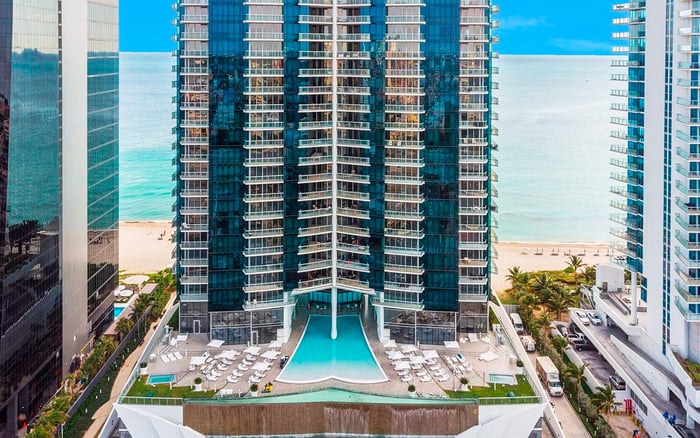
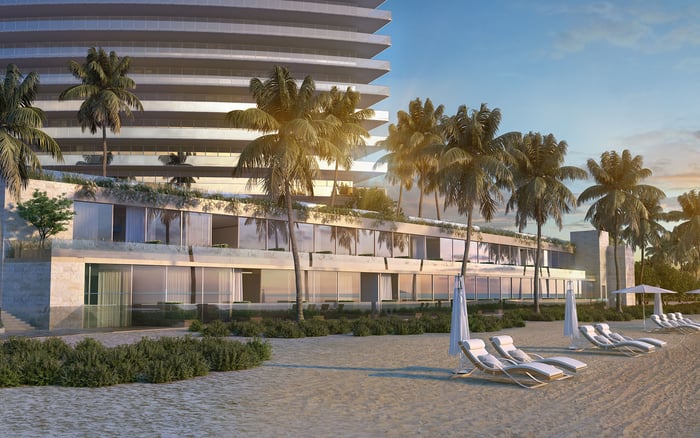
A disciplined review of Jade Ocean condominium dues separates the visible monthly charge from the insurance, staffing, utilities, reserves, and assessment exposure beneath it.
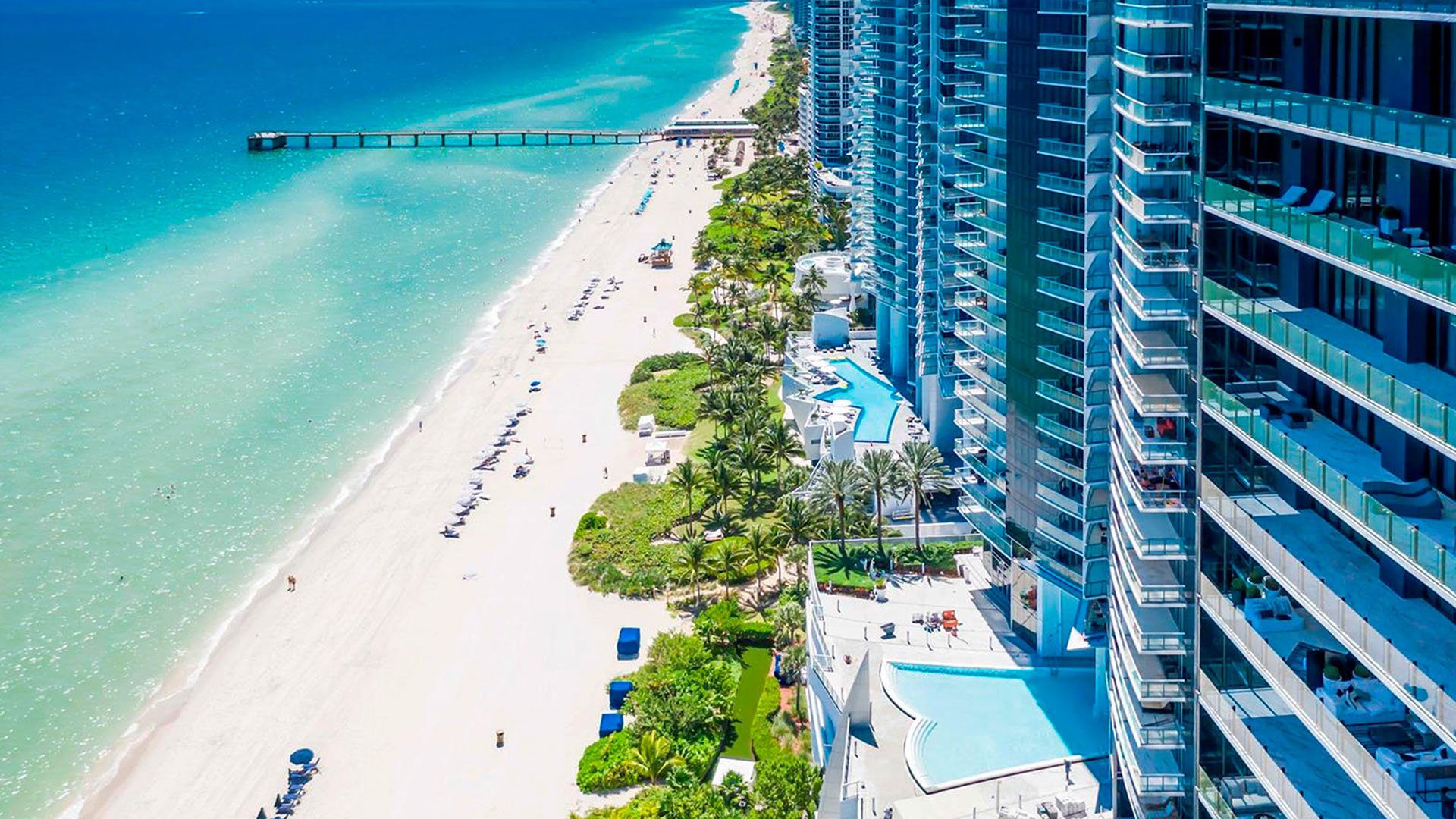
At Jade Ocean Sunny Isles Beach, the monthly association charge is best understood as an ownership system, not a single expense. Condominium dues generally fund two distinct obligations: current operations and reserve contributions. The first keeps the property functioning today; the second prepares it for future capital needs.
That distinction matters in an amenity-rich oceanfront building, where maintenance, common areas, pool and beach operations, concierge, valet, security, structural insurance, water, sewer, programming, and reserve contributions may all sit within the association's cost structure. A polished service experience can be valuable, but buyers should establish how it is funded and whether the current budget is durable.
This is particularly important for resale acquisitions. The quoted fee captures the current billing period, not necessarily the association's future exposure to insurance renewals, labor costs, utility consumption, capital work, or a major deductible. The objective is not simply to find a low fee. It is to determine whether the fee is credible.
The objective is not simply to find a low fee, but to determine whether it is credible.
Estimated monthly Jade Ocean fees range from $1,900 to $2,300 for one-bedroom residences, $2,300 to $3,100 for two bedrooms, and $3,100 to $4,000 for three bedrooms. Four-bedroom estimates range from $4,000 to $5,500, while penthouse estimates begin around $4,800 and may reach $7,000 or more. A broader estimate spans approximately $1,900 to $3,600, depending on size.
These ranges are directional, not substitutes for unit-specific documents. Individual listings illustrate the variation: one residence carried a monthly fee of $3,877, another $3,330, and another at the property $3,034. Buyers should therefore reconcile the sales listing, current ledger, estoppel information, and official association materials before completing their underwriting.
Normalize comparisons by residence size and determine exactly what the quoted amount includes. Parking, cable, internet, reserves, and other services can affect comparability. The same discipline applies when reviewing nearby luxury options such as Jade Signature Sunny Isles Beach or Armani Casa Sunny Isles Beach. A dollar-for-dollar comparison is incomplete unless the included services and reserve component are aligned.
The association's structural insurance and an owner's HO-6 policy are distinct layers of coverage. Estimated personal HO-6 coverage ranges from roughly $14,000 to $22,000 annually, separate from the structural coverage carried through the association. That personal premium should remain outside the HOA line in the buyer's ownership model.
For the association policy, request the declarations and examine coverage limits, deductibles, and hurricane or windstorm provisions. Then ask the consequential liquidity question: if a major deductible became payable, could reserves absorb it, or would owners face an assessment?
Build the downside case from actual renewal terms and insurance documents, not a generic escalation assumption. Model the association's insurance line independently, allocate the resulting change according to the unit's applicable share, and keep HO-6 premium sensitivity separate. Combining the categories can obscure which risk belongs to the association and which falls directly to the owner.
In a luxury tower, payroll should be evaluated alongside the service model. Concierge, valet, security, pool and beach operations, management, and maintenance all shape the resident experience. Buyers should identify which roles are held by employees, which are provided under contract, and whether the current budget reflects the level of service being delivered.
The practical test is straightforward: compare budgeted payroll and contract services with recent actual results, then model a downside case using assumptions supported by current contracts and management materials. Look for persistent variances, vacancies, overtime pressure, or service obligations that appear underfunded. Management fees, repairs, legal and accounting expenses, and administration should remain visible rather than disappearing into a broad operating category.
For a second-home owner, staffing quality can be especially consequential because the building often serves as the owner's operational proxy while the residence is vacant. The question is not whether staffing is expensive in isolation. It is whether the expense is transparent, stable, and commensurate with the service proposition.
Common-area utilities require their own sensitivity analysis. Water and sewer may be included within estimated Jade Ocean association fees, but buyers still need the budgeted amount, recent actual consumption, rate assumptions, and any material variance.
Review utilities across comparable periods and distinguish recurring consumption from unusual events. Then test changes against documented rates or management assumptions. If recent actual costs consistently exceed budget, the gap may indicate that the next budget requires adjustment. If costs are volatile, the model should preserve that volatility rather than relying on a smooth annual average.
This is where architecture and operations intersect. Extensive common spaces, pools, beach facilities, and service areas may create a different utility profile from another tower. Comparisons with Turnberry Ocean Club Sunny Isles should therefore focus on scope and inclusions, not merely the monthly total.
Reserve contributions are not surplus cash. They are the planned funding mechanism for future capital obligations. The central test is to compare the reserve study's recommended annual contribution with the amount actually budgeted. Any gap deserves an explanation and should be carried into the buyer's downside model.
Request the current reserve study, reserve balances, planned contributions, recent financial statements, and details of pending assessments. Examine whether reserves are growing in line with the study and whether major projects could compete for the same funds. Also determine whether the reserve balance is expected to cover a significant insurance deductible.
Special assessments must be analyzed separately from regular dues. A stable monthly charge does not eliminate assessment risk, and a higher charge is not automatically evidence of weakness if it supports disciplined reserve growth. This distinction is central to Buyer's Guides and Pricing & Trends discussions, yet it is often lost when properties are compared solely by advertised dues.
Create four independent lines for association insurance, payroll and contracted staffing, common-area utilities, and reserve contributions. Add management, repairs, professional fees, administration, and other operating items beneath them. For each line, record the current budget, recent actual result, documented next-period assumption, and a downside case. Add the owner's HO-6 premium and any known or pending assessment outside regular dues.
Jade Ocean's private line-item association budget and the allocations required for this analysis are not publicly available. The decisive materials are transaction-specific association records. Before relying on an advertised amount, reconcile the current budget, reserve study, insurance declarations, financial statements, unit ledger, estoppel information, and assessment disclosures.
The resulting analysis should answer three questions: what the residence costs now, which categories could reset the monthly obligation, and whether reserves can absorb foreseeable pressure without shifting it abruptly to owners. For a buyer in Sunny Isles Beach, that is the difference between observing an HOA fee and underwriting the ownership model.
For discreet guidance on South Florida luxury condominium ownership, connect with MILLION.
If branded residences are on your mind — as a home or as an allocation — we would be glad to share what we are seeing, privately.
Begin a quiet conversationEstimated fees may cover maintenance, common areas, pool and beach operations, concierge, valet, security, structural insurance, water, sewer, programming, and reserves.
Published market estimates place one-bedroom fees at approximately $1,900 to $2,300 per month.
Three-bedroom estimates range from $3,100 to $4,000, four-bedroom estimates from $4,000 to $5,500, and penthouses from $4,800 to $7,000 or more.
Fees can vary by residence size, allocation, configuration, and included services, so the unit ledger and official documents should control.
No. Jade-focused estimates place personal HO-6 coverage at roughly $14,000 to $22,000 annually, separate from association structural insurance.
Review coverage limits, deductibles, and hurricane or windstorm deductible provisions, including how a major deductible would be funded.
Compare budgeted payroll and contract services with recent actual results, current agreements, staffing obligations, and management assumptions.
Compare the reserve study's recommended annual contribution with the amount budgeted and investigate any funding gap.
No. Special assessments are separate obligations and should be reviewed independently during underwriting.
Request the current budget, reserve study, insurance declarations, recent financial statements, unit ledger, estoppel information, and pending-assessment disclosures.