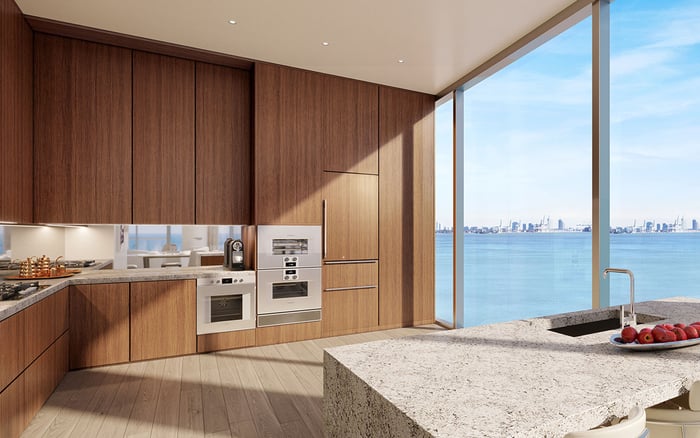
Digital key management is moving from a convenience feature to a quiet marker of sophistication in Miami luxury real estate, shaping how buyers tour, compare, own, and eventually resell prime residences.

In Miami luxury real estate, the most persuasive amenities are often the least visible. A residence may still be judged by its view, ceiling heights, terrace depth, and the grace of its arrival sequence. Yet a more discreet question is entering the search: how does the home manage access?
Digital key management is not simply a replacement for a metal key. It is a framework for controlling who enters a residence, when they enter, how long that permission lasts, and how the owner can modify access without being physically present. For buyers comparing a waterfront condominium, a lock-and-leave pied-à-terre, or a primary residence with staff, that framework can shape daily life as much as a private elevator or a well-proportioned kitchen.
The appeal is especially clear in a city where ownership patterns are layered. A buyer may live between Miami and another financial center, host family seasonally, coordinate designers before arrival, or allow a trusted vendor to enter while away. In that context, access becomes an extension of service. It is no longer only about unlocking a door. It is about choreographing privacy, convenience, security, and trust.
The traditional residence search treated access as an operational detail. Buyers toured the home, admired the finishes, asked about maintenance, and assumed that keys, fobs, and staff coordination would be handled later. Digital key management brings that conversation forward.
A well-designed system can support temporary credentials, scheduled access windows, mobile entry, revocable permissions, and records of access events. The strongest versions feel almost invisible. They allow the owner to grant entry to a family member, house manager, cleaner, designer, dog walker, or delivery contact without handing over a permanent physical credential.
For an ultra-premium buyer, this is not about novelty. It is about control. A digital credential can be specific, limited, and removed. A physical key can be copied, misplaced, or forgotten in a drawer. In a high-value residence, the distinction between those two access models is meaningful.
It also changes the touring experience. A buyer evaluating multiple residences may notice whether showings feel seamless or improvised. Buildings and homes with disciplined access protocols can create a calmer first impression. The arrival feels prepared. Staff know who is expected. Permissions are coordinated. The property presents itself as managed, not merely available.
Miami’s luxury audience is unusually sensitive to time, privacy, and mobility. Many buyers arrive with compressed schedules and clear expectations. They may tour several neighborhoods in a short window, moving from Brickell to coastal enclaves, then to quieter residential pockets. In that rhythm, inefficient access is more than an inconvenience. It becomes a signal.
Even shorthand search labels such as Brickell, Miami Beach, Sunny Isles, Coconut Grove, second-home, and new-construction now carry access questions beneath the surface. How will the owner enter after a late flight? Can a guest be admitted without a phone call? Can a vendor complete a task before the owner arrives? Can access be paused immediately if circumstances change?
For a second-home purchaser, digital key management can be particularly compelling. The owner may be away for weeks, then arrive with little notice. The residence must remain ready, but not exposed. The best access strategy allows housekeeping, maintenance, and preparation to occur within controlled boundaries, preserving both convenience and discretion.
For new-construction buyers, the subject becomes part of a broader technology review. The question is not only whether a building feels modern, but whether its systems will still feel intuitive years from now. Buyers should look for technology that enhances the ownership experience without making the residence dependent on overly complex routines.
Luxury access is ultimately a privacy issue. The most refined residences do not require owners to explain their schedules, repeat instructions, or rely on informal coordination. Digital key management can reduce those frictions by allowing permissions to be planned in advance and removed cleanly when no longer needed.
This matters for households with staff, frequent guests, art handlers, wellness providers, chefs, security consultants, or design teams. Each category of access may deserve a different level of permission. A permanent resident and a one-time delivery should not be treated the same. Neither should a weekday vendor and a family member arriving for the season.
In practice, buyers should ask how access is segmented. Can permissions be created for specific doors or areas? Can they be limited by time? Can the owner or authorized manager adjust them remotely? Is there a clear backup process if a phone is lost, a device fails, or a guest is unfamiliar with the system?
The answer should sound simple. If the explanation is overly complicated, the system may create more work than it solves. In high-end residential life, technology earns its place by disappearing into the background.
Digital key management should be evaluated with the same seriousness as parking, storage, building staffing, and service circulation. It belongs in the buyer’s due diligence conversation before a contract is signed, not after closing.
Start with daily use. Ask how owners, family members, staff, and guests enter the property. Ask whether credentials are physical, digital, or both. Ask who administers the system and what happens when access must be changed quickly. In a condominium, clarify where the building’s responsibilities end and the private residence’s responsibilities begin.
Then consider the property’s lifestyle profile. A lock-and-leave apartment needs different access logic from a full-time home with employees. A waterfront residence with frequent service appointments may require more granular permissions than a city apartment used mainly by the owner. A home intended for seasonal entertaining may need a graceful guest process that does not burden the owner with constant coordination.
Buyers should also consider the tone of the experience. Does the system feel hospitality-oriented, or does it feel like an office building? Does it preserve the elegance of arrival? Can a guest be admitted with confidence and clarity? Luxury is not only the presence of technology. It is the absence of awkwardness.
Digital key management can also influence how a residence is perceived when it returns to the market. A property that demonstrates organized access, thoughtful owner controls, and clean coordination may feel easier to own. That feeling matters.
Resale buyers often imagine their future routines while walking through a home. They consider morning arrivals, evening guests, travel weeks, staff needs, and family use. If the access structure supports those routines, the residence feels more complete. If it appears ad hoc, the buyer may sense work ahead.
This does not mean every luxury residence needs the most elaborate system available. In fact, restraint is often preferable. The most desirable access design is proportionate to the property. It should protect privacy, simplify ownership, and avoid unnecessary technological showmanship.
As Miami’s residential market continues to serve global, mobile, and privacy-conscious buyers, digital key management is becoming part of the language of quality. It sits alongside architecture, service, wellness, security, and location as one of the elements that define how a residence actually lives.
For buyers, the lesson is straightforward: do not wait until closing to understand access. Ask early. Test the logic. Imagine the residence while you are away, while guests are arriving, while a vendor needs entry, and while plans change at the last moment. The right system will not feel like technology for its own sake. It will feel like discretion made practical.
What is digital key management in a luxury residence? It is the use of digital credentials and controlled permissions to manage entry for owners, guests, staff, and vendors.
Why does it matter during a Miami residence search? It affects privacy, convenience, showing quality, staff coordination, and the ease of owning a home while traveling.
Is a digital key the same as a smart lock? Not necessarily. A smart lock is a device, while digital key management is the broader system for creating, limiting, and revoking access.
Should second-home buyers prioritize digital access? Yes, especially if the owner expects to coordinate maintenance, housekeeping, or guest arrivals while away from Miami.
What should buyers ask before making an offer? Ask who controls access, how permissions are changed, what backup options exist, and how guests or vendors are admitted.
Can digital access improve privacy? It can, when permissions are specific, temporary, and easy to revoke rather than dependent on copied keys or informal arrangements.
Does every luxury property need the same system? No. The best system should match the lifestyle of the residence and remain simple enough for daily use.
How does this apply to condominium living? Buyers should understand both the building access process and the private residence access process, since they may be administered separately.
Can digital key management affect resale appeal? It can support a stronger ownership impression by showing that the residence is organized, secure, and easy to manage.
What is the ideal user experience? The ideal system feels discreet, reliable, and intuitive, with technology supporting the lifestyle rather than interrupting it.
For a discreet conversation and a curated building-by-building shortlist, connect with MILLION.
If branded residences are on your mind — as a home or as an allocation — we would be glad to share what we are seeing, privately.
Begin a quiet conversation