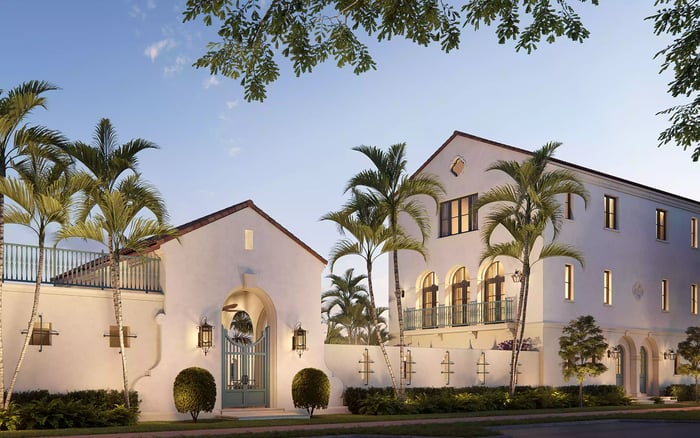
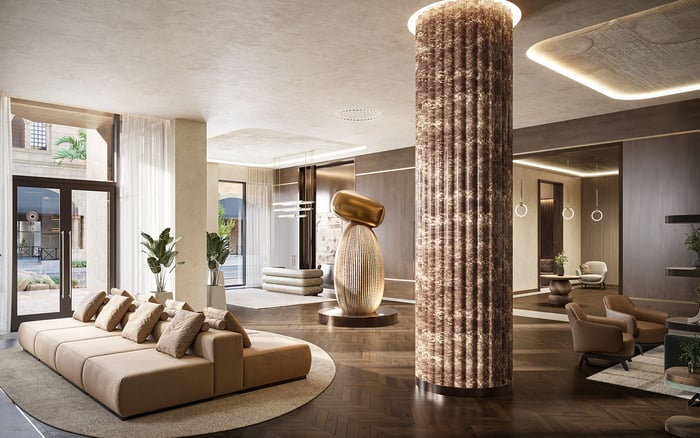
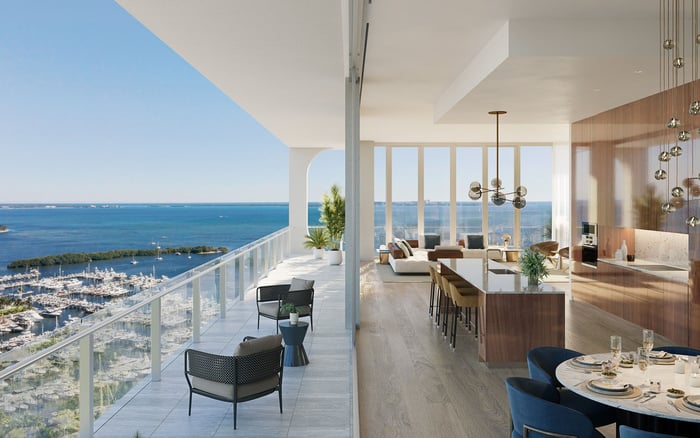
A buyer-focused comparison of Coconut Grove and Coral Gables through the practical demands of entertaining, private dining, guest circulation, and event-week privacy.
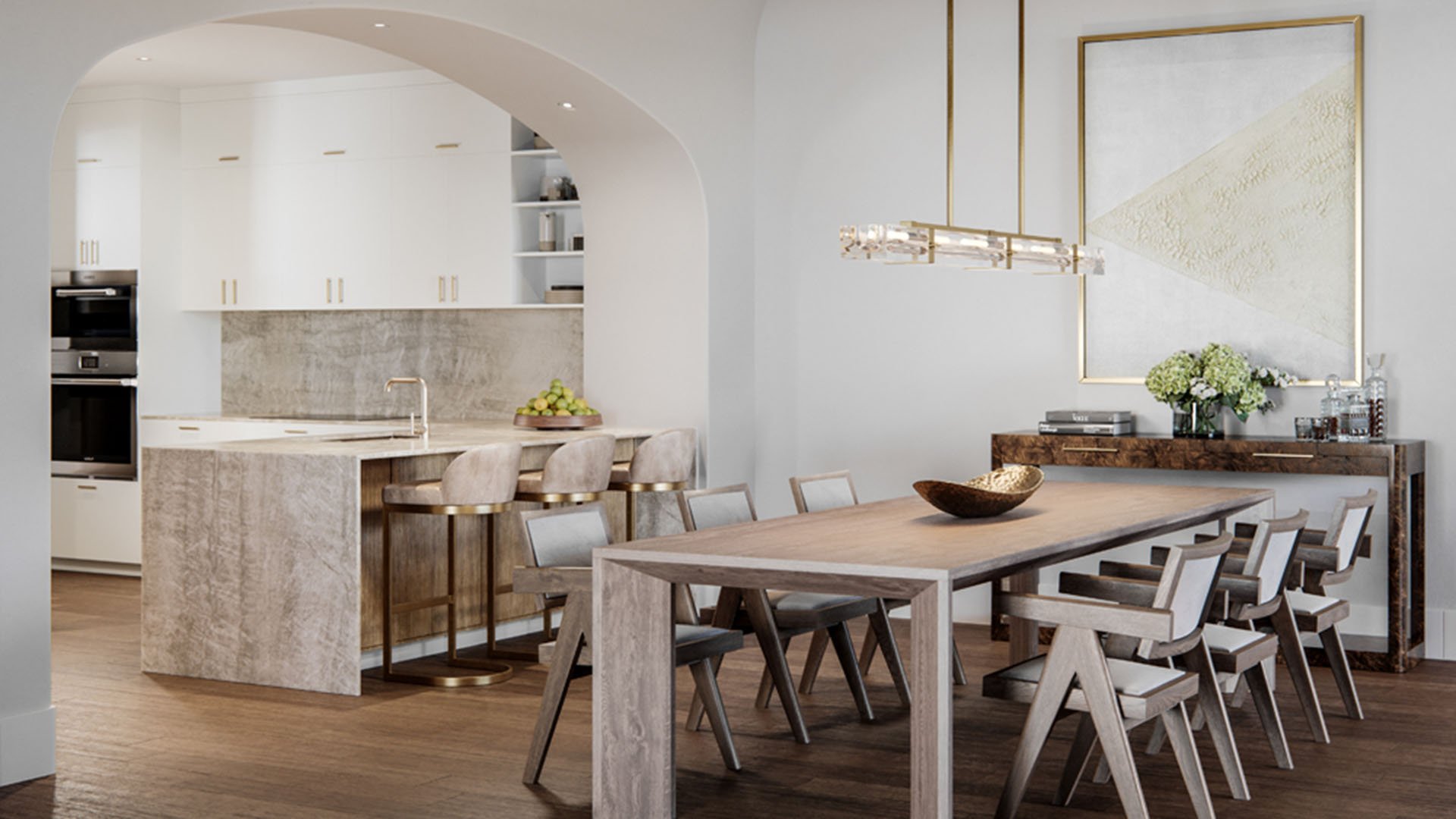
For luxury buyers, privacy is not a single feature. It can involve the separation of entertaining and sleeping areas, discreet guest arrivals, controlled service access, or the ability to host dinner without disrupting the rest of the residence. Comparing Coconut Grove and Coral Gables therefore requires more than reviewing finishes, views, or a dining-room photograph.
The useful question is how each property supports a buyer’s preferred social rhythm. Some buyers want entertaining to feel fluid, with indoor and outdoor areas that can adapt during the evening. Others prefer defined rooms, a formal sequence of arrival and dining, and clear boundaries between guests, residents, and staff.
The right neighborhood is the one that supports privacy before, during, and after the gathering.
Neither neighborhood should be treated as uniformly private. Building configuration, residence position, staffing procedures, visitor policies, parking, service circulation, and nearby activity can change the experience from one property to another.
A Coconut Grove search can begin with the relationship between the residence and its surroundings. Buyers who expect to host should study how the main living areas connect, whether an outdoor component has a practical indoor alternative, and whether private rooms remain removed from guest circulation.
The arrival sequence deserves equal attention. A polished entertaining plan can become inconvenient if drivers, caterers, vendors, and guests converge at the same point. Buyers should ask where each group waits, enters, unloads, and departs. They should also consider how quickly the home can return to ordinary residential use after an event.
Residential options for comparison include Four Seasons Residences Coconut Grove and The Well Coconut Grove. These links provide useful starting points, but every privacy or hosting requirement should be verified for the specific residence under consideration.
Buyers comparing a condominium with a single-family home should apply the same test in different ways. In a condominium, the review may focus on elevators, shared arrival areas, visitor procedures, and service routes. For a house, the emphasis may shift to driveway circulation, gates, landscaping, outdoor sound, staff access, and the separation between formal and family spaces.
In Coral Gables, buyers seeking a controlled private-dining experience can focus on room definition and circulation. A formal dining room is only one part of the plan. The route from arrival to cocktails, dining, and departure should work without exposing private family areas or creating avoidable overlap with service activity.
A buyer can test whether doors provide meaningful separation, whether the kitchen supports the intended style of service, and whether guests can reach a terrace or powder room without moving through personal spaces. If the residence will host business dinners, acoustics and the visual separation of adjacent rooms may matter as much as table capacity.
Projects that can be included in a Coral Gables comparison are Ponce Park Coral Gables and The Village at Coral Gables. Buyers should confirm residence-specific layouts, access arrangements, operating procedures, and any restrictions directly during due diligence.
The same discipline applies when considering estates or other single-family choices. A larger footprint does not automatically create discretion. Privacy depends on sightlines, circulation, access points, adjacent properties, and the placement of entertaining areas relative to bedrooms and quieter living spaces.
Event weeks can magnify ordinary friction. More visitors, tighter schedules, transportation delays, vendor activity, and last-minute changes can expose weaknesses that are less obvious during a routine showing. A buyer should map the entire sequence rather than evaluating the dining room in isolation.
Start with arrival. Determine how guests will identify the correct entrance, where vehicles will pause, and whether security procedures can be handled without creating congestion. Then trace the service path from unloading to preparation and cleanup. Finally, consider departure, including late-evening vehicle coordination and the effect on residents who are not participating.
Weather planning is another essential part of the review. If any portion of the evening depends on an outdoor area, the residence needs a credible alternative that does not compromise circulation or privacy. The backup should be tested as a real hosting plan, not treated as an abstract possibility.
Buyers who intend to use an outside private-dining venue should still assess the residence as part of the evening. The home may serve as a meeting point, a quiet retreat, or a place for a smaller gathering before or after dinner. That requires clear boundaries around who enters, which rooms remain private, and how transportation is coordinated.
A focused property tour should examine the practical details behind the visual presentation. Buyers can ask to see the guest route, service route, parking or vehicle plan, elevator or gate sequence, kitchen access, powder-room location, indoor weather alternative, and separation from bedrooms.
Operational questions are equally important. The buyer should verify current visitor procedures, staffing options, vendor access, security coordination, applicable sound limitations, and any rules affecting gatherings. These matters are specific to the property and may change, so assumptions based on a neighborhood or project name are not sufficient.
It is also worth conducting the review at a time that resembles the buyer’s intended use. Evening light, surrounding activity, traffic movement, and acoustics can feel different from a daytime appointment. Where possible, buyers should evaluate both the residence and its arrival experience under realistic conditions.
The distinction between Coconut Grove and Coral Gables becomes most useful when it is tied to behavior. Buyers should identify whether they favor adaptable entertaining, more formal dining, frequent business hosting, family-centered gatherings, or a residence that remains separate from larger social occasions.
From there, the decision becomes property-specific. The strongest choice is the home that protects private areas, gives guests an intuitive experience, supports service without unnecessary overlap, and remains comfortable once the evening ends. Neighborhood character may guide the search, but layout, access, operations, and verified rules determine whether the residence truly fits.
For discreet guidance on matching a South Florida residence to your hosting priorities, connect with MILLION.
If branded residences are on your mind — as a home or as an allocation — we would be glad to share what we are seeing, privately.
Begin a quiet conversationThe better fit depends on the buyer’s preferred hosting style and the specific property. Layout, circulation, access, and operating procedures should be verified during diligence.
Buyers should review guest arrival, indoor-outdoor flow, service access, weather backup, and separation from private rooms.
Buyers should assess room definition, dining circulation, kitchen access, acoustics, and the separation of guest and family areas.
Clear circulation can reduce overlap among residents, visitors, staff, and vendors. It also helps private areas remain protected during a gathering.
They should map arrivals, security, transportation, service access, weather contingencies, and departures. Each element should be checked against current property procedures.
No. Privacy depends on sightlines, access points, room placement, circulation, and the relationship to adjacent spaces.
They should verify visitor procedures, elevator access, shared arrival areas, service routes, staffing, and any applicable gathering rules.
They should assess driveway flow, gates, landscaping, outdoor sound, staff access, and separation between entertaining and sleeping areas.
It can keep a larger gathering away from private living areas. Buyers should still plan transportation and determine whether the home will be used before or after the event.
Evening conditions can reveal differences in lighting, surrounding activity, traffic movement, and acoustics that may not be apparent during a daytime tour.