A buyer-focused comparison of advertised wellness amenities, resident access, air-system evidence and water-treatment questions at Auberge Beach and Waldorf Astoria Downtown Miami, with a practical framework for verifying everyday value.
A wellness residence should make a preferred routine feel effortless: an early workout, an available treatment appointment, a comfortable interior and confidence in the water at the kitchen tap. Yet these are separate promises. A generous spa does not establish appointment availability, and a thermal circuit does not demonstrate drinking-water quality.
For buyers comparing Auberge Beach Residences & Spa Fort Lauderdale with Waldorf Astoria Residences Downtown Miami, the essential distinction is between advertised facilities, documented ownership rights and measured performance. Neither property can be declared the wellness winner on the available evidence. The better purchase decision rests on what can be confirmed for the specific residence-and the hours its owner intends to use the facilities.
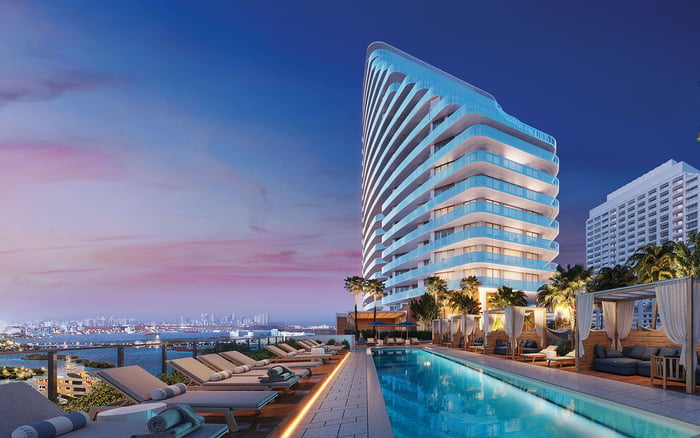
At 2200 North Ocean Boulevard in Fort Lauderdale, Auberge advertises a 6,000-square-foot fitness center and multiple pools with cabanas. Its spa was described in 2018 as a 10,000-square-foot facility with massage and skincare rooms, a couples’ suite and a purification circuit. That historical footprint is not a current capacity audit.
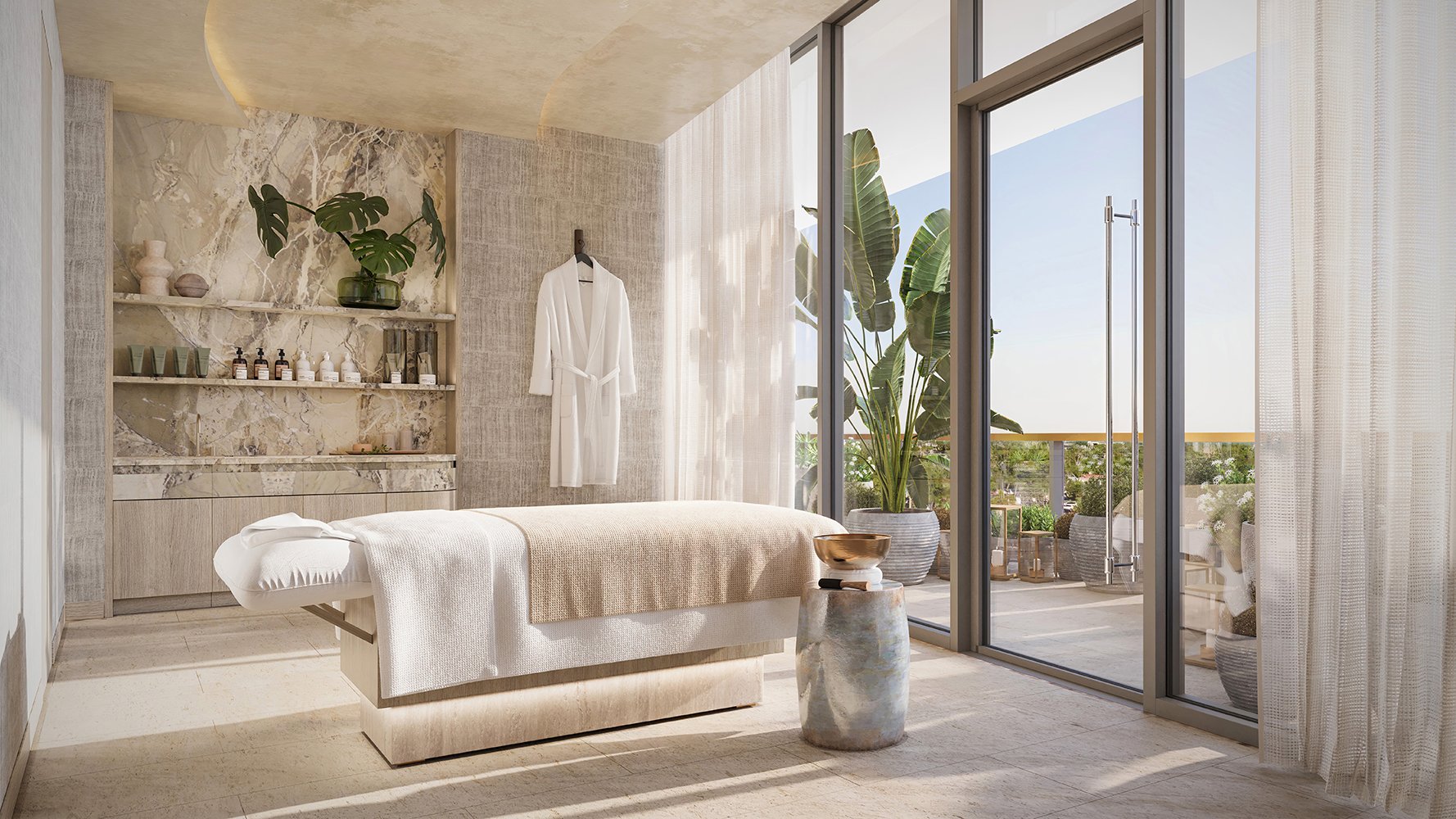
The on-site EVARA Beach Spa offers public day-use bookings. Its self-guided Vitality Ritual includes salt caves, infrared saunas, steam rooms, cool deluge showers and cold plunges. The listed Vitality Spa & Beach Pass includes thermal facilities, locker rooms, and a reserved beach lounge chair and umbrella. These are pass inclusions, not proof of ownership benefits.
Public access does not establish overcrowding, but it makes allocation rules consequential. Ask how many appointments and thermal-area places are reserved for residents, whether outside bookings are capped and what happens during peak periods. Resident priority, preferred appointments and pricing were described in 2018; obtain current entitlements in writing rather than treating historical promises as purchase assumptions.
Waldorf’s Downtown Miami wellness offering advertises a signature spa and fitness center, private training, wellness lounges, saunas, steam rooms and treatment rooms. Personalized health, nutrition and fitness programs are also advertised. These details describe the intended program-not measured operating capacity or an all-inclusive service package.
The phrase “full access” needs precise definition. It does not, by itself, establish 24-hour entry, unlimited treatments, resident exclusivity or the inclusion of private training in ownership costs. Request a facility-by-facility schedule distinguishing admission from bookable services and complimentary use from paid appointments.
Do not assume the access model mirrors Auberge’s. Hotel-guest or outside-patron access to Waldorf’s residential wellness facilities is not established by the available information. Ask which spaces are residential, which may be shared and how reservations would be allocated among eligible users. Where policies remain proposed, distinguish them from binding ownership rights.
Square footage is a useful starting point, but buyers should request treatment-room counts, thermal-area occupancy limits, staffing levels and appointment duration. Together, these details provide a more meaningful picture of usable capacity than the amenity footprint alone.
Ask for peak-time utilization and typical appointment waits where operating records exist. Where they do not, request planned staffing and allocation policies without treating projections as demonstrated performance. Then test a realistic personal schedule: weekday training before work, a weekend treatment and occasional guest access.
Have the operator explain advance booking windows, resident priority, resident-only hours, guest allowances, cancellation charges, no-show rules and any public-access caps. Clarify whether priority means earlier booking, protected inventory or merely a wait-list preference. The same diligence applies if Four Seasons Hotel & Private Residences Fort Lauderdale enters the shortlist; its inclusion should prompt the same questions, not an assumption of equivalent policies.
Air-system diligence should follow the equipment serving the actual home. An advertised “upgraded HVAC with UV filtration” feature in Auberge Unit S1704/05 is unit-specific. It establishes neither a building-wide standard nor a verified indoor-air result. A buyer considering that residence should request equipment details and maintenance documentation supporting the advertised upgrade.
MERV ratings, HEPA filtration and fresh-air rates are not specified in the available information on Waldorf’s wellness amenities. That omission is not proof that particular systems are absent; it leaves the technical question unresolved.
For either property, request residence and common-area HVAC specifications, filter ratings, outdoor-air delivery, humidity controls, maintenance records and available indoor-air testing. Ask an independent specialist to review the documents against the spaces being purchased and used. Distinguish a specified system from an installed one, and an installed feature from measured performance. Beachfront exposure, salt rooms and spa branding are not substitutes for that evidence.
Evaluate domestic water independently of recreational water. Request specifications identifying any potable-water filtration, softening or UV treatment, the areas served, maintenance responsibilities and available test results. Establish whether treatment applies throughout the building, within the residence or only at individual fixtures.
Whole-building potable-water filtration, softening and UV-treatment specifications are not identified in the available information on Waldorf’s amenities. Verified building-wide drinking-water performance is likewise not established for Auberge by the available wellness information. Neither gap supports a conclusion that systems are absent or water quality is inferior.
Review pools and cold plunges separately through their disinfection and maintenance documentation. Hydrotherapy facilities establish an amenity offering, not the quality of water delivered to a kitchen. Keep the inquiries distinct so an impressive spa tour does not leave the domestic-water question unanswered.
Request an itemized explanation of association charges, spa fees, optional memberships, treatment pricing and private-training costs. For each advertised service, ask whether ownership includes admission, a discount, a credit or a separate charge. Confirm who controls the benefit and whether its terms can change.
Keep amenity reservations separate from residential leasing rights. The available information does not establish Waldorf’s minimum rental periods, short-term-rental permissions or the relationship between hotel and residential booking rules. Review current governing documents and leasing policies with counsel rather than inferring rental flexibility from hospitality branding. At either property, confirm whether tenants and owners receive the same wellness privileges.
Before committing, assemble three clear records: the access policy, the technical system documentation and the schedule of costs. Mark each material point as confirmed, proposed or unresolved. A residence deserves credit for documented capabilities, not assumptions attached to its address or brand.
For a discreet approach to comparing wellness-focused residences across South Florida, connect with MILLION.
If branded residences are on your mind — as a home or as an allocation — we would be glad to share what we are seeing, privately.
Begin a quiet conversationThe available evidence does not establish a winner for peak wellness capacity, indoor air quality or water filtration. Compare written access policies, technical specifications and available performance records.
Auberge advertises a 6,000-square-foot fitness center. Its size does not establish peak occupancy, equipment availability or appointment capacity.
EVARA Beach Spa offers public day-use bookings. Buyers should confirm current resident priority, protected appointment inventory and any limits on outside access.
The advertised ritual includes salt caves, infrared saunas, steam rooms, cool deluge showers and cold plunges. Access through a paid pass should not be confused with ownership entitlements.
The advertised wording does not establish unlimited treatments, 24-hour access or resident exclusivity. Obtain a written distinction between facility admission and separately charged services.
Hotel-guest or outside-patron access to residential wellness facilities is not established by the available amenity information. Request a facility-specific access policy.
The advertised HVAC upgrade with UV filtration concerns Unit S1704/05. It does not establish a building-wide standard or verified indoor-air performance.
Request HVAC specifications, filter ratings, outdoor-air delivery details, humidity controls, maintenance records and available indoor-air testing. Confirm which systems serve the residence and which serve common areas.
The available wellness descriptions do not establish verified building-wide potable-water treatment performance at either property. Request treatment specifications and test results separately from pool and plunge maintenance records.
No rental permission can be inferred from the supplied marketing or hospitality branding. Confirm minimum rental periods, permitted uses and tenant amenity rights through current governing documents and leasing policies.