A buyer-focused insurance audit for Four Seasons Fort Lauderdale, covering replacement-cost valuation, ordinance-and-law protection, unit interiors, and the documents needed before closing.

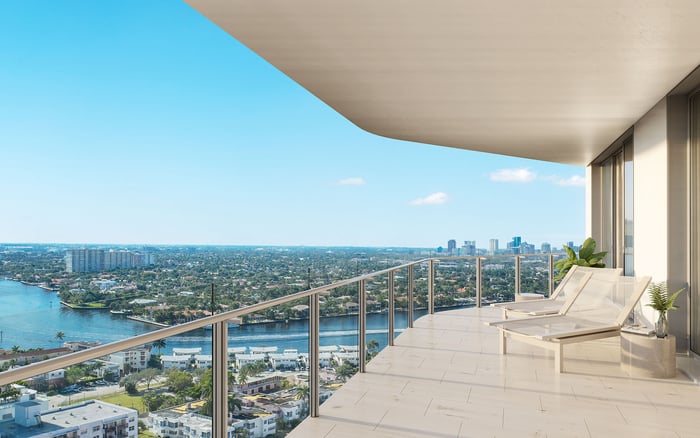
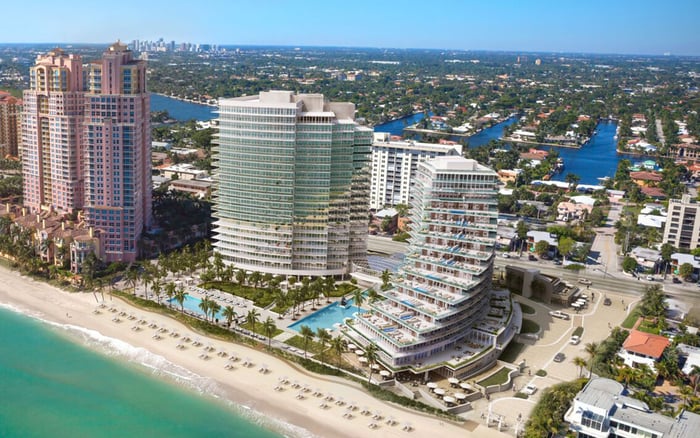
At Four Seasons Hotel & Private Residences Fort Lauderdale, ownership combines private residential space with access to hotel services. The 22-story waterfront tower at 525 North Fort Lauderdale Beach Boulevard offers one- to four-bedroom private residences, with separate hotel and residential entrances. Pools, spa facilities, dining, and concierge services extend the experience beyond the apartment itself.
For a buyer considering Fort Lauderdale Beach, the insurance question is not simply whether the building has a master policy. It is whether the insured property, reconstruction valuation, code-upgrade protection, and unit-level coverage align. A beautifully finished residence warrants an equally precise understanding of what would be restored, by whom, and under which limits.
This is a proposed due-diligence audit, not a finding of underinsurance. The property's current limits, appraisal, endorsements, deductibles, claims history, and owner-insurance requirements are not established here.
Before reviewing premiums or limits, ask counsel and the insurance adviser to map the declaration, amendments, insured entities, and policy schedules against the physical property. Separate entrances do not establish separate insurance obligations. Nor does access to an amenity establish which entity owns it or which policy responds to damage.
Request a written allocation of responsibility for residential areas, hotel areas, shared systems, and amenities. Confirm the residence count and distinguish hotel accommodations, Hotel Residences, and Private Residences before using those figures in valuation or reserve analysis. Hotel residences should not inadvertently be counted twice within accommodation totals.
For buyers comparing Auberge Beach Residences & Spa Fort Lauderdale, the same discipline applies: evaluate each property's governing documents and policies independently, rather than carrying assumptions from one address to another.
The central valuation document is the current replacement-cost appraisal. A purchase price measures a transaction; it does not establish the cost of reconstructing insured property. Assessed values and historical construction costs are not substitutes either.
Ask the adviser to reconcile the appraisal with the declaration and insured-property schedule. The review should identify what is included, what is excluded, and which entity's policy is intended to insure each component. A tower-wide figure has limited value if its boundaries cannot be matched to the actual insurance program.
The scope review should address:
Luxury common-area finishes, façade, and glazing.
Elevators, mechanical systems, and pools.
Demolition, debris removal, professional fees, and permitting.
The labor and material assumptions used to calculate replacement cost.
These are valuation questions, not assurances that every listed expense is covered. Ask how each item is reflected in the appraisal and policy, whether sublimits apply, and whether the valuation assumptions remain appropriate. The objective is a documented reconstruction basis, not a reassuring headline number.
An adequate reconstruction estimate does not, by itself, establish protection for costs arising from compliance with applicable building requirements. Obtain the actual ordinance-and-law endorsement and review its wording with the association's insurance adviser.
Coverage A concerns the undamaged portion of a building. Coverage B concerns demolition. Coverage C concerns increased construction costs. Examine each component separately, including its limit, triggering conditions, exclusions, and relationship to the underlying property coverage.
Ask whether limits are separate or shared and how the endorsement would operate in a partial-loss scenario. Have the adviser explain what happens when an undamaged portion must be addressed as part of a compliant reconstruction. An endorsement label alone is not a complete coverage explanation.
Where wind or flood coverage is separately placed, request a specific explanation of ordinance-and-law treatment under those policies. Do not assume that protection in one policy carries into another. The useful deliverable is a written explanation tied to the actual forms, not a general statement that code coverage exists.
Florida's condominium insurance framework generally requires association property coverage for condominium property as originally installed, subject to statutory exclusions. Crucially, originally installed does not mean that every original interior finish falls within the association's required coverage.
The statutory exclusions include floor, wall, and ceiling coverings; electrical fixtures; appliances; water heaters and filters; built-in cabinets; and countertops. Personal property within units or limited common elements is also excluded from the association's required property coverage. Window treatments serving only the unit, including curtains, drapes, blinds, and associated hardware, belong in this review as well.
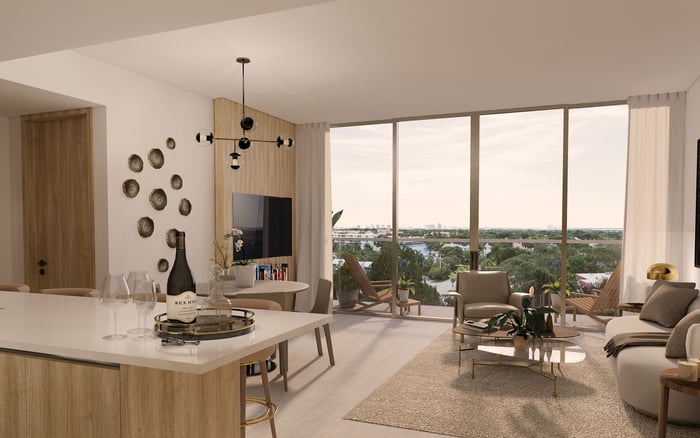
For a luxury residence, these distinctions warrant an itemized inventory. Record cabinetry, flooring, decorative finishes, lighting, appliances, window treatments, furnishings, and owner-installed improvements. Retain photographs, specifications, and available invoices, then obtain replacement estimates where needed.
Compare that inventory with the declaration, master policy, and proposed HO-6 policy. Ask the adviser to identify the intended coverage for each category, along with limits, valuation provisions, deductibles, and exclusions. Neither an original installation nor a later upgrade should be treated as automatically insured merely because it is physically attached to the residence.
Request wind deductibles in both percentage and dollar terms, with the calculation basis clearly identified. Then ask how any association allocation would be determined under the governing documents and applicable requirements. A percentage without its calculation base offers little help in evaluating personal liquidity.
Loss-assessment coverage requires a separate review. Ask whether the owner's policy responds to the relevant cause of loss and to an assessment arising from an association deductible. Obtain an explanation of applicable limits and restrictions rather than assuming that a loss-assessment line item covers every assessment.
A buyer also considering Andare Residences Fort Lauderdale should apply the same questions to that property's documents. The comparison should turn on verified obligations and coverage, not presumed similarity between luxury addresses.
Before committing, assemble full policies and endorsements, the declaration and amendments, the replacement-cost appraisal, engineering and reserve documentation, applicable inspection records, claims history, and recent assessment notices. Certificates alone do not provide the wording this review requires.
Ask the buyer's attorney and insurance adviser to produce a concise responsibility matrix: the item or exposure, responsible entity, responding policy, limit, deductible, and unresolved question. Resolve each material question with supporting documentation or an explicit decision about the exposure the buyer will retain.
The aim is not to remove every uncertainty from ownership. It is to distinguish the residential experience from the financial obligations behind it, so the purchase decision rests on both.
For a considered approach to South Florida luxury ownership, explore MILLION.
If branded residences are on your mind — as a home or as an allocation — we would be glad to share what we are seeing, privately.
Begin a quiet conversationNo. It outlines due-diligence checks and does not establish the property's current coverage limits, endorsements, deductibles, or any specific insurance gap.
Request the full policies and endorsements, declaration and amendments, and current replacement-cost appraisal. These documents establish the starting point for reviewing insured property and responsibilities.
No. A transaction price does not establish the cost of reconstructing insured property, and assessed values or historical construction costs are not substitutes either.
The audit must identify which entity owns and insures each area or system. Separate entrances and shared amenity access do not establish insurance responsibilities.
Coverage A concerns the undamaged portion of a building. Its application depends on the actual endorsement, including its limits, triggers, and exclusions.
Coverage B concerns demolition, while Coverage C concerns increased construction costs. Each should be reviewed separately against the actual policy wording.
No. Florida's framework includes statutory exclusions for items such as floor coverings, built-in cabinets, countertops, and electrical fixtures, even when originally installed.
Include cabinetry, flooring, lighting, appliances, window treatments, furnishings, decorative finishes, and owner-installed improvements. Compare the inventory with the declaration, master policy, and proposed HO-6 coverage.
Do not assume it does. Ask the adviser to confirm whether the relevant cause of loss and deductible assessment are covered, subject to applicable limits and restrictions.
No. Obtain full policies and endorsements so advisers can examine the operative coverage language, exclusions, limits, and deductibles.