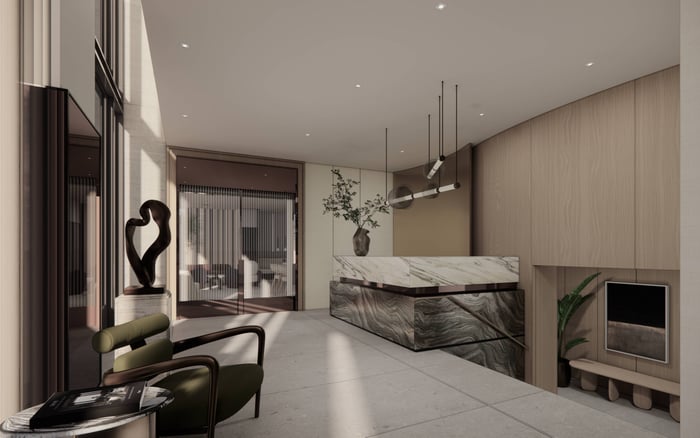
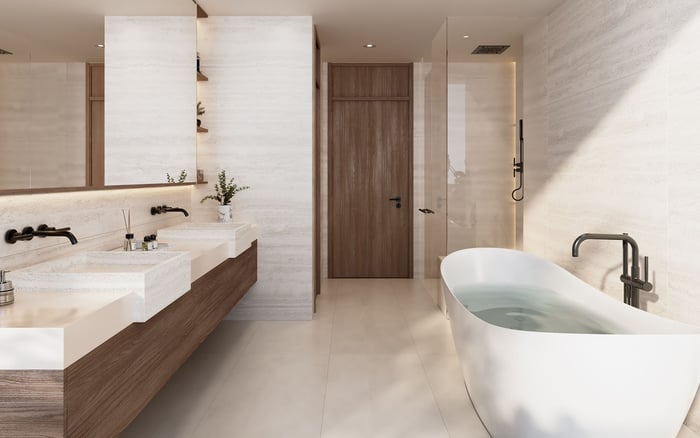
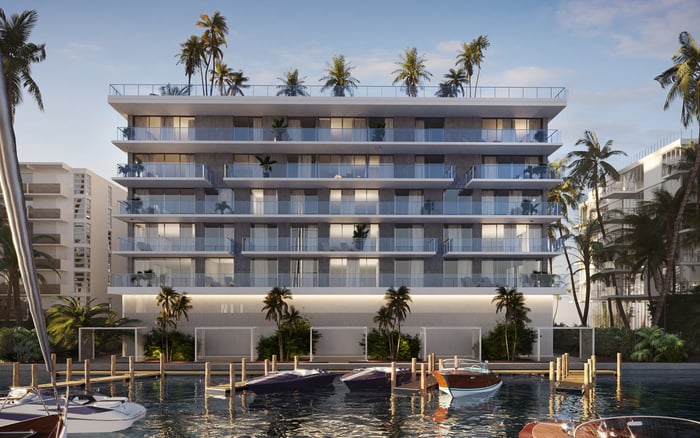
For a boating-minded buyer at Alana Bay Harbor Islands, the essential questions extend beyond the view. Confirm dockage rights, test the actual navigation route against the vessel, and establish how crew and provisioning would work before assigning value to water access.
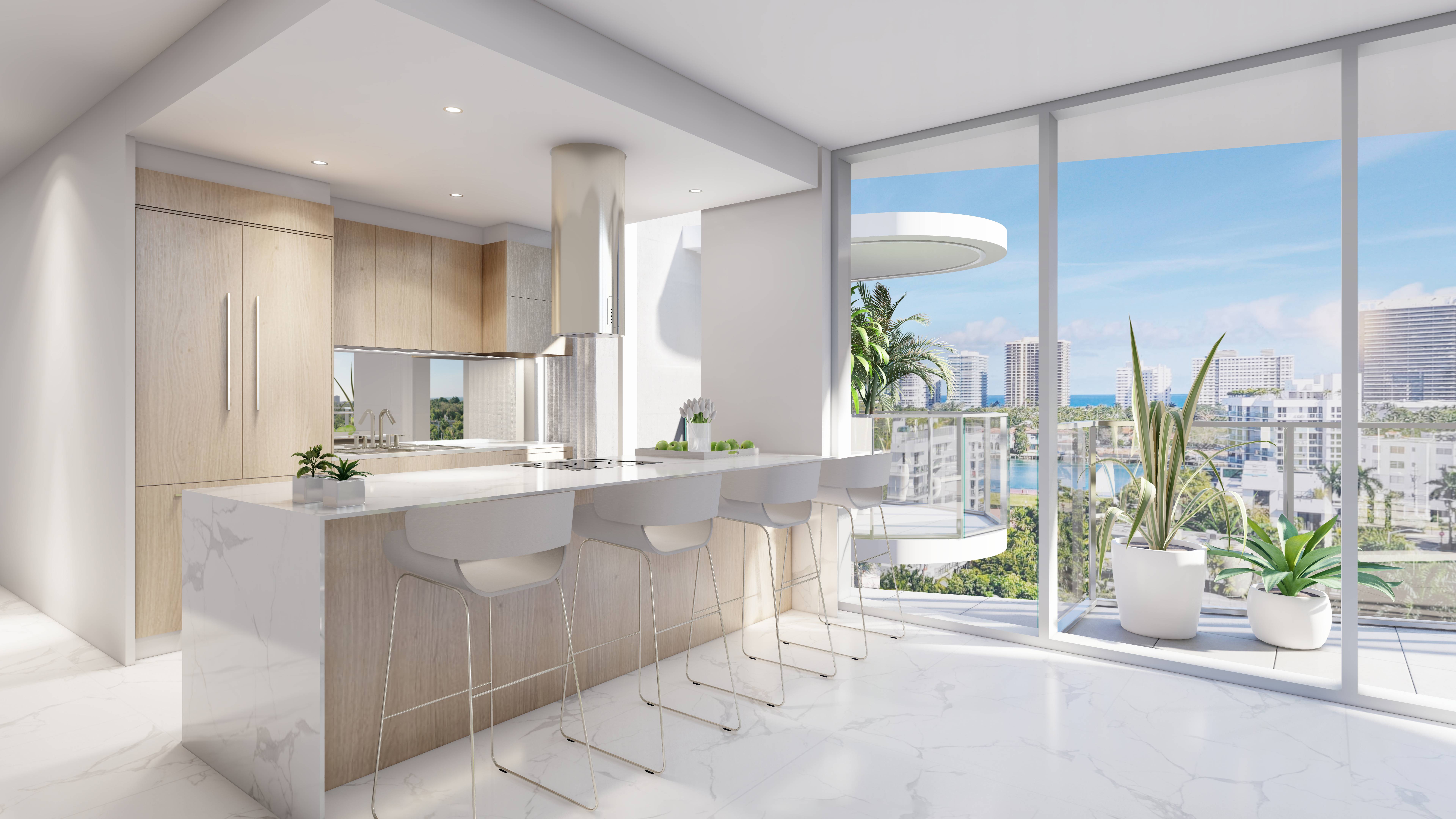
For a buyer who intends to spend as much time aboard as at home, a water view and a workable boating arrangement are separate purchases. At Alana Bay Harbor Islands, the question is not simply how close the residence sits to the water. It is whether the ownership documents, navigation route, and daily operating arrangements support your vessel and the way you intend to use it.
Alana is a seven-story condominium at 9901 W Bay Harbor Drive, Bay Harbor Islands, FL 33154, developed by Alta Developers and designed by Revuelta Architecture. Its location puts Haulover Inlet and Marina, beaches, Bal Harbour Shops, and restaurants in the surrounding area. None of those geographic advantages, however, establishes a right to berth a boat at the property.
The purchase should proceed on two tracks: evaluate the residence on its own merits, then establish the boating arrangement independently. Only when both are satisfactory should water access influence the price you are willing to pay.
Alana’s unit-level descriptions make this distinction important. Unit 601 is labeled “Waterfront: Intracoastal,” yet its water access is described only as “Other,” with no dedicated slip identified. Unit 302 is labeled “Waterfront: No” with “Water Access: N/A.” The rental description for unit 502 mentions a canal view without establishing waterfront status or water access.
These differences warrant clarification; they do not establish that a particular residence includes dockage. Treat any proposed slip, marina, or watersports dock as a separate item requiring property-specific documentation.
If dockage is offered, request written confirmation of availability, dimensions, permitted vessels, utilities, and fees. Have counsel determine whether the rights are deeded, assigned, leased, or otherwise granted-and whether they transfer with the residence. A verbal assurance that a boat can be accommodated is no substitute for terms identifying exactly what the buyer receives.
Bridge clearance matters only once the departure berth and intended route are identified. Specific Indian Creek crossings between Bal Harbour and Bay Harbor Islands have fixed spans of 43 feet and vertical clearance of 12 feet. An overhead power cable on the north side of that crossing has a stated clearance of 51 feet. Farther south, fixed bridges south of Allison Island have a minimum width of 41 feet and clearance of 12 feet.
Those figures describe particular crossings. They do not establish that every route from Bay Harbor Islands to Haulover Inlet passes beneath a 12-foot bridge, nor do they establish a departure route from Alana.
Ask the captain to map the actual berth-to-inlet passage and identify every relevant crossing. The assessment should compare the vessel’s air draft-its height above the water-with the clearances and current conditions along that route. Use the vessel’s intended operating configuration rather than relying on its model name or overall length.
Navigation conditions also require a fresh check. Historical repair schedules are not evidence of present restrictions or unrestricted passage. The objective is a vessel-specific operating assessment, not a generalized promise of ocean access.
A reassuring bridge assessment does not settle the question of depth. No controlling depth for an Alana berth or its approach is established here, so there is no defensible maximum vessel draft to quote. Nor is there a basis for deciding that bridge height is necessarily the more restrictive issue.
Before accepting a proposed berth, request current soundings for both the berth and its approach, along with information about shoaling. Have the captain assess the vessel’s draft-its depth below the waterline-and an appropriate under-keel-clearance allowance for the intended use.
The assessment should cover the complete passage, not just the water immediately beside the dock. Request written findings identifying any operating limitations and unresolved questions. Avoid broad boat-length recommendations: length alone cannot establish compatibility with the depth or overhead constraints of a particular route.
A useful nearby comparison is Onda Bay Harbor, with a marketed offering of 15 marina slips for boats ranging from 36 to 60 feet, direct ocean access through Haulover Inlet, and a watersports launch dock. Those are Onda’s marketed features, not specifications that can be applied to Alana.
The comparison clarifies what to request: an identifiable marina offering, stated vessel parameters, and a defined access arrangement. Even then, confirm the availability and legal terms of the particular slip under consideration. A general amenity description does not secure a berth.
If Bay Harbor Towers is also on your residential shortlist, apply the same documentation standard there. Comparisons are more useful when the home, any berthing rights, and operating costs are evaluated separately. Neighborhood proximity is not evidence of equivalent boating arrangements.
For an owner using a captain or regular service team, the practical test is how a boating day would unfold. Ask management who may enter the property, what approvals contractors need, where crew can park, and how supplies reach the vessel. Establish loading arrangements and permitted operating hours before assuming an early departure or late return will be straightforward.
Overnight crew stays and dockside boarding also require explicit answers. Do not assume residential guest rules permit every intended crew arrangement, or that an owner’s access automatically extends to contractors. These are questions for management, not established Alana services.
If the vessel would be kept off-site, Haulover’s proximity may be relevant, but it does not establish an available or suitable slip. Confirm the berth independently, then walk through the transfer of guests, provisions, and equipment. The home-to-boat routine deserves as much attention as the open-water itinerary.
Before committing, assemble the essentials: written dockage terms if offered, a captain’s route and clearance assessment, current depth information, and management’s access rules. If the plan depends on an off-site marina, obtain confirmation of that arrangement rather than treating it as an easy fallback.
Ask your advisers how unresolved boating requirements should be addressed in the purchase terms. Where access remains uncertain, evaluate the residence without assigning value to an unconfirmed slip. The best fit is a home whose documented rights and practical arrangements support the way you intend to use it.
For a discreet conversation about aligning your next residence with your boating priorities, connect with MILLION.
If branded residences are on your mind — as a home or as an allocation — we would be glad to share what we are seeing, privately.
Begin a quiet conversationAlana is located at 9901 W Bay Harbor Drive, Bay Harbor Islands, FL 33154. It is a seven-story condominium developed by Alta Developers and designed by Revuelta Architecture.
A dedicated slip is not established by the unit descriptions discussed here. Buyers should obtain written confirmation of any offered dockage and its legal relationship to the residence.
Unit 601 is labeled Intracoastal waterfront with water access described as Other, while unit 302 is labeled non-waterfront with no applicable water access. Those descriptions do not establish slip rights.
The 12-foot clearance figures apply to specific Indian Creek crossings, not every possible route. A captain should identify the actual berth-to-inlet passage before assessing clearance.
Air draft is the vessel’s height above the water, relevant to overhead clearance. Vessel draft is its depth below the waterline, relevant to depth and under-keel clearance.
No maximum draft can be established without current berth and approach depth information. Obtain soundings, shoaling information, and a captain’s under-keel-clearance assessment.
Confirm slip availability, dimensions, permitted vessels, utilities, fees, and transferability. Counsel should also establish whether the rights are deeded, assigned, leased, or otherwise granted.
Onda markets 15 slips for boats ranging from 36 to 60 feet, direct ocean access through Haulover Inlet, and a watersports launch dock. These are not Alana specifications.
Ask about contractor approval, parking, loading, provisioning, operating hours, overnight crew stays, and dockside boarding. None should be assumed to be an established Alana service.
Proximity does not guarantee slip availability or suitability for a particular vessel. Confirm an actual berth and assess the guest, crew, and provisioning routine separately.