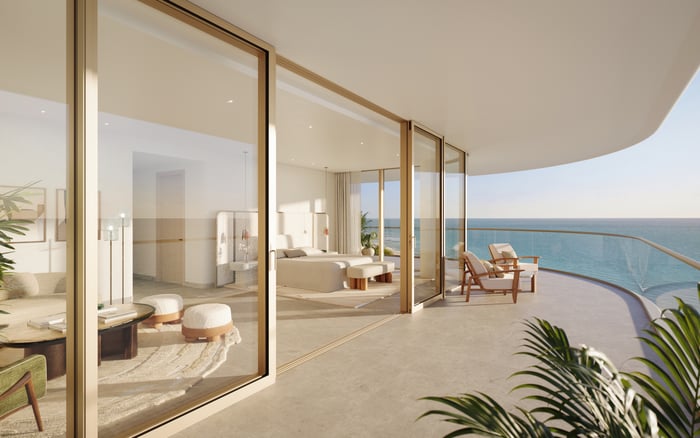
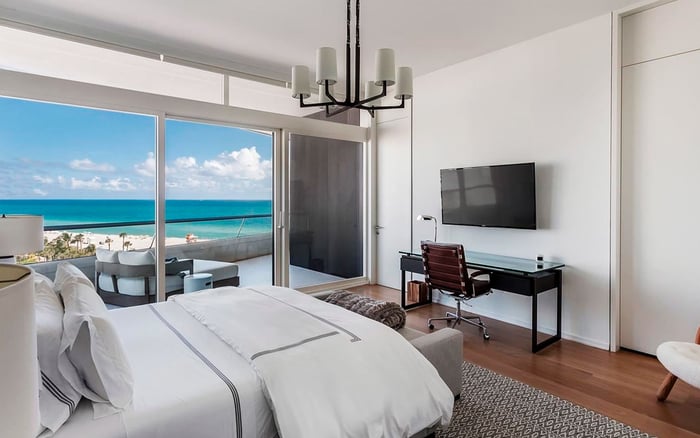
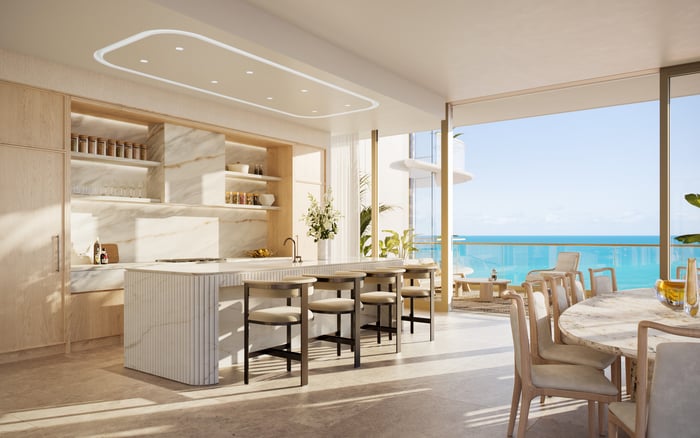
A buyer-focused guide to balancing daily convenience with discretion, privacy, and calm before committing to a luxury Miami Beach residence.
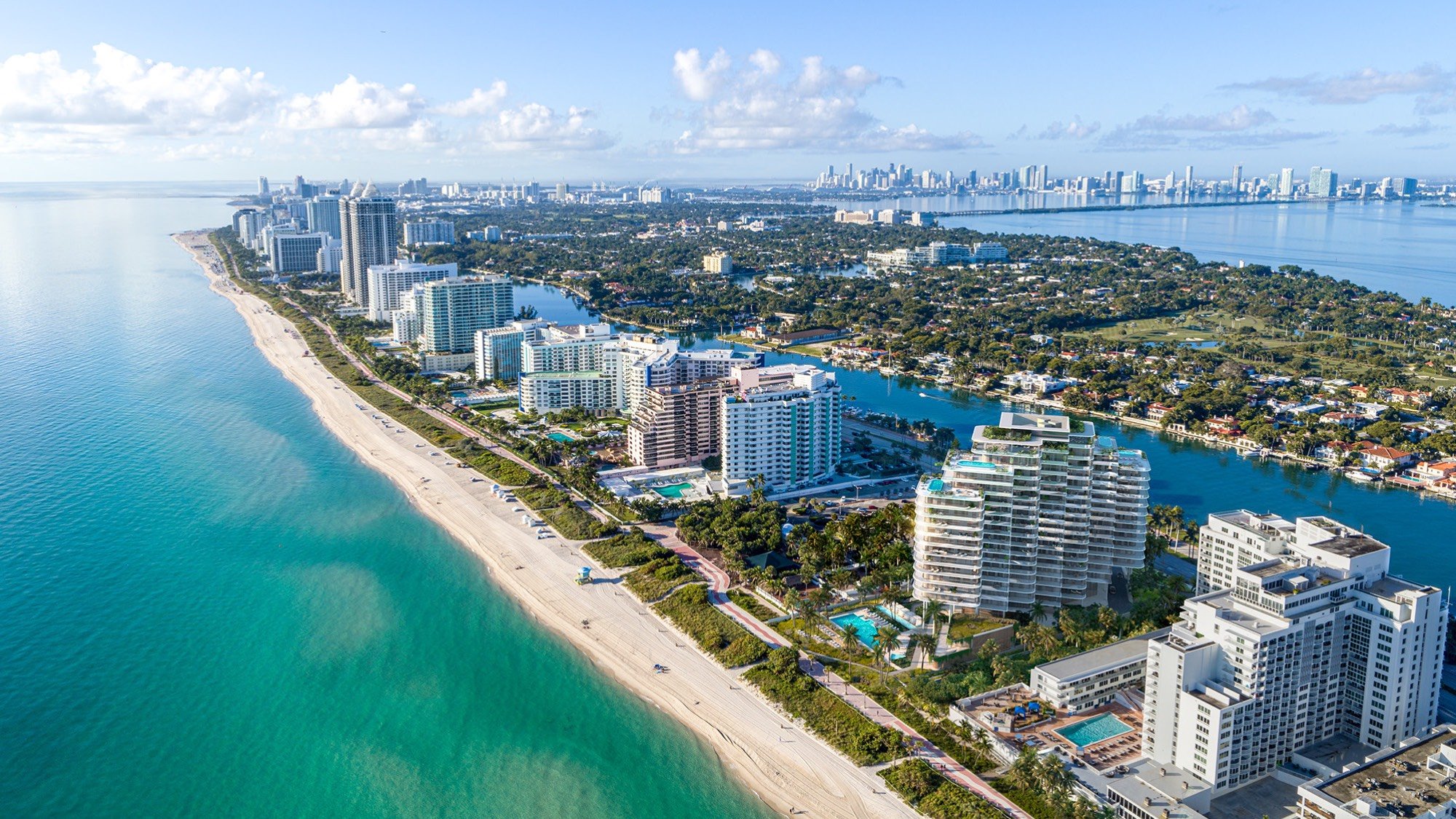
For the luxury buyer, walkability in Miami Beach is not simply proximity to restaurants, sand, fitness, or retail. The more refined question is whether daily life can be lived on foot while the residence still feels removed, composed, and private. Convenience loses value when it places the lobby in constant view, leaves terraces open to easy sightlines, or turns every return home into a public performance.
A thoughtful Miami Beach search should begin with the rhythm of the property edge. Before focusing on finishes, amenity decks, or views, observe how the building meets the sidewalk. Does the approach feel ceremonial or exposed? Is there a graceful transition from public street to private entry? Can residents arrive, wait for a car, greet guests, or walk a dog without feeling that the city is watching too closely?
This is where walkability becomes a design question. A residence can sit near the life of Miami Beach and still preserve calm if its entrances, landscaping, glazing, security posture, and vertical circulation are handled with discretion.
Many buyers evaluate walkability by asking what is nearby. That is only the first layer. The more important exercise is to walk the route, then return to the building as if already living there. A pleasant walk to dinner may reveal a very different feeling on the way back, especially if the entry sequence is bright, busy, or too directly connected to the public realm.
Tour at several times of day. Morning walks show service patterns, deliveries, pet activity, and school or commuter movement. Midday reveals shade, glare, and the comfort of pedestrian edges. Evening exposes lighting, noise, restaurant spillover, ride-share flow, and whether the lobby remains composed when the neighborhood is most animated.
For buyers comparing residences such as 57 Ocean Miami Beach with other Miami Beach options, the goal is not to declare one address more walkable than another in the abstract. The question is whether the specific walking routes you will actually use feel elegant, safe, and repeatable, and whether returning home restores privacy rather than subtracting it.
In a true luxury residence, privacy starts well before the unit threshold. It begins at the curb, continues through the entry court or lobby, and extends into the elevator, corridor, and private residence. Buyers should study every moment of that sequence.
Ask how guests are received. Consider whether service providers, residents, deliveries, and visitors share the same paths. Watch how staff manage arrivals without making the process feel theatrical. A private building is not necessarily hidden, but it should be controlled. The best arrival sequences are calm, legible, and quietly protective.
This matters even more when a property is close to active pedestrian destinations. A walkable setting can be a gift, but only if the building has enough architectural composure to separate resident life from the public pace outside. A lobby that is too visually porous, a porte cochere that feels like a stage, or a sidewalk-facing amenity can diminish the sense of refuge a buyer expected to purchase.
Distance alone does not secure privacy. A residence set slightly away from a busy path may still feel exposed if its windows, balcony, or terrace face directly into pedestrian movement or neighboring buildings. Conversely, a home closer to activity can feel remarkably private if elevations, landscaping, and orientation are carefully resolved.
During a tour, stand where people will actually stand: near the kitchen island, the primary bath, the main seating area, and the outdoor space. Look outward, then imagine who can look back. Consider evening conditions as well, when interior lighting can turn glass into a display if shades, setbacks, and angles are not handled thoughtfully.
Buyers looking at celebrated addresses such as Faena House Miami Beach often understand that architecture, not just location, determines how privacy is experienced. The same principle applies at every price tier of the ultra-premium market: views should expand the residence, not invite unwanted visibility.
Walkability is often described as freedom, but in Miami Beach it can also mean proximity to social energy. That energy may be exactly what a buyer wants for part of the week, yet too much of it can become a privacy compromise. The task is to distinguish convenience from exposure.
A useful framework is to divide walkability into three categories. First, essential walkability: the places that support daily life. Second, leisure walkability: dining, wellness, beach time, and culture. Third, spectacle walkability: areas where the surrounding environment may draw attention, traffic, or transient crowds. A private buyer may welcome the first two and prefer distance from the third.
Beach access should be evaluated in this spirit. Reaching the sand comfortably is valuable, but the path should feel natural rather than crowded or performative. The best fit is personal: some buyers want immediate connection, while others prefer a softer buffer and a more private return home.
Marketing language rarely captures the true lived boundary between home and city. Instead of relying on adjectives, compare buildings by their edges. How much landscaping sits between sidewalk and glass? Where do cars pause? Where do pedestrians naturally gather? Does the lobby have visual depth, or is it flush with public movement?
When touring Shore Club Private Collections Miami Beach, The Perigon Miami Beach, or The Ritz-Carlton Residences® Miami Beach as part of a broader comparison, keep the questions consistent. Which building lets you participate in Miami Beach without feeling consumed by it? Which one makes the transition from public life to private life feel most graceful? Which address still feels calm after the novelty of convenience fades?
Do not reduce the decision to a map. Two properties may appear equally close to the same destinations, yet feel entirely different because of entry placement, pedestrian flow, frontage, elevation, and the orientation of outdoor spaces.
There is no universal answer to the walkability and privacy equation. A second-home buyer may prioritize immediate leisure and accept more visible energy. A full-time resident may value quieter daily routines, discreet service access, and a greater sense of retreat. An owner who entertains often may want a walkable setting for guests, while another may prefer that the residence feel almost invisible from the street.
The mistake is assuming that walkability automatically increases livability. It can, but only when paired with privacy, acoustic comfort, secure circulation, and outdoor spaces that feel genuinely usable. The finest Miami Beach purchase is not necessarily the one closest to the most places. It is the one that makes daily movement feel effortless while preserving the quiet authority of home.
Should I prioritize walkability or privacy first? Prioritize the lifestyle you will repeat most often. Then test whether the building preserves privacy during that routine.
How many times should I visit before deciding? Visit during morning, midday, and evening conditions. Each period reveals a different aspect of activity, sound, and exposure.
Is a quieter street always more private? Not necessarily. Privacy depends on sightlines, entry design, neighboring views, and how the residence meets public space.
Can a highly walkable building still feel discreet? Yes, if the arrival sequence, landscaping, glazing, and resident circulation create a clear buffer from public movement.
What should I study from the balcony or terrace? Look for direct views into the residence, pedestrian sightlines below, neighboring windows, and how the space feels after dark.
Does beach access guarantee a better purchase? Only if the route feels comfortable and the building still provides a private return. Convenience should not erase calm.
Should I walk the neighborhood alone or with an advisor? Do both if possible. A private walk reveals instinctive comfort, while an advisor can help identify design and privacy details.
How do I judge lobby privacy? Watch how arrivals, guests, deliveries, and staff movement are handled. A composed lobby should feel controlled without feeling cold.
Is South of Fifth always the right answer for privacy? No single area is automatically right for every buyer. The individual building, exposure, and daily routine matter more than shorthand labels.
What is the best way to shortlist comparable options for touring? Start with location fit, delivery status, and daily lifestyle priorities, then compare stacks and elevations to validate views and privacy.
To compare the best-fit options with clarity, connect with MILLION.
If branded residences are on your mind — as a home or as an allocation — we would be glad to share what we are seeing, privately.
Begin a quiet conversation