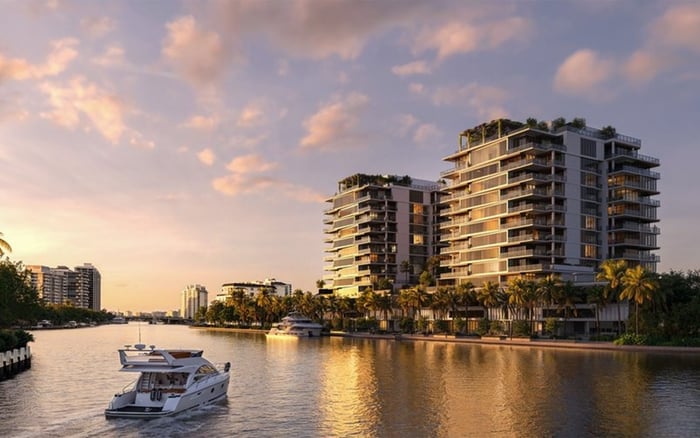
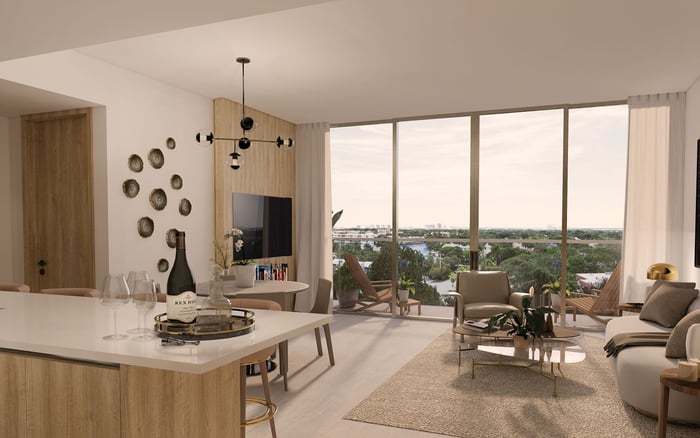
Luxury entertaining depends on more than an elegant dining room. Buyers should compare the planned venues at St. Regis Sunny Isles with the more explicit hotel catering framework associated with Ritz-Carlton Fort Lauderdale, then secure current, residence-specific rules in writing.

For buyers who entertain regularly, a private dining room is more than a photogenic extension of the lobby. Its real value depends on who may reserve it, how many guests may attend, which culinary teams may work there, what the evening costs, and when the event must end. Those operational details can determine whether a residence supports spontaneous family dinners, formal celebrations, or neither.
This distinction is especially relevant when comparing St. Regis® Residences Sunny Isles with The Ritz-Carlton Residences® Fort Lauderdale. The former presents an expansive planned collection of settings for resident entertaining. The latter is associated with more concrete hotel catering terms, but buyers should not assume those terms govern residential owners without confirmation.
The lesson extends across branded residences: compare permissions and procedures with the physical amenity program. A beautiful room has limited utility if preferred chefs cannot access it, the guest list exceeds approved capacity, or the complete service structure remains unknown.
The value of private dining lies in both the room and the rules governing it.
St. Regis presents several distinct hospitality settings in Sunny Isles Beach. Its amenity program includes a signature restaurant with a bar and private dining, along with an oceanfront dining terrace and lounge. The signature restaurant is described as open to the public, making it important to distinguish restaurant access from spaces intended specifically for residents.
The Ellipse Club is marketed with private dining, a chef's kitchen, wine vault, bar, cognac room, billiards, poker tables, and a golf simulator. The Residents' Club adds event space, a bar and lounge, terrace dining, a VIP conference room, a library, and guest suites. The Beach Bar & Grill is planned with indoor and covered outdoor seating, beach service, in-residence dining, and a private-events lawn. Other planned areas include an events lawn and pavilion, outdoor dining spaces, and a sunken sitting lounge.
This breadth suggests flexibility across intimate dinners, larger social occasions, and indoor-outdoor hosting. It also distinguishes the project within the Sunny Isles market, where buyers may compare its hospitality proposition with Bentley Residences Sunny Isles. Yet an extensive menu of spaces does not, by itself, establish an owner's right to bring in an independent chef, florist, musician, DJ, or rental company.
The St. Regis program lists in-residence dining and catering among its planned services. Buyers should interpret that as a service offering, not automatic authorization for outside vendors. The available amenity information does not specify private-event capacities, reservation periods, quiet hours, or vendor protocols. Each point belongs on the pre-contract diligence list.
The Fort Lauderdale comparison requires a different reading. Ritz-Carlton hotel dining venues are described as accommodating occasions ranging from parties of six to events of up to 40 guests. The hotel catering process requires all event food and beverages to be purchased through the hotel, prohibits outside food and beverages, and requires a signed catering agreement and initial deposit to reserve event space.
The process also requires a guaranteed guest count before the event. A 24% taxable service charge and 6% state sales tax apply to food, beverage, audiovisual, and destination-service charges. These figures illustrate how sharply a quoted menu can differ from the final event budget.
The critical caveat is scope. These are hotel catering terms, not confirmed residential association rules. A buyer at The Ritz-Carlton Residences® Fort Lauderdale should request current ownership-specific policies and determine whether residents receive distinct access, pricing, privileges, or restrictions. The same discipline applies when comparing hospitality-led alternatives along Fort Lauderdale Beach, including Four Seasons Hotel & Private Residences Fort Lauderdale.
The hotel terms are more explicit than the St. Regis event rules, but explicit does not necessarily mean applicable to a condominium owner. The practical goal is not to infer residential privileges from hotel operations. It is to obtain the governing documents that connect the residence, management team, dining venue, and proposed event.
Buyers should begin with a realistic entertaining profile. A household that hosts six-person dinners needs a different operating model from one planning milestone celebrations for 30 or 40 guests. Define likely frequency, guest counts, preferred cuisines, alcohol requirements, live entertainment, and whether events will take place in the residence or a shared venue.
Next, establish who controls the culinary relationship. Can an owner use a personal chef inside the residence? May that chef use a shared chef's kitchen? Must food for common-area events be supplied by an affiliated restaurant or hotel? If an outside caterer is permitted, what licensing, insurance, staffing, and indemnification standards apply? “Catering available” does not answer these questions.
Access logistics matter just as much. Written policies should address service-elevator reservations, loading windows, delivery staging, vendor parking, security clearance, kitchen access, waste removal, and post-event inspections. Buyers should also confirm rules for florists, musicians, DJs, audiovisual teams, furniture rentals, and décor installation. In oceanfront buildings, indoor and outdoor venues may have different sound, weather, and closing protocols.
Finally, distinguish resident-only settings from public venues. A restaurant open to the public may offer polished service but less exclusivity and different reservation priorities. Conversely, a residents' club may provide privacy while imposing tighter guest limits or advance-booking rules. The words “private dining” can describe a restaurant room, a resident amenity, or a dedicated event space-and each may operate differently.
A prudent comparison uses an all-in estimate rather than a food-and-beverage minimum alone. Request current schedules for room reservations, deposits, cancellation charges, staffing, security, cleaning, audiovisual equipment, destination services, corkage where permitted, taxes, and service charges. Ask whether charges are refundable, taxable, or subject to minimum-spending thresholds.
The Ritz-Carlton hotel example shows why this matters: a 24% taxable service charge and 6% state sales tax can materially affect the final total. Buyers should obtain a current agreement because the terms may not reflect present pricing or residence-specific treatment. At St. Regis, the absence of stated event fees or capacities makes a written management response especially important.
Address insurance before it becomes a last-minute obstacle. Confirm whether owners, guests, or vendors must provide certificates of insurance and whether alcohol service requires approved professionals. Clarify responsibility for property damage, overtime, excess cleaning, noise complaints, and vendor conduct.
The strongest diligence package includes the declaration and bylaws, current rules and regulations, event-space policies, dining and catering menus, fee schedules, sample reservation agreements, vendor insurance requirements, and cancellation terms. Buyers should also request written answers covering guest limits, booking windows, duration limits, quiet hours, alcohol, outside food, musicians, décor, security, loading access, and cleanup.
If an entertaining feature is central to the purchase decision, verbal guidance is insufficient. Ask which document controls if marketing materials, hotel procedures, and condominium rules differ. Also determine whether management may revise fees, access priorities, or vendor requirements after closing.
Ultimately, St. Regis offers a broader array of planned resident entertaining environments, while the Ritz-Carlton hotel framework provides more procedural detail. Neither replaces residence-specific confirmation. The better choice is the one whose written rules align with how the buyer actually hosts-not simply the one with the most evocative dining room.
For discreet guidance comparing private dining privileges and ownership rules across South Florida, connect with MILLION.
If branded residences are on your mind — as a home or as an allocation — we would be glad to share what we are seeing, privately.
Begin a quiet conversationYes. Its planned amenities include private dining within the signature restaurant, the Ellipse Club, and other resident entertaining settings.
Yes. In-residence dining and catering are included among the planned services.
Available amenity information does not specify that permission. Buyers should obtain written management and condominium policies before relying on outside-vendor access.
The signature restaurant is described as open to the public. Buyers should distinguish restaurant facilities from resident-only entertaining areas.
The hotel dining framework describes options for groups ranging from parties of six to events of up to 40 guests.
The stated hotel catering terms prohibit outside food, beverages, and alcoholic beverages and require event purchases through the hotel.
The stated hotel terms require a signed catering agreement and an initial deposit, followed by a guaranteed guest count before the event.
The terms list a 24% taxable service charge and 6% state sales tax on food, beverage, audiovisual, and destination-service charges.
Not necessarily. Buyers should confirm current residence-specific privileges and restrictions rather than assuming hotel terms govern residential ownership.
Request written rules for caterers, guest limits, alcohol, fees, cancellations, quiet hours, vendors, insurance, loading access, security, and cleanup.