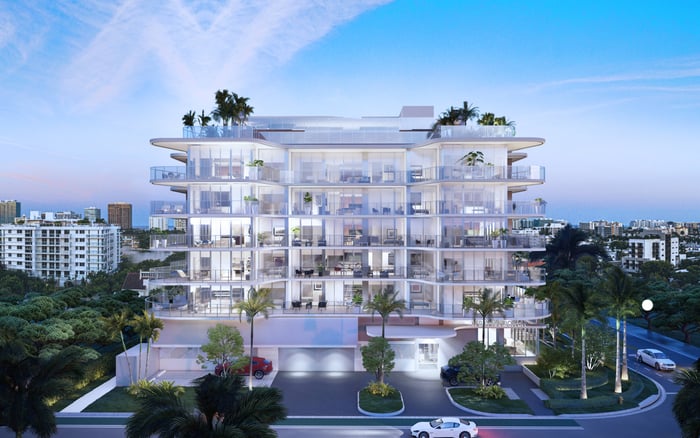
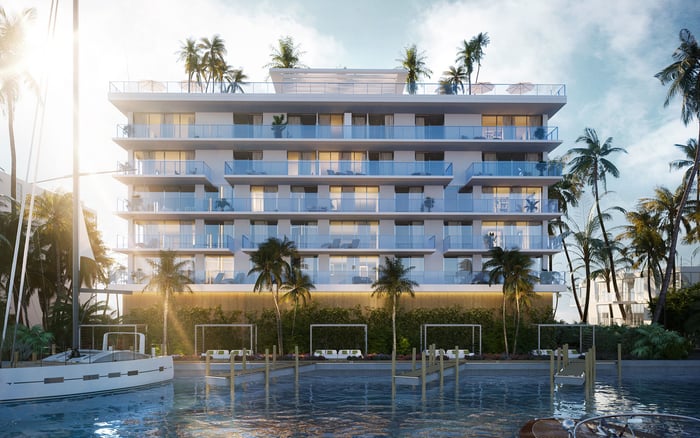
A buyer-focused framework for examining private arrival, household-staff circulation, visitor permissions, parking access, deliveries, amenities, and management procedures at Alana and Origin in Bay Harbor Islands.

Privacy in a luxury condominium does not begin at the residence door. It starts wherever a person or vehicle first enters the property and continues through parking, reception, elevators, corridors, amenity areas, and service points. Buyers comparing Alana Bay Harbor Islands and Origin Bay Harbor Islands should therefore evaluate the entire sequence rather than relying on one design feature or security label.
Map a separate journey for the owner, an expected guest, an unexpected visitor, a recurring household employee, a contractor, and a delivery courier. Each route should identify where authorization occurs, who provides it, what areas become accessible, and how access ends. If a route starts from more than one entry point, test every alternative rather than assuming the controls are identical.
Arrival privacy is strongest when architecture, credentials, staffing, and written rules operate as one system.
Ask for a live walkthrough instead of relying only on plans or descriptions. Repeat part of the walkthrough during a busier period, when residents, guests, vendors, and service personnel may overlap. The objective is not simply to find barriers; it is to determine whether movement remains discreet, understandable, and manageable under ordinary conditions.
At Alana, buyers should begin with the routes that matter to their own household. Enter as a resident would, then repeat the process as a guest, employee, contractor, and courier. Note where each person waits, whom they contact, whether management becomes involved, and which doors or elevators they can use after admission.
Elevator access requires particular attention. Request the current elevator plan and a demonstration of how credentials operate. Determine whether access can be limited by entrance, elevator, floor, time, or user category. Do not infer private, semi-private, shared, or service circulation from renderings, residence layouts, or general sales language; obtain written confirmation of the actual configuration.
Households employing a driver, housekeeper, nanny, private chef, or dog walker should examine repeat access rather than one-time guest entry. Ask whether the owner can create, modify, suspend, and revoke recurring permissions. Clarify what happens when an employee arrives early, remains after the owner leaves, uses parking, brings supplies, or needs access during a management change or system outage.
Deliveries and contractor visits deserve their own test. Establish whether packages, food orders, furniture crews, and maintenance technicians follow the same route or use different procedures. Buyers should also ask how management handles an arrival that was not preregistered and whether the owner receives notice before access is granted.
At Origin, apply the same route-by-route analysis rather than treating security, technology, parking, or service terminology as self-explanatory. Ask the sales and management teams to define who controls each entrance, how a visitor is approved, what credentials are issued, and which areas those credentials unlock.
Parking circulation can materially affect discretion. Walk from the vehicle entry to the residence route and note any point where residents, employees, couriers, or contractors converge. A buyer who expects a driver or household team should obtain written answers about authorized users, temporary access, waiting locations, credential sharing, and the handling of unfamiliar vehicles.
Any waterside entry or related circulation shown or represented for Origin should be evaluated separately from street and parking access. Buyers should verify the current physical configuration, approval status, operating rules, and connection to interior common areas before relying on that route. Questions should cover owners, guests, captains, crews, deliveries, after-hours entry, and the ability to move from the waterfront edge toward elevators or amenities.
Storage and support spaces should also be included in the walkthrough if they are relevant to the purchase. Confirm who may enter them, whether household staff can receive limited access, and whether reaching them unintentionally grants broader privileges.
A well-managed staff route should support efficient work without creating unrestricted access. Buyers should request current architectural plans, condominium documents, parking rules, access procedures, and any available credential matrix. Trace the journey of each employee from arrival to the specific area where work occurs.
The most useful questions concern scope and control. Can permission be limited to selected days, hours, entrances, elevators, floors, or rooms? Does authorization expire automatically? Can an owner revoke it immediately? Is an entry history available when a concern arises? What is the process when credentials are lost, shared, or used outside the expected schedule?
Physical circulation matters as much as digital permission. Identify every point where household employees cross guest areas, resident lobbies, parking zones, amenity routes, or residential corridors. If separate service circulation is important to the household, require confirmation in plans and governing documents rather than assuming that it exists.
The same framework can help buyers benchmark other Bay Harbor Islands options, including Onda Bay Harbor and La Maré Bay Harbor Islands. The comparison should use identical scenarios so that differences in circulation and management are visible.
Visitor management should distinguish among a social guest, event attendee, courier, contractor, broker, and recurring employee. Ask whether each category requires preregistration, direct owner approval, management confirmation, an escort, or a temporary credential. Then verify when the permission expires and whether it can reach only the intended destination.
Amenity circulation may create different access pressures from ordinary residential use. Buyers should test whether a credential intended for a common area can also activate residential floors or restricted doors. They should also ask how management handles larger gatherings, outside vendors, closing-time departures, and simultaneous arrivals.
A polished reception area can support a gracious arrival, but the decisive issue is what happens after someone is admitted. Follow the guest beyond the initial checkpoint. Determine whether the route is observable, whether restricted areas remain protected, and whether the owner receives timely notice of arrival.
After testing both properties, create a side-by-side record of the routes, permissions, staffing responsibilities, and unresolved questions. Separate demonstrated conditions from verbal representations and proposed features. Current plans and condominium documents should be reviewed with the buyer's qualified advisers before any material privacy or access feature influences a purchase decision.
Written confirmation is especially important for elevator configuration, staff entrances, parking privileges, visitor preregistration, delivery handling, waterside access, escort procedures, and the authority to change operating rules. Buyers should also identify who controls these systems after turnover and what happens during outages, emergencies, or staffing transitions.
The strongest arrival experience is quiet and predictable: residents move directly, guests are welcomed without receiving unnecessary access, trusted employees work within defined permissions, and deliveries remain controlled. For discreet guidance comparing Bay Harbor Islands residences and their operating details, consult MILLION.
If branded residences are on your mind — as a home or as an allocation — we would be glad to share what we are seeing, privately.
Begin a quiet conversationBegin at every property entry point and follow each route through parking, reception, elevators, corridors, and the residence door.
No. Buyers should test resident, guest, employee, contractor, and delivery routes under both quiet and busy conditions.
Request current plans, governing documents, and a live demonstration showing which credentials can access each elevator and floor.
Ask whether owners can limit, modify, suspend, and revoke permissions by time, entrance, elevator, and destination.
Trace the route from vehicle entry to the residence and clarify permissions for owners, drivers, employees, vendors, and couriers.
Confirm how visitors are approved, which areas they can reach, whether an escort is required, and when access expires.
Couriers, food deliveries, contractors, and moving crews may follow different procedures and require different levels of access.
Verify the current configuration, approvals, operating rules, checkpoints, and connection between the waterfront edge and interior areas.
Request current plans, condominium documents, parking rules, access procedures, and written confirmation of material representations.
It should let residents, guests, employees, and service providers reach appropriate destinations without receiving unnecessary access.