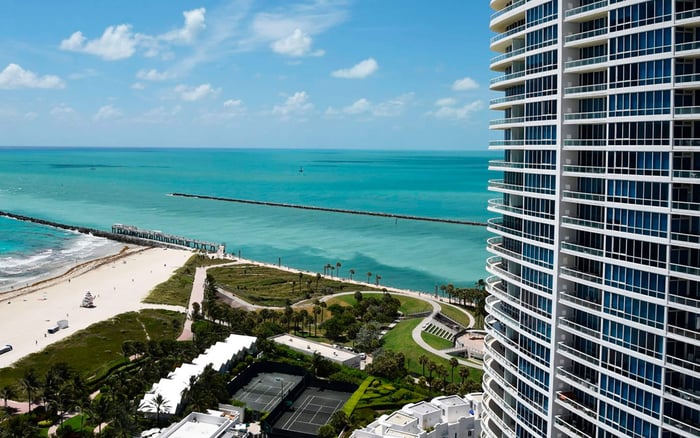
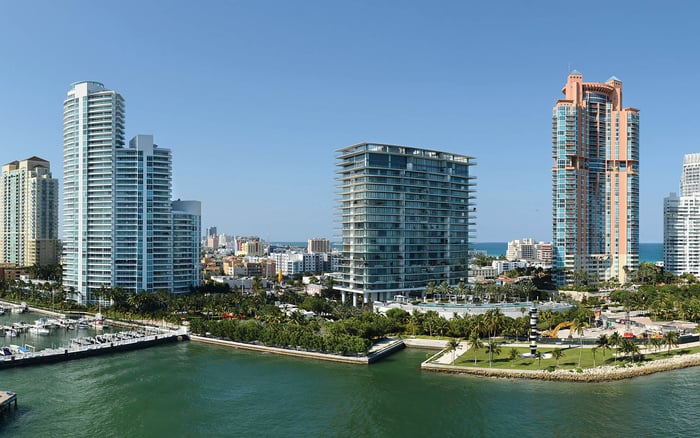
For an absentee owner, luxury is measured as much by operational precision as by design. This buyer-focused review explains how to compare routine unit care, storm preparation, key custody, emergency authority, and re-entry planning at 57 Ocean Miami Beach and The Perigon Miami Beach.

For an absentee owner, a beautifully finished residence is only part of the proposition. The deeper measure of luxury is whether the home can be closed, monitored, protected, and reopened with minimal uncertainty. At 57 Ocean Miami Beach and The Perigon Miami Beach, buyers should assess this capability as an operating system rather than assume that every residential service covers private-unit oversight.
This distinction is especially important for a second home. Routine care, storm preparation, post-event access, and authority over a private residence are separate functions that may involve different people, permissions, and agreements. A polished arrival experience does not by itself establish a complete hurricane protocol.
The first task is to identify the boundary between condominium operations and an owner’s private-unit responsibilities. Buyers should confirm which services apply to common areas, which extend into residences, and which require a separate agreement with a manager or vendor.
For both 57 Ocean Miami Beach and The Perigon Miami Beach, request current governing documents, service descriptions, access rules, and emergency procedures. Do not infer private-unit management from general residential services or assume that a third-party provider is affiliated with the association.
A private-unit agreement should state its scope, approval requirements, insurance expectations, fees, termination provisions, and reporting standards. The same document-based review can help buyers compare other Miami Beach properties, including Setai Residences Miami Beach, without relying only on lifestyle descriptions.
A credible lock-and-leave arrangement translates broad assurances into a task schedule. Buyers can ask whether arrival and departure support, cleaning, stocking, connectivity checks, inspections, vendor supervision, and storm-related work are included, optional, or excluded.
The agreement should identify inspection frequency, reporting format, escalation contacts, repair-approval procedures, and spending limits. It should also explain whether photographs or other records will be provided before and after authorized work.
Key custody warrants particular attention. Confirm where physical keys, access cards, digital credentials, and vehicle keys will be held; who may use them; how access will be logged; and how credentials will be returned or disabled when an agreement ends.
An oceanfront residence benefits from a written preparation sequence rather than an informal promise to check the unit. Buyers should ask how the plan addresses exterior furnishings, openings, water service, selected electrical systems, refrigeration, leak detection, interior contents, and communication with the owner.
Each task should be assigned clearly to the association, owner, private manager, or an approved vendor. The plan should also define emergency-spending authority, exceptions, notification procedures, inspection responsibilities, documentation, and the conditions that must be met before work begins.
Building systems deserve a separate review. Ask what may happen to elevators and other services during or after a storm, what backup systems support, and how prolonged interruptions would affect a closed residence. Any answer used in a purchase decision should be confirmed in current property documents or written procedures.
A private management agreement cannot by itself ensure post-storm access. Buyers should determine which public restrictions, property clearances, building conditions, identity requirements, and access-control procedures could affect an owner, manager, household employee, or vendor seeking entry.
An absentee owner should ask what credentials and written authorizations each person may need. The owner should also confirm who communicates access updates, who may conduct the first authorized inspection, and how conditions will be documented before cleanup or repairs.
This distinction is useful when comparing service-oriented properties such as The Ritz-Carlton Residences® Miami Beach. Service depth may influence communication and coordination, but buyers should evaluate access procedures independently.
Before committing to a purchase, buyers should request the documents available for review, including governing documents, rules, management agreements, emergency procedures, budgets, insurance information, vendor-access policies, and private-unit entry authorizations. The exact document set and applicable review process should be confirmed for each transaction.
Then compare 57 Ocean Miami Beach and The Perigon Miami Beach line by line across routine care, storm preparation, key control, communications, inspections, vendor supervision, and financial authority. The strongest arrangement is the one that gives the buyer a clear allocation of responsibilities, written permissions, defined reporting, and records that can be reviewed.
Is lock-and-leave service the same as hurricane management? Not necessarily. Buyers should confirm whether routine residence care and storm-related work are separate services with different terms.
Is private-unit management confirmed at 57 Ocean Miami Beach? Buyers should request current written information directly and verify the provider, scope, approvals, and contract terms before relying on any service.
Is private-unit management confirmed at The Perigon Miami Beach? Buyers should review current service descriptions and agreements rather than assume that general residential services include private-unit management.
What should a unit-management agreement define? It should address entry authority, key custody, inspections, vendor supervision, repair approvals, spending limits, documentation, and owner notification.
How should key custody be evaluated? Confirm who holds each key or credential, who can authorize its use, how access is recorded, and how credentials are returned or disabled.
What belongs in a written storm protocol? The protocol should allocate preparation, communication, inspection, documentation, repair authorization, and post-event responsibilities.
Can a private manager guarantee immediate post-storm access? Buyers should not assume so. Access can depend on public restrictions, property procedures, safety conditions, and required clearances.
What should an absentee owner confirm about re-entry? Confirm the credentials and authorizations needed for the owner, family members, managers, household staff, and approved vendors.
Which building-system questions matter for a second home? Ask how interruptions involving elevators, utilities, backup systems, access control, and communications could affect a closed residence.
How should buyers compare 57 Ocean and The Perigon? Use current documents and written procedures to compare responsibilities, service scope, access controls, reporting, emergency authority, and recordkeeping.
For a discreet conversation and a curated building-by-building shortlist, connect with MILLION.
If branded residences are on your mind — as a home or as an allocation — we would be glad to share what we are seeing, privately.
Begin a quiet conversation