Hotel service and residential privacy are not mutually exclusive, but they require different kinds of scrutiny. A buyer-focused comparison of Setai and Mandarin Oriental Boca Raton explains what shared amenities, private foyers, sky-bridge access, and visitor rules actually establish.
The pleasure of a hotel-connected residence is hospitality on demand without surrendering the comforts of home. Privacy, however, depends on more than attentive service. It rests on who can enter, where routes intersect, and whether owners can choose when to participate in the hotel environment.
For buyers comparing Setai Residences Miami Beach with Mandarin Oriental’s Boca Raton offering, that distinction is particularly useful. Setai’s amenity arrangements establish shared resort use. The Boca Raton specifications describe residential separation more explicitly. Neither establishes relative crowding, the effectiveness of security, or how discreet the daily experience will be.
Assess four attributes separately: acoustic calm, exclusive access, controlled movement toward the residence, and visitor turnover. A quiet pool can be shared. A private foyer can be served by a semi-private elevator. A gracious arrival can still leave visitor-screening questions unanswered.
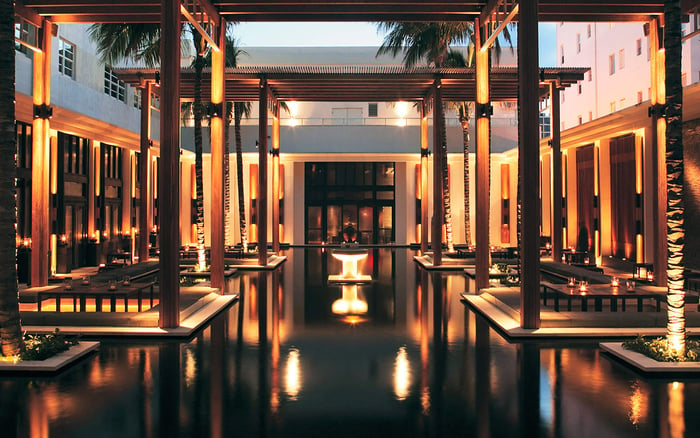
At Setai, private-residence rentals are marketed with access to hotel amenities, including pools, beach facilities, fitness facilities, spa services, valet, concierge assistance, and dining. Buyers should therefore evaluate a resort environment shared by residence occupants and hotel guests, rather than assume an owner-only amenity setting.
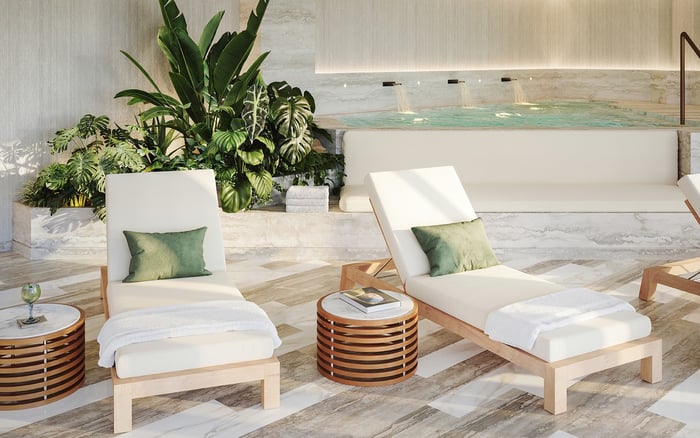
The three temperature-controlled infinity pools deserve particular attention. Walk from the residence to the pool area and note where the route intersects with hotel circulation. Ask how eligibility is checked, whether accompanying guests face limits, and how seating is managed. These are matters to confirm, not evidence of existing restrictions or congestion.
Apply the same discipline to the beach. Private beach access includes chairs, umbrellas, and food-and-beverage service, but “private” does not mean exclusive to residence owners. Establish who may use the service and whether the owner’s route passes through hotel gathering areas.
Valet parking and Les Clefs d’Or concierge services speak to hospitality, not necessarily to a separate residential entrance. Equally, the absence of detailed elevator information does not prove shared elevator banks, shared owner hallways, or unrestricted hotel-guest access. Request the actual arrival and floor-access arrangements before drawing conclusions.
Setai’s pool and spa areas have been described as music-free. That matters to atmosphere, but it neither establishes exclusive occupancy nor guarantees silence at every hour. A buyer who values quiet may find a shared setting appealing; one who prioritizes minimal contact with unfamiliar visitors needs a different test.
Arrange visits at contrasting times, including an arrival period and an evening dining period where possible. Observe circulation routes rather than treating one quiet inspection as representative. Ask management how restaurant visitors, rental occupants, invited guests, and service providers move through the property.
Residence rental offerings advertise amenity access for rental guests. They do not establish how many residences are rented, how frequently occupants change, or actual guest volumes. Review rental restrictions and registration rules without turning the existence of rentals into an unsupported conclusion about traffic.
At The Residences at Mandarin Oriental Boca Raton, private residential entrances and elevators are explicitly marketed features. A sky bridge is advertised as the hotel connection. This gives buyers a more defined separation concept to examine, but delivery and operating details still require confirmation.
Elevator terminology requires precision. Specifications describe a private elevator foyer for each residence, served by semi-private elevators and shared service corridors. A private foyer is not an elevator car dedicated to one home. Ask which residences share each elevator, how floor permissions work, and how service personnel reach individual homes.
The sky bridge deserves equal scrutiny. Advertised “exclusive access and signing privileges” at the hotel do not explain authentication procedures or who, if anyone, may travel in the reverse direction. Request a clear account of access at both ends, including permissions for owners, their visitors, hotel guests, and staff. Confirm whether those permissions change outside regular amenity hours and, if so, how.
Boca Raton’s marketed amenity program distinguishes resident-only lounges and gathering areas from hotel public spaces. A rooftop pool with private ocean-view cabanas is also among the marketed owner amenities. Because some descriptions date to 2018, confirm delivery, present specifications, eligibility, and guest rules rather than treating those descriptions as current operating policy.
Preferred access to restaurants, bars, and The Spa at Mandarin Oriental should not be read as exclusive resident use. Ask what preference means in practice: reservation priority, booking windows, or another defined privilege. The answer should be specific enough to inform how often you would choose the hotel’s social spaces.
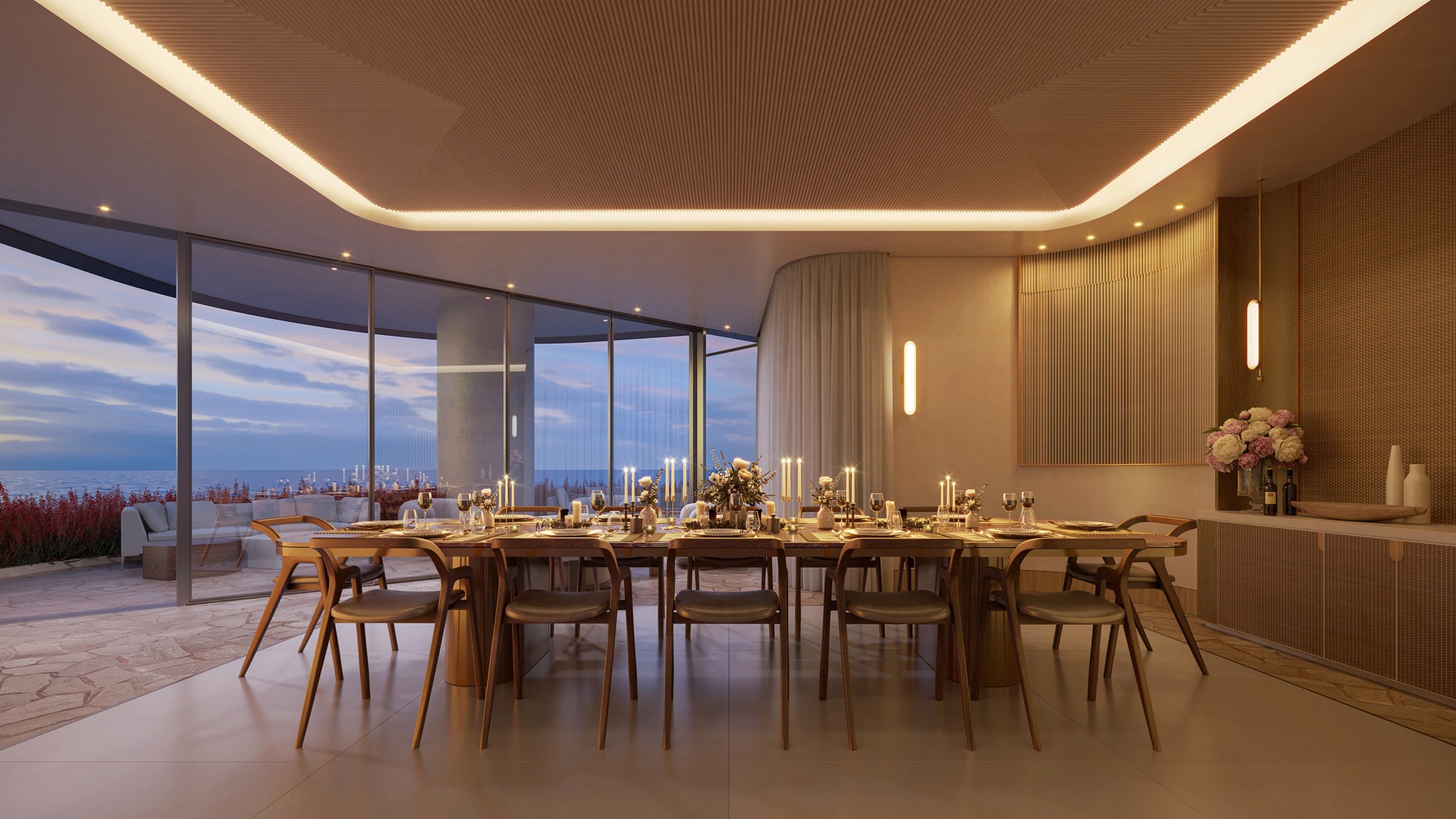
Advertised 24-hour in-residence catering offers another way to enjoy hospitality without dining in public areas. Discreet service, however, still depends on movement behind the scenes. Clarify delivery routes, access authorization, and the use of shared service corridors. Promises of concierge, doorman, valet, and security staffing do not themselves establish visitor-screening protocols.
Build the inspection around ordinary routines. Follow the owner’s path from vehicle arrival to the front door, then trace the routes to the pool, beach where applicable, restaurant, and fitness facilities. At each transition, identify who else is entitled to be there and what separates public, shared, and residential space.
Then trace an invited guest’s arrival and a delivery. Where facilities are unavailable to inspect, use plans and obtain written explanations of the intended procedures. Keep intended arrangements distinct from operating practices you can observe.
For a broader Boca Raton search that also includes Alina Residences Boca Raton, carry the same questions to each appointment without assuming equivalent amenities or access arrangements. A consistent inspection framework is more useful than comparing privacy adjectives.
Before committing, request lobby and elevator plans, floor-access permissions, visitor-registration procedures, rental restrictions, amenity guest limits, and service-corridor arrangements. Have the relevant governing documents reviewed alongside written management explanations. Distinguish documented entitlements from discretionary service practices.
The decision is not simply shared versus private. At Setai, establish whether resort participation fits your preferred routine and verify the residential boundary independently. At Mandarin Oriental Boca Raton, test the promised separation against precise specifications, delivery status, and access procedures. Neither property can responsibly be declared more private on the available details alone.
The strongest fit is a residence where encounters are optional to the degree you require, service reaches you discreetly, and the rules support the experience you expect.
For a discreet assessment of hotel-connected residences and the privacy details that matter to your purchase, connect with MILLION.
If branded residences are on your mind — as a home or as an allocation — we would be glad to share what we are seeing, privately.
Begin a quiet conversationNo. Private-residence rentals are marketed with access to hotel resort amenities, establishing a shared amenity environment rather than an owner-only setting.
No. Private beach access includes chairs, umbrellas, and food-and-beverage service, but it does not establish residence-owner exclusivity.
Walk the residence-to-pool route around the three temperature-controlled infinity pools. Confirm access eligibility, accompanying-guest limits, and seating procedures.
No. Buyers should request elevator plans and floor-access permissions rather than infer elevator or hallway arrangements from shared resort amenities.
No. Rental offerings advertise amenity access, but do not establish rental percentages, occupancy turnover, or actual guest traffic.
The specifications describe private elevator foyers served by semi-private elevators and shared service corridors. A private foyer does not necessarily include a dedicated elevator car.
The advertised hotel-access privileges do not establish reverse-direction permissions. Buyers should confirm access controls and authorized users at both ends.
The marketed features should not be treated as proof of completed facilities or current operations. Confirm delivery, eligibility, and guest policies, particularly for amenities described in older materials.
No. Preferred access to hotel restaurants, bars, and the spa is distinct from exclusive resident use; the specific privileges require confirmation.
Request lobby and elevator plans, floor-access permissions, visitor-registration rules, rental restrictions, amenity guest limits, and service-corridor arrangements. Review documented rights separately from discretionary service practices.