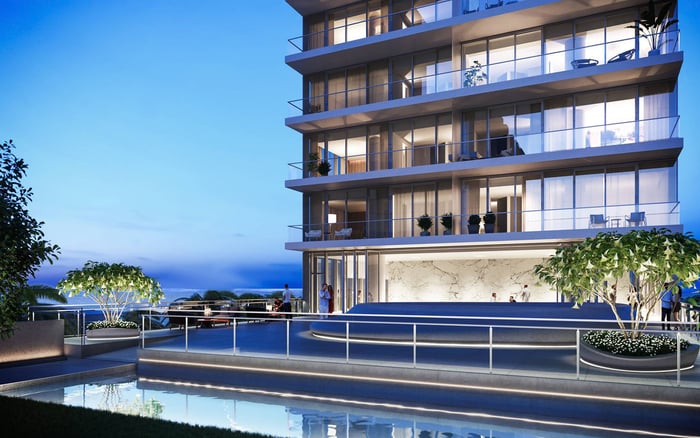
A discreet buyer’s framework for separating enduring residential quality from the allure of nearby private-club programming before purchasing in Hallandale Beach.
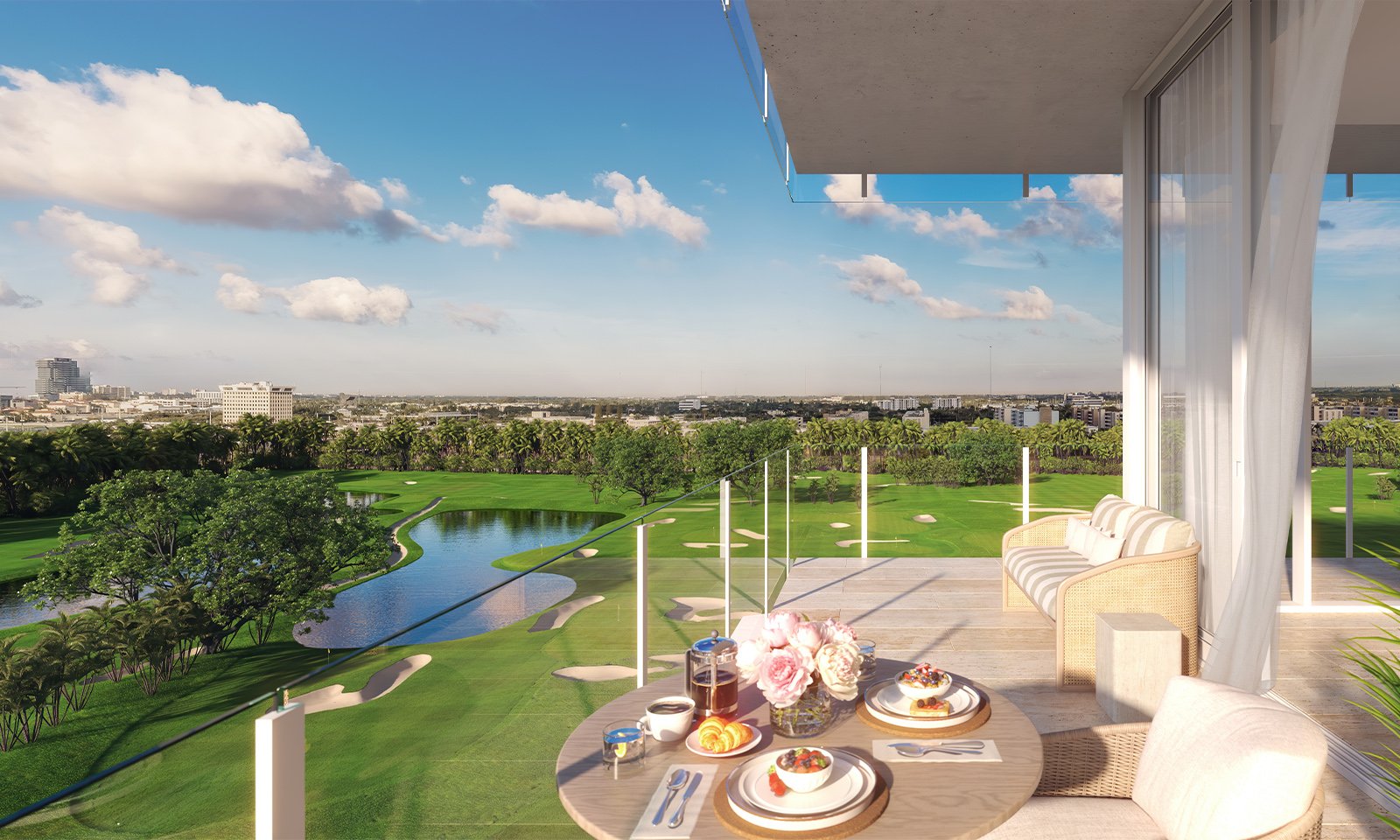
For many South Florida buyers, the idea of living near a private club is deeply seductive. It suggests a rhythm of morning fitness, quiet lunches, curated social rooms, spa time, sport, and effortless hosting. In Hallandale Beach, where buyers often weigh waterfront privacy, service, and access to the broader coastal lifestyle, that proposition can be especially persuasive.
The risk is subtle. A club-adjacent purchase can become a club-dependent purchase when the buyer is not disciplined. The strongest acquisition still makes sense if membership rules change, programming evolves, usage patterns shift, or the novelty of proximity fades. The club should be an elegant extension of the home, not the reason the home works.
Begin with the residence itself. Does the floor plan support daily life without reliance on outside spaces? Are entertaining, wellness, storage, staff flow, parking, pet routines, and guest privacy resolved within the property or building? Do the view, light, terrace, and arrival sequence feel substantial on an ordinary Tuesday, not only before a gala dinner or weekend match?
This is where the most refined buyers separate atmosphere from architecture. A project such as 2000 Ocean Hallandale Beach can be considered through the lens of its residential fundamentals before any lifestyle comparison is made. The question is not whether the surrounding lifestyle is appealing. It is whether the home has independent merit.
Club-adjacent does not have to mean living inside the orbit of one institution. It may mean that private sport, dining, wellness, beach, marina, or social amenities are close enough to influence daily life. It may also mean that a residence borrows the polish associated with club culture without requiring the buyer to organize life around a single membership.
That distinction matters. A buyer should identify the actual lifestyle being sought. Is it golf access, a dining room where friends naturally gather, racquet sports, discreet wellness, business hosting, family programming, or simply the social ease of being near people with similar standards? Each use case creates a different real estate decision.
If the buyer primarily wants private sport, then travel time, reservation pressure, equipment storage, and post-activity routines matter. If the buyer wants social dining, the more relevant questions become dress culture, guest policies, seasonal intensity, and whether the home itself can host equally well. If wellness is the magnet, a residence with excellent in-building amenities may provide more consistency than relying exclusively on an external club calendar.
A property such as Shell Bay by Auberge Hallandale naturally invites this kind of scrutiny because the name itself signals a club-minded lifestyle. The disciplined buyer should appreciate the positioning while still testing whether the residence, service model, and location remain compelling on their own.
A weekend preview can flatter almost any club-adjacent environment. The landscaping looks composed, the service is rehearsed, and the buyer is usually in an aspirational mood. The better test is the weekday routine.
Imagine the first hour of the morning. How does the day begin if no club reservation is on the calendar? Is there a place to train privately, work quietly, take a call, have coffee outside, walk a dog, or receive a guest without friction? Then test the early evening. Can the household transition from work to dinner, from beach to shower, from child pickup to hosting, without treating the club as a necessary second living room?
This is particularly important for second-home owners. A residence that only feels complete when every external amenity is operating at peak level may not serve well during quieter visits. A primary residence must also support repetition. The goal is a home that feels complete before the club is added.
Buyers comparing Hallandale with nearby markets may also look at Avenia Aventura as a way to sharpen their thinking about access, routine, and the balance between residential calm and surrounding convenience. The comparison is less about one project versus another and more about how each address supports the way a household actually lives.
Prestige is emotional. Liquidity is structural. A private-club halo can add narrative power to a residence, but buyers should be careful not to confuse narrative with durable market depth.
A sound purchase should appeal to more than one future buyer profile. If the next buyer is not a golfer, does the home still have stature? If the next buyer is not socially active, does the building still offer privacy, design quality, and ease? If the next buyer already belongs elsewhere, is the address still desirable without conversion to a new membership or lifestyle identity?
This is the central resale test. The residence should carry multiple arguments. Oceanfront presence, meaningful outdoor space, elegant building operations, refined finishes, view quality, privacy, and convenient access can all support value independently of a club relationship. Club proximity may enhance the story, but it should not be the only story.
When evaluating oceanfront options, buyers should be especially clear about what they are paying for: the water, the residence, the service culture, the exclusivity, the amenity mix, or the social ecosystem. Those layers can overlap, but they are not identical. The most resilient purchase usually has more than one layer working in its favor.
Sophisticated diligence is rarely dramatic. It is a sequence of quiet questions asked early enough to influence negotiation.
How does the club relationship work in practice? Is membership included, optional, separate, limited, waitlisted, transferable, or subject to future approval? Are family members, guests, renters, or visiting friends treated differently? Are there initiation costs, annual dues, minimum spends, usage charges, or capital assessments that should be modeled separately from the residence? If any answer is uncertain, the buyer should not assume convenience will solve it later.
Equally important, how does the residential association or building governance interact with the club culture? A serene building with a high-touch service model can feel very different from an address where club traffic, events, or social energy dominate the atmosphere. Neither is inherently better. The key is alignment with the buyer’s temperament.
Buyers who also compare the broader coast might consider Turnberry Ocean Club Sunny Isles to evaluate a different expression of amenity-rich coastal living. The exercise helps clarify whether the buyer is truly seeking a club-adjacent identity or simply a highly serviced residence with strong private amenities.
Before purchasing, create a no-club case. This is a private exercise, but it is invaluable.
First, describe why the residence is worth owning without any external membership. Second, identify the features that would matter to a future buyer who never uses the club. Third, estimate whether the monthly carrying costs still feel justified if dining, sport, or social programming is used less than expected. Fourth, decide whether the home can host, restore, entertain, and provide privacy without leaving the building.
If the no-club case is weak, the purchase may still be enjoyable, but it is more speculative. If the no-club case is strong, the club becomes what it should be: an enhancement. That is the refined posture. The buyer is not rejecting the lifestyle. The buyer is refusing to be captive to it.
In Hallandale, the best club-adjacent decision is not simply about proximity. It is about optionality. The residence should support solitude and sociability, service and independence, polish and ease. When those elements are balanced, the buyer can enjoy the club with pleasure rather than reliance.
What does club-adjacent mean for a Hallandale buyer? It means the residence benefits from proximity to private lifestyle amenities, while the home itself still functions beautifully without relying on them.
Should club access be the main reason to buy? Usually no. Club access can be a meaningful enhancement, but the residence, location, privacy, and carrying costs should stand on their own.
How should I evaluate a club membership tied to a property? Review whether membership is included, optional, transferable, approval-based, or subject to separate dues and charges before making assumptions.
What is the biggest risk of club-dependent buying? The buyer may overpay for a lifestyle pattern that changes with time, family needs, governance, availability, or personal use.
Can a club-adjacent residence still be a good second home? Yes, if the property feels complete during quiet stays and does not require constant club usage to justify ownership.
How do I test the daily lifestyle before purchase? Walk through a normal weekday morning, afternoon, and evening, then ask whether the home supports each moment without friction.
Does golf access automatically improve resale appeal? Not automatically. It may appeal to certain buyers, but resale strength should also rest on design, privacy, service, and location.
Is oceanfront value different from club value? Yes. Oceanfront value is tied to the residential setting, while club value depends more on access, programming, culture, and usage.
Why compare Hallandale with Aventura or Sunny Isles? Comparisons help clarify whether the buyer wants a specific club culture, a coastal residence, or a broader amenity-rich lifestyle.
What is the simplest decision rule? Buy the home you would still want if the club were unavailable for a season, then enjoy the club as a privilege rather than a necessity.
If you'd like a private walkthrough and a curated shortlist, connect with MILLION.
If branded residences are on your mind — as a home or as an allocation — we would be glad to share what we are seeing, privately.
Begin a quiet conversation