Brickell offers an unusually broad choice between hospitality-rich residences and resident-only towers. For buyers weighing Bal Harbour, the decisive exercise is to verify whether a specific property’s arrival sequence, dining program, guest circulation, and event protocols satisfy a more retreat-oriented brief.
For frequent hosts, the choice between Brickell and Bal Harbour is less about which address carries greater prestige than how each is expected to perform. The essential questions are operational: Can dinner move from a public restaurant to a private room without sacrificing service? Can guests arrive elegantly while residents retain a discreet route home? During major event weeks, does the building absorb activity-or expose owners to it?
Brickell offers the clearest spectrum. At one end are residences that turn hospitality into residential infrastructure, combining restaurants, catering, lounges, poolside service, and in-home dining. At the other are private residential environments designed to exclude hotel crowds, outside memberships, and public spaces. Bal Harbour presents a different buyer brief, often centered on retreat and controlled hosting, but any conclusion should rest on the specific residence rather than a neighborhood stereotype.
The true luxury is not simply hosting well, but choosing how visible the occasion becomes.
Brickell suits the owner who wants entertaining options close at hand and a residence capable of scaling from an impromptu dinner to a substantial social or business occasion. The surrounding nightlife includes vibe-dining venues such as Komodo, Gekko, and Delilah Miami, alongside the rooftop lounges Sugar at EAST Miami and Rosa Sky. That energy can be an asset for residents who want the city to function as an extension of home.
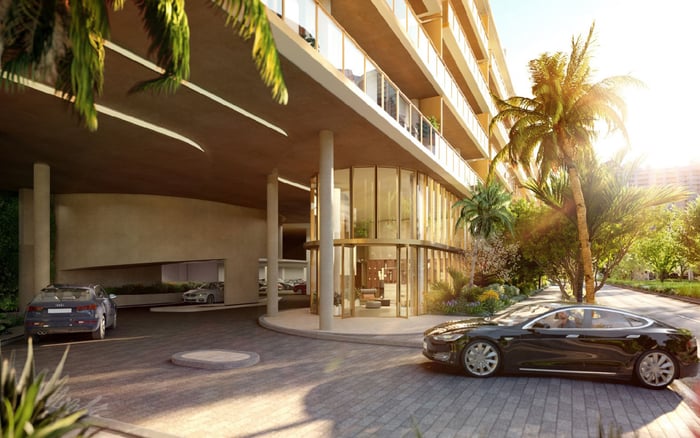
The more consequential distinction, however, is what happens inside the building. Cipriani Residences Brickell offers resident-exclusive private dining, in-home dining, and 24-hour catering. Its reservable private dining rooms allow owners to host with Cipriani service without entering a public restaurant. A landscaped private entrance, porte-cochère, and two banks of high-speed touchless elevators further refine the arrival experience.
888 Brickell by Dolce & Gabbana represents a restaurant-forward interpretation. Its program includes a Major Food Group signature restaurant, an all-day pool-club restaurant and bar, multiple dining concepts, a demonstration kitchen, and private dining. The proposition is compelling for buyers who view culinary access and atmosphere as central to ownership rather than occasional amenities.
A serviced residence can remove much of the friction from hosting. Four Seasons Residences Brickell combines two restaurants, poolside dining, 24-hour in-room dining, concierge service, and 15,000 square feet of event space. Together, these offerings support private celebrations and business entertaining without requiring every gathering to unfold inside the owner’s residence.
SLS Lux Brickell follows a similarly hospitality-led model, with a signature restaurant by chef Katsuya Uechi, the S Bar lounge, poolside food-and-beverage service, expansive decks, cabanas, and in-room dining for residences and suites. In both cases, the buyer acquires more than an apartment. The service platform becomes a practical extension of the dining room, office, and guest itinerary.
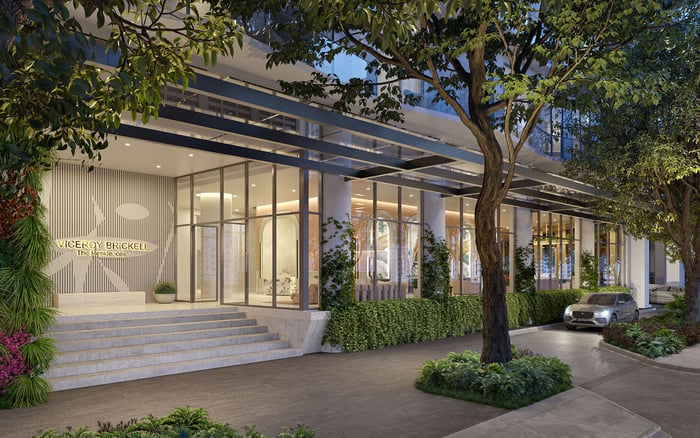
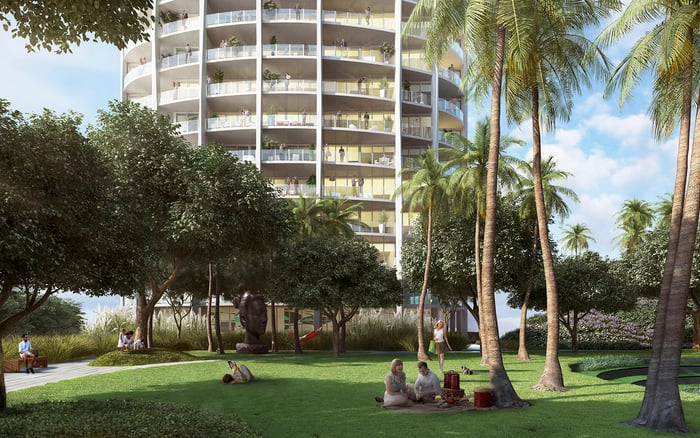
Not every host requires hotel-scale infrastructure. Colette Residences Brickell centers more intimate entertaining through indoor and outdoor lounges, a catering kitchen, barbecue facilities, and dedicated gathering zones. A screening room, children’s playroom, and meeting space broaden the possible guest list, from family occasions to informal business sessions. The distinction is useful: some buyers want a branded hospitality ecosystem; others prefer adaptable residential rooms that remain socially capable without feeling public.
During a high-demand week, privacy is rarely secured by square footage alone. Owners should examine the complete path from vehicle arrival to residence entry. Even a polished lobby can become a point of exposure when hotel guests, restaurant patrons, event attendees, and residents converge in the same space.
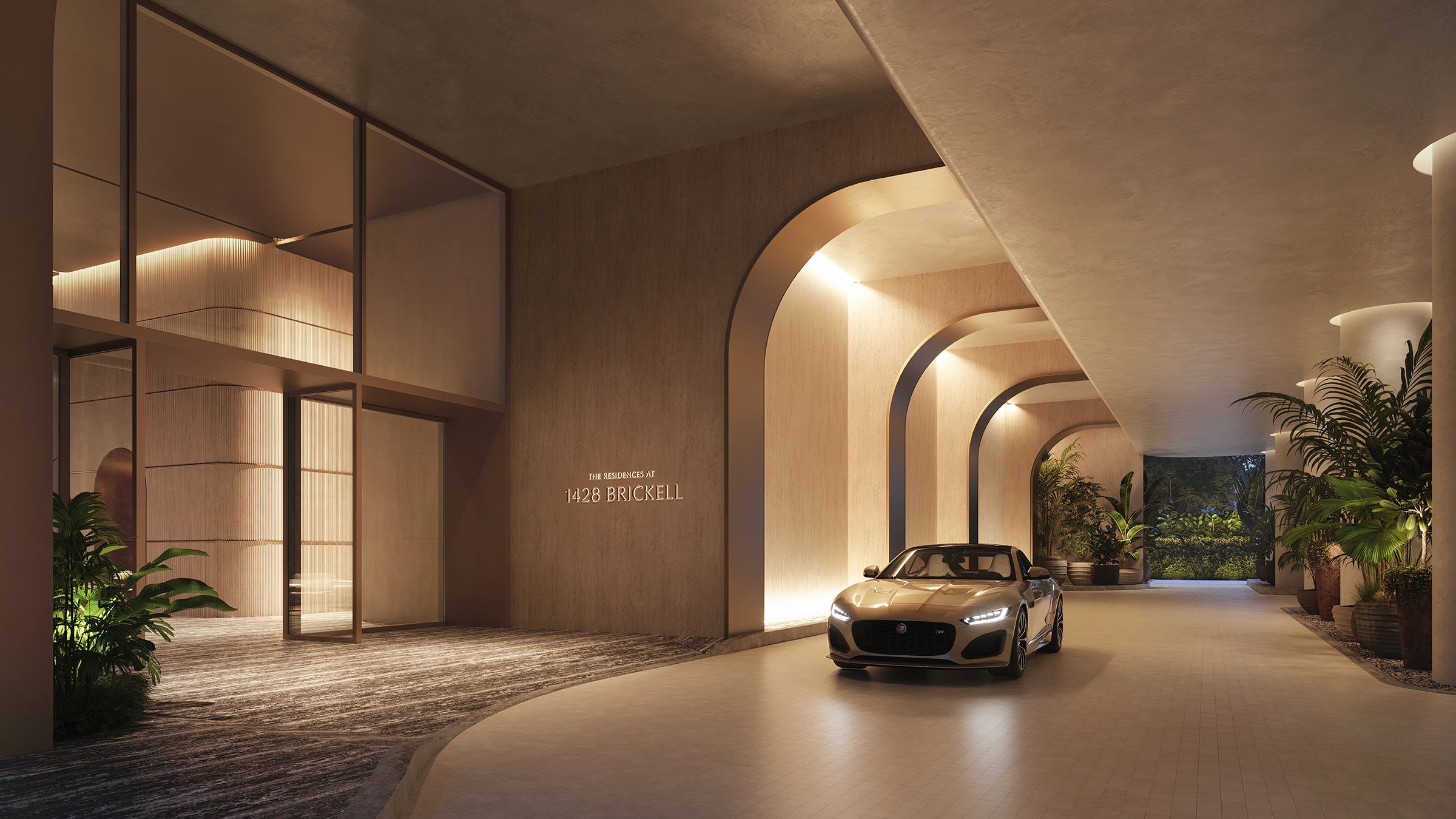
Access design therefore becomes a primary buying criterion. The Residences at 1428 Brickell distinguishes itself as a resident-and-guest-only environment without hotel crowds, outside memberships, or public spaces. Discreet access, controlled entry, and separated circulation are intended to protect privacy in a central urban setting. For owners who value Brickell’s location but do not want hospitality traffic, this model addresses the tension directly.
Other branded Brickell offerings broaden the options. St. Regis® Residences Brickell includes private elevators, guest suites, fine dining, concierge and butler service, and private-marina access. Baccarat Residences Brickell includes private dining, a wine cellar, a private marina, and beach-club membership. These combinations illustrate why buyers must distinguish amenity quantity from amenity control. A rich program can be private, public-facing, or a carefully managed blend of both.
Bal Harbour should be assessed through a property-specific privacy audit. Neighborhood labels do not reveal how a building handles diners, guests, vendors, residents, and events. A buyer considering Rivage Bal Harbour alongside a Brickell residence should request direct confirmation of private dining arrangements, catering access, guest registration, elevator control, service circulation, valet procedures, and policies during major event periods.
This approach preserves the meaningful contrast without relying on assumptions. A Brickell buyer can select a residence embedded in active dining and hospitality, then determine how much of that energy should enter the residential experience. A Bal Harbour buyer may begin with a more retreat-oriented objective but must still establish whether the individual property delivers the required degree of seclusion and hosting capability.
The key is to define privacy precisely. For one owner, it means never crossing a public lobby. For another, it means having restaurant-caliber food at home. A third may prioritize a private elevator, controlled guest access, or a dining room that can discreetly support staff and catering. These are distinct requirements, and no neighborhood name resolves them automatically.
Begin with the intended scale of entertaining. Frequent large gatherings favor properties with event space, multiple food-and-beverage options, and experienced residential service. Regular dinners for eight or ten may place greater value on a reservable private room, catering kitchen, or reliable in-home dining. For family hosting, a screening room, playroom, and flexible lounge may prove more useful than a public restaurant downstairs.
Next, inspect circulation. Ask whether residents, restaurant patrons, hotel guests, event attendees, caterers, and staff use separate entrances or elevators. Confirm who can reserve dining spaces, whether outside memberships exist, and how access procedures change during busy weeks. Finally, test the residence itself: kitchen support, acoustic separation, guest powder rooms, terrace flow, and staff routes can matter more than a spectacular amenity deck.
Brickell’s advantage is choice. It can serve the highly social owner through restaurant-centered living, the frequent host through catering and event infrastructure, or the privacy-led buyer through a fully residential environment. Bal Harbour may answer a retreat-oriented search, but the final judgment belongs to the building’s operating model. At either address, discretion is best understood as a system, not a mood.
For a private consultation on residences aligned with your entertaining and privacy priorities, connect with MILLION.
If branded residences are on your mind — as a home or as an allocation — we would be glad to share what we are seeing, privately.
Begin a quiet conversationBrickell offers a documented choice between hospitality-intensive residences and resident-and-guest-only environments.
It offers resident-exclusive private dining, in-home dining, reservable dining rooms, and 24-hour catering.
It is designed as a resident-and-guest-only environment without hotel crowds, outside memberships, or public spaces.
They should study entry procedures, elevator control, guest registration, valet operations, and separation among residents, staff, and public visitors.
Yes. Four Seasons Residences Brickell combines residential service with 15,000 square feet of event space and multiple dining options.
It emphasizes intimate hosting with lounges, a catering kitchen, barbecue facilities, and dedicated entertaining zones.
Its program includes a signature restaurant, an all-day pool-club restaurant and bar, multiple dining concepts, a demonstration kitchen, and private dining.
No. Buyers should determine whether amenities are resident-only, public-facing, or shared with hotel guests and outside members.
Compare specific buildings through confirmed dining, guest-access, service-circulation, valet, and event-period protocols rather than relying on neighborhood assumptions.
Define the usual gathering size and service expectations, then match them to private dining, catering, event space, and circulation design.