A discreet buyer’s guide to choosing a South Florida residence around serious wine storage, redundant cooling, building systems, and lifestyle fit.
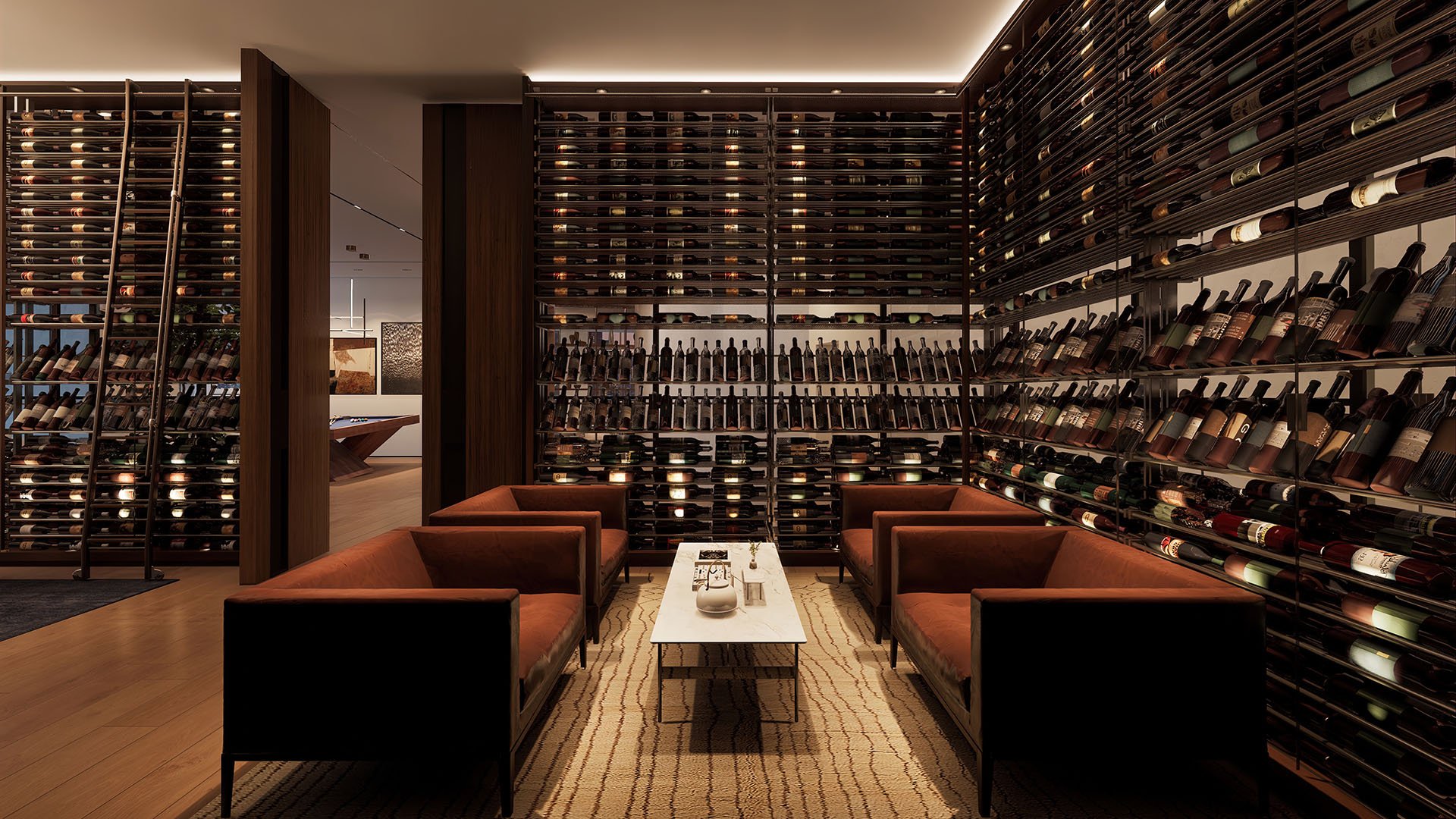
The Aspen buyer arriving in South Florida often brings more than skis, art and a preference for privacy. They bring collections: Burgundy acquired over decades, Champagne for entertaining, California verticals, bottles with sentimental provenance and cases never intended for a decorative cabinet near the kitchen.
In a warm coastal market, wine storage and backup cooling should move from afterthought to acquisition criterion. The right home is not simply the one with a dramatic terrace or a cinematic primary suite. It is the one whose mechanical logic can protect what lives inside, including bottles that may be more sensitive than the furnishings.
This is not about turning every residence into a commercial cellar. It is about asking better questions before contract, understanding where a beautiful wine display ends and true storage begins, and recognizing that comfort during a power disruption is different from a building that merely keeps elevators and emergency systems alive.
Across South Florida, Brickell, Miami Beach, Sunny Isles, Boca Raton, Coconut Grove and West Palm Beach each ask a different version of the same question: how much resilience does the home really offer when the owner is away, entertaining or waiting out a summer storm?
A glass wall of wine can be seductive. It can also be the least important part of the system. Serious collectors should begin by separating three ideas: presentation, daily drinking inventory and long-term preservation.
A presentation wall near a dining room can be ideal for bottles that will be opened soon. A working wine room or cellar must be treated more like a controlled environment than an interior-design feature. That means insulation, vapor control, dedicated cooling, appropriate lighting, minimized vibration and a plan for service access. The more valuable the collection, the less tolerance there is for improvisation.
In a condominium, the feasibility of a true wine room depends on structure, permitted alterations, plumbing and condensate routes, electrical capacity, association rules and how the room interfaces with the residence’s air-conditioning system. In a single-family estate, there may be more freedom, but the same discipline applies. A large custom cellar built without a resilient cooling strategy remains fragile.
Brickell is often the first South Florida stop for buyers who want international energy, financial-district convenience and high-rise services. For wine collectors, the appeal is clear: lock-and-leave living, controlled access, professional management and the possibility of a residence that functions elegantly when the owner is elsewhere.
The question is what, precisely, remains cooled if power fails. Many buyers assume a prestigious tower means continuous comfort inside the residence. That assumption should be tested. Ask whether backup power supports only life-safety systems and common areas, or whether it can support in-unit air conditioning, refrigeration, dedicated wine cooling or select circuits. Ask how long the system is intended to operate, how fuel is handled, and what maintenance history or commissioning documentation can be reviewed.
A buyer considering The Residences at 1428 Brickell or St. Regis® Residences Brickell should make the mechanical conversation as important as the view corridor. In a trophy apartment, the finest upgrade may be invisible: a properly coordinated plan for wine cooling, monitoring, alarms and backup circuits.
On the beach, the wine conversation becomes more architectural. Sun exposure, glass, terrace doors, humidity and salt air all influence how a residence performs. A wine room placed for drama may need extra care if it sits near exterior glazing or high-traffic entertaining zones. A quieter internal location can often be more appropriate for a serious collection.
For Miami Beach buyers, the best question is not whether a residence can have a wine room. It is whether the wine room can be maintained without disrupting the rest of the home. Where will equipment sit? Can it be serviced discreetly? Is there a plan for condensation? Will vibration from adjacent mechanical spaces or elevators be an issue? How will the system alert the owner, house manager or service team if temperature begins to drift?
At a project such as The Perigon Miami Beach, a collector should approach the residence with both a lifestyle brief and a technical brief. The lifestyle brief asks where wine will be opened, shown and shared. The technical brief asks where it will quietly survive.
In Boca Raton, Coconut Grove and Palm Beach, buyers often have more room to think in estate terms. That can be an advantage for collectors who want a walk-in cellar, tasting room, back-of-house storage or a separate chilled pantry near the service kitchen. More space, however, does not remove the need for discipline.
Single-family ownership places more responsibility on the owner’s team. Generator capacity, transfer switching, fuel planning, HVAC zoning, humidity control, remote monitoring and preventive maintenance all become part of the residence’s operating plan. A cellar is not a static luxury. It is a system that should be inspected, commissioned and cared for.
For buyers studying Alina Residences Boca Raton or Four Seasons Residences Coconut Grove, the central issue is fit. Some collectors want a discreet wine room that supports intimate dinners. Others want a more ceremonial environment, perhaps with a tasting table, art, cigar storage nearby or a chef’s staging area. Either way, the mechanical solution should precede the millwork.
Before making an offer, ask for a clear explanation of the building or home’s backup-power hierarchy. Which systems are backed up? Which are not? Are in-unit cooling systems included? Can a dedicated wine-cooling unit be placed on a backed-up circuit? Are there restrictions on supplemental equipment? What approvals would be required for a new cellar or wine wall?
Then ask who will own the problem. In a staffed estate, the answer may be a property manager, HVAC contractor and cellar specialist working together. In a condominium, the answer may involve the owner’s team, the building engineer and the association. The best homes make this collaboration easy. The wrong homes make it bureaucratic or physically difficult.
Monitoring is equally important. A serious collection should not depend on someone noticing that a room feels warm. Remote alerts, service protocols and a written response plan can matter as much as the equipment itself. If the owner travels often, the wine room needs an operating plan that works without the owner present.
South Florida living is social. Wine is often part of that ritual, whether it is a quiet dinner after the boat, a long lunch that moves indoors, or a formal evening with guests flying in for the season. The best residences acknowledge that hospitality and preservation are different acts.
Keep ready-to-serve bottles near the places where people gather. Keep long-term bottles in the most stable environment available. If the same room must do both, design it with restraint: limited heat load, thoughtful lighting, controlled access and storage that favors bottle health over spectacle.
The most refined wine rooms in South Florida do not shout. They feel inevitable, as if they were always part of the floor plan. They are beautiful enough for a guest to admire and technical enough for a collector to trust.
A seasonal owner with a modest but meaningful collection may prioritize remote monitoring and a small dedicated room. A host who entertains weekly may need serving storage, glassware, refrigeration and a layout that connects naturally to dining. A collector with investment-grade bottles should prioritize redundancy, professional maintenance and the ability to document the storage environment.
The Aspen-to-Brickell move is ultimately a shift from cold-weather assumptions to coastal-resilience thinking. In the mountains, the outside climate may be forgiving to wine for part of the year. In South Florida, the residence must create its own discipline. That discipline is a luxury, even when no guest ever sees it.
Should wine storage influence which South Florida home I buy? Yes. If the collection is meaningful, mechanical resilience, backup power and service access should be reviewed before finishes or furniture plans.
Is a glass wine wall the same as a cellar? Not necessarily. A glass display may suit entertaining bottles, while a true cellar needs controlled conditions, proper construction and dedicated equipment.
Do luxury condos automatically provide backup cooling inside units? No buyer should assume that. Ask exactly which systems are supported by backup power and whether dedicated wine equipment can be included.
Where is the best place to put a wine room in a condo? Often, the most stable interior location is preferable to the most theatrical one. The final answer depends on structure, approvals and mechanical routing.
Can I add a wine cellar after closing? Sometimes, but approvals, electrical capacity, condensate management and association rules can affect feasibility. Review these issues during due diligence.
What should seasonal owners prioritize? Remote monitoring, alarm response, preventive maintenance and a clear service protocol are essential when the owner is not in residence.
Are single-family homes easier for serious collectors? They can offer more flexibility, but they also require the owner to manage generator capacity, HVAC coordination and ongoing maintenance directly.
Should wine cooling be separate from home air conditioning? For serious storage, a dedicated system is often the cleaner planning concept. The design team should coordinate it early with the broader mechanical plan.
What should I ask before signing a contract? Ask what is backed up, what can be modified, where equipment can be serviced and who responds if the wine room drifts out of range.
Which South Florida neighborhood is best for collectors? The best choice depends on lifestyle, building systems and the scale of the collection. The right residence is the one whose infrastructure matches the owner’s habits.
For a discreet conversation and a curated building-by-building shortlist, connect with MILLION.
If branded residences are on your mind — as a home or as an allocation — we would be glad to share what we are seeing, privately.
Begin a quiet conversation