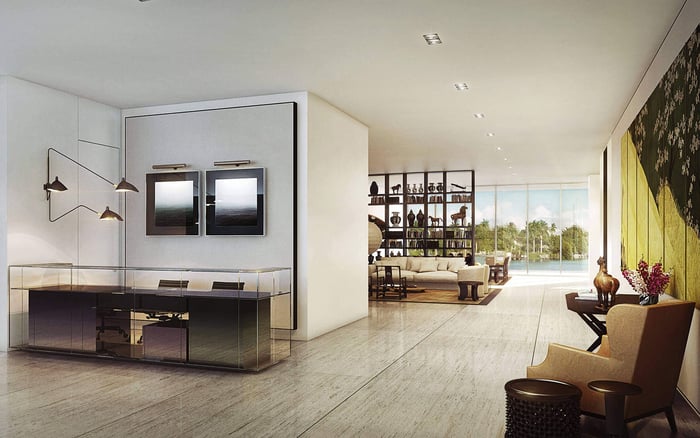
For owners who spend months away, the most important storage questions concern usable capacity, environmental conditions, access and accountability. 888 Brickell’s lockable owner’s closets provide a concrete starting point, while a comparison with Armani Casa Sunny Isles Beach calls for residence-specific documentation rather than assumptions based on branding.
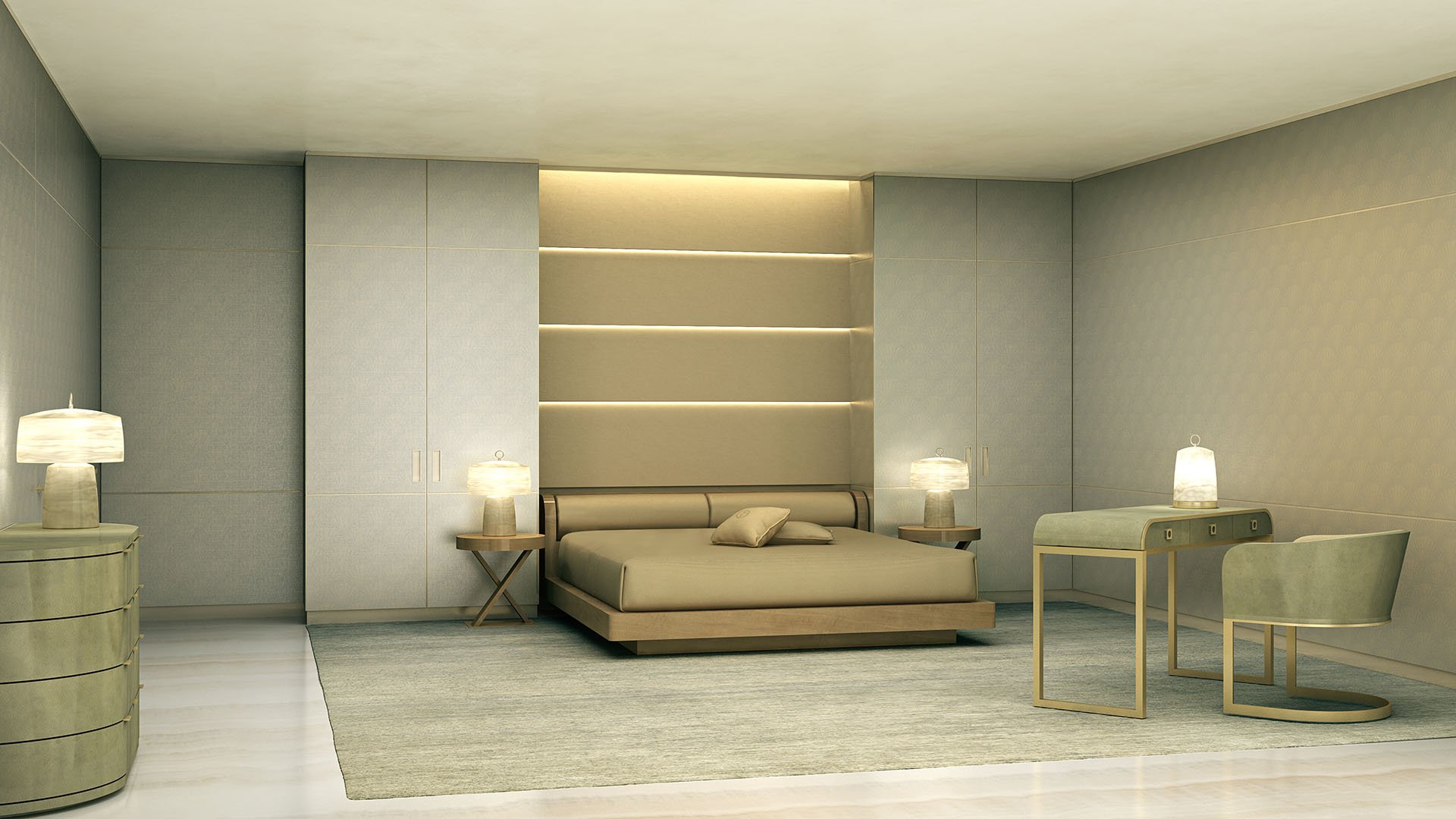
A residence can be beautifully appointed and still leave a consequential question unanswered: what happens to personal belongings when its owner is away for several months? For a wardrobe, a wine collection or objects with sentimental value, the answer depends less on presentation than on storage rights, environmental conditions and a clear chain of responsibility.
The comparison between 888 Brickell by Dolce & Gabbana and Armani Casa Sunny Isles Beach is best framed around those obligations, not presumed equivalence between design names. At 888 Brickell, lockable owner’s closets offer a concrete starting point. At Armani Casa, buyers should request residence-specific storage, conditioning and access documentation before drawing comparisons.
A locked door is one layer of protection, not a complete preservation or custody system. The essential distinction is between having somewhere to put belongings and knowing precisely how they will be protected during an absence.
Planned at 888 Brickell Avenue in Miami, 888 Brickell combines residential ownership with a hotel-oriented operating concept across 259 hybrid residences. The residences are offered as fully furnished and turnkey, with Studio Sofield interiors incorporating Dolce & Gabbana design. The offering includes one- to four-bedroom residences and full-floor, duplex and penthouse collections; individual floor plans should govern unit-specific expectations.
Residence features include lockable owner’s closets in the primary suite and fully built-out closets in custom millwork. These are meaningful provisions, but built-in cabinetry is not equivalent to a separately assigned building storage locker.
Nor does lockability establish capacity, fire rating, insurance coverage or exclusive owner access. Buyers should request the relevant closet’s location on their selected plan, usable internal dimensions and hardware specification. A generous-looking wardrobe should not substitute for measured capacity to accommodate the belongings an owner intends to leave behind.
The first inquiry is physical: where is the space, what fits inside it and how is it reached? Request dimensions that distinguish shelves, hanging areas and clear floor space. Confirm whether additional storage is within the residence, elsewhere in the building or available only through a separate arrangement.
The second inquiry is contractual. Ask whether storage is part of the purchased unit, an assigned right or a service subject to separate charges. Confirm transferability, restrictions on contents and whether access or allocation can change. These terms belong in purchase exhibits, condominium documents and any storage assignment-not merely in a sales conversation.
A buyer also considering Cipriani Residences Brickell should apply the same document-led test, without assuming that a comparable address or design positioning produces comparable storage rights. Compare usable space and enforceable rights separately.
A closet within an air-conditioned residence is not automatically a storage environment with guaranteed temperature and humidity ranges. At 888 Brickell, the technology offering describes control of climate, lighting, security and entertainment, including management while the owner is away. That capability does not establish dedicated closet humidity monitoring or a preservation standard for stored contents.
Ask whether the storage area sits within the conditioned envelope, how air reaches it and whether temperature and humidity are measured there. Request written operating ranges, if offered, and clarify who receives an alert when conditions fall outside them.
The more revealing question concerns interruption: what happens after an equipment failure, loss of connectivity or a missed alert? Buyers should seek an escalation procedure that identifies the responsible contact, access authority and corrective action. Environmental control is useful to an absent owner only when someone is accountable for responding.
888 Brickell’s Grand Residences are described as transitioning into multiple individual rooms and suites, allowing simultaneous use by owners and hotel guests through private entries intended to preserve privacy. This arrangement makes the boundary between owner property and guest-use space a central contractual question.
Before committing, request a plan identifying the owner-retained areas in each permitted configuration. Establish whether the owner’s closet remains inaccessible from guest-use areas and who can open it. A private entrance does not, by itself, resolve questions about housekeeping, maintenance, emergency access or hotel-operator permissions.
The access schedule should distinguish routine entry from emergency entry. Ask who holds keys or master credentials, whether entries are logged and how the owner is notified. Clarify whether stored belongings must be moved before hotel occupancy, who authorizes that movement and who accepts responsibility while items are being handled.
For second-home ownership, an inventory should reflect the actual contents rather than a generic departure checklist. Buyers should request a protocol covering photographs, serial numbers where applicable, receipts, valuations and the recorded location of significant items.
That initial record should connect to movement logs and pre- and post-occupancy inspections. If an item is relocated, the record should identify it, the person handling it, its destination and the owner’s authorization. Ask whether such a service is available, what it costs and which party is contractually responsible. Do not assume it accompanies a turnkey residence.
The same questions apply when evaluating Bentley Residences Sunny Isles alongside other Sunny Isles Beach options. The point is not to imply identical operating models, but to compare each residence against the same owner-defined standard for absence management and documented custody.
Private wine storage is identified within 888 Brickell’s amenity program. That provision does not establish an allocation for every residence or a general-purpose, conditioned owner-storage room. Buyers should confirm eligibility, assigned capacity, access procedures and any environmental specifications before treating wine storage as part of their personal storage solution.
Branded residences also require clarity about the party making each promise. The condominium at 888 Brickell is not owned, developed or sold by Dolce & Gabbana or its affiliates. The brand relationship should therefore be distinguished from the contractual obligations of the seller, operator or service provider.
Have counsel and an insurance adviser reconcile storage arrangements with applicable coverage, exclusions and prohibited items. A lock, a service description and an insurance policy answer different questions; none should substitute for the others.
Neither design pedigree nor residential air conditioning establishes equivalent protection across these two projects. A sound comparison requires a residence-level schedule covering capacity, storage rights, environmental commitments, authorized access, inventory procedures and responsibility when something goes wrong.
For the owner who travels frequently, the strongest arrangement is one whose obligations remain clear after departure. Before signing, resolve which protections are included, which require separate agreements and which remain the owner’s responsibility.
For a discreet perspective on South Florida residences and the questions that distinguish them, explore MILLION.
If branded residences are on your mind — as a home or as an allocation — we would be glad to share what we are seeing, privately.
Begin a quiet conversationResidence features include lockable owner’s closets in the primary suite and fully built-out closets in custom millwork. These provisions do not establish a separately assigned building storage locker.
No. Buyers should obtain written confirmation of keyholders, master access and housekeeping, maintenance and emergency-entry permissions.
The closet description does not specify capacity. Request usable internal dimensions and the closet configuration for the selected residence.
No. Climate-control capabilities do not establish dedicated closet humidity monitoring or guaranteed storage temperature and humidity ranges.
Grand Residences are described as converting into individual rooms and suites for simultaneous owner and hotel-guest use. Buyers should clarify how owner belongings are separated from guest-use areas and who can access them.
The amenity reference does not establish an allocation for every residence. Eligibility, capacity, access and environmental specifications should be confirmed separately.
Request residence-specific documentation for storage capacity, conditioning, access permissions and long-absence services. Do not assume equivalence with 888 Brickell based on branding.
Request photographs, serial numbers, receipts, valuations and recorded item locations, supported by movement logs and pre- and post-occupancy inspections. Confirm whether the service is offered and who is responsible.
The condominium is not owned, developed or sold by Dolce & Gabbana or its affiliates. Buyers should identify the party contractually responsible for each promised provision or service.
Review purchase exhibits, condominium documents, storage assignments and any hotel-management agreement with counsel. Reconcile those terms with insurance coverage, exclusions, charges and prohibited items.