Guest-suite access can influence privacy, residence sizing, carrying costs, and family flexibility. Buyers should verify current rules, availability, charges, and reservation priorities before treating access as part of a purchase decision.
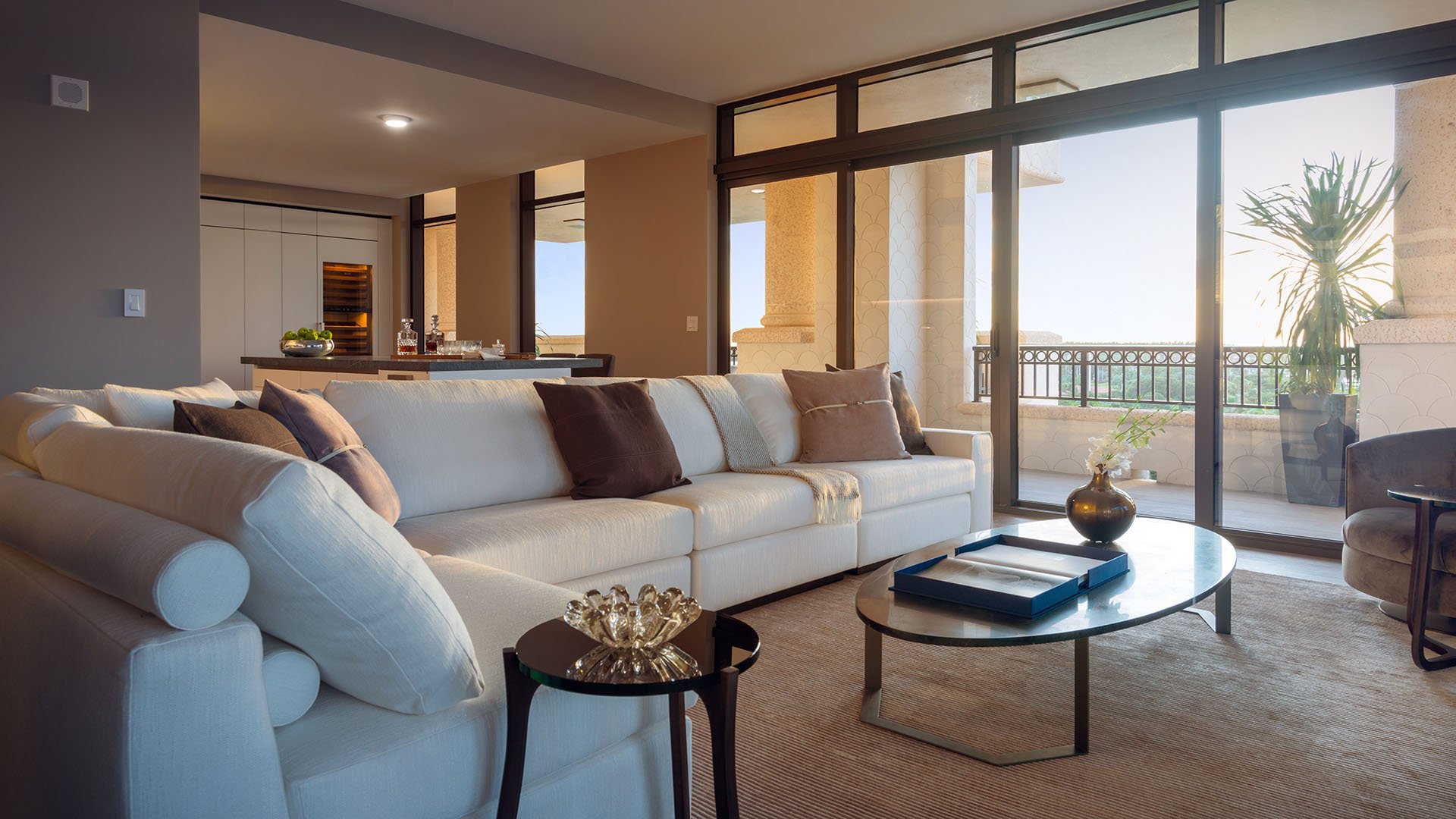
For buyers considering Palazzo del Sol Fisher Island, the most consequential ownership questions often extend beyond a particular finish or view. They center on how the residence will function when adult children arrive, grandparents stay longer than expected, or several generations gather at once.
Guest-suite access, when available under the governing policies then in effect, can materially change that calculation. It may allow an owner to preserve the intimacy of a private residence while giving visitors a separate place to sleep, dress, work, and decompress. The value lies not simply in added capacity, but in the ability to host generously without making every visit feel like a full household merger.
That distinction matters on Fisher Island, where privacy is central to the ownership proposition. Buyers should treat guest accommodations as an operational feature requiring careful verification, not as an assumed extension of the deeded residence.
A family expecting frequent visitors may instinctively prioritize an additional bedroom. Yet that bedroom carries daily implications, including acquisition cost, furnishing, climate control, maintenance, and the opportunity cost of space that might otherwise accommodate a library, media room, office, or larger entertaining area.
Reliable guest-suite access offers another path. An owner might select a residence based on the primary household’s needs, then use separate accommodations for occasional overflow. This can be particularly relevant to a Second-home buyer whose guest patterns are intense but episodic.
The strategy should remain conservative. Guest accommodations should complement a residence that already works for its owners. They should not justify an undersized home when family visits are frequent, lengthy, or difficult to schedule in advance.
Before assigning financial or Lifestyle value to access, buyers should request the current written rules and understand how the arrangement operates in practice. The essential questions are straightforward:
Who may reserve a suite, and must the owner be in residence? How far in advance can bookings be made? Are there limits on consecutive nights, total annual use, number of rooms, or peak-period reservations? What charges, taxes, deposits, housekeeping costs, or cancellation fees apply? Are reservations first come, prioritized by circumstance, or allocated through another procedure?
Buyers should also clarify check-in protocols, visitor registration, service expectations, parking or arrival arrangements, and whether policies can be amended. Any representation made during a showing should be reconciled with the operative condominium documents, association materials, and a current written explanation of building policy.
This is especially important because access is not ownership. A deeded bedroom remains under the owner’s direct control, subject to the condominium framework. A shared guest suite can depend on availability, policy, staffing, maintenance, and future association decisions.
The strongest case for guest accommodations is qualitative. Family members can remain close without sharing every morning routine. Parents with young children can preserve their own schedule. Adult children can return late without crossing the main residence. A caregiver or accompanying guest may also benefit from separation, provided the applicable occupancy rules permit the intended arrangement.
For the host, that separation can protect the residence itself. Guest luggage, deliveries, calls, and differing schedules need not dominate the private rooms. For visitors, independent accommodations can feel more gracious than a converted office or sofa bed.
In a Waterfront setting, the ownership experience is often defined by effortless transitions between privacy and sociability. Guest-suite access can support that balance, but only when reservations are sufficiently dependable for the family’s actual calendar.
Palazzo del Sol should be evaluated within the broader island context rather than in isolation. Buyers may also consider Palazzo della Luna, The Residences at Six Fisher Island, or The Links Estates at Fisher Island. Each comparison should begin with the residence itself, then turn to the current rules governing guests, services, access, and shared facilities.
The objective is not to identify a universally superior format. It is to determine which ownership structure aligns with the family’s rhythms. One household may value a larger private floor plan and rarely need overflow space. Another may prefer a more tailored primary residence, with the possibility of separate accommodations for holiday visits.
A disciplined comparison should apply the same assumptions to every option: number of visitors, average stay, busiest dates, desired privacy, likely booking notice, and total annual hosting cost. Without that consistency, an attractive convenience can be overvalued.
Guest access may influence what a buyer is willing to pay, but it should not be valued as though it were deeded square footage. Its economic value is personal and conditional. A family that hosts six times a year may find meaningful utility; an owner whose relatives prefer hotels may find very little.
Model at least three scenarios: accommodations are available when desired, available only on alternative dates, or unavailable during the most important visit. Then compare those outcomes with the cost and utility of purchasing a larger residence. Include recurring charges for each stay and any costs created by last-minute alternatives.
The same restraint applies to Resale. Future purchasers may appreciate guest-suite access, but they will also examine floor plan, condition, exposure, privacy, carrying costs, and the rules then in force. The feature can strengthen a complete ownership proposition; it cannot repair a residence that otherwise misses the market.
For families, the decisive exercise is a calendar test. Map the next twelve months of likely visits, including school breaks, holidays, milestone events, and unplanned stays. Identify which guests need true separation and which can comfortably remain within the residence.
Then test that calendar against the current reservation framework. If the most important visits are likely to coincide with peak demand, the prudent choice may be a residence with greater internal capacity. If visits are flexible and privacy is prized, guest accommodations may allow a more elegant allocation of private space.
At Palazzo del Sol, the ownership equation therefore extends beyond bedroom count. It encompasses control, convenience, certainty, and the emotional quality of hosting. The right answer is the one that remains comfortable even when shared accommodations are unavailable.
Does guest-suite access mean the suite is part of the residence? No. Buyers should distinguish shared access from deeded space and verify the legal and operational arrangement.
Should a buyer choose a smaller residence because guest accommodations may be available? Only if the residence independently meets the primary household’s needs and overflow plans remain workable.
What documents should a buyer review? Review the current condominium documents, association rules, fee schedules, reservation terms, and written building guidance with qualified advisers.
Can guest-suite policies change? Shared-facility policies may be subject to amendment, so buyers should confirm the applicable approval process and current terms.
Which reservation details matter most? Focus on eligibility, advance-booking windows, stay limits, peak-date priority, cancellation rules, and all charges.
Should holiday availability be assumed? No. Buyers should test the dates that matter most and plan a credible alternative.
How should families value the privacy benefit? Consider whether separate sleeping arrangements and daily routines would materially improve the experience for hosts and guests.
Can guest access support multigenerational visits? It can provide useful separation, subject to occupancy, registration, reservation, and use rules.
Does guest-suite access guarantee stronger resale demand? No. It may add appeal, but future value will depend on the complete residence and the rules in effect at the time of sale.
What is the safest way to make the purchase decision? Choose a residence that works without shared accommodations, then treat verified guest access as an additional benefit.
For a tailored shortlist and next-step guidance, connect with MILLION.
If branded residences are on your mind — as a home or as an allocation — we would be glad to share what we are seeing, privately.
Begin a quiet conversation