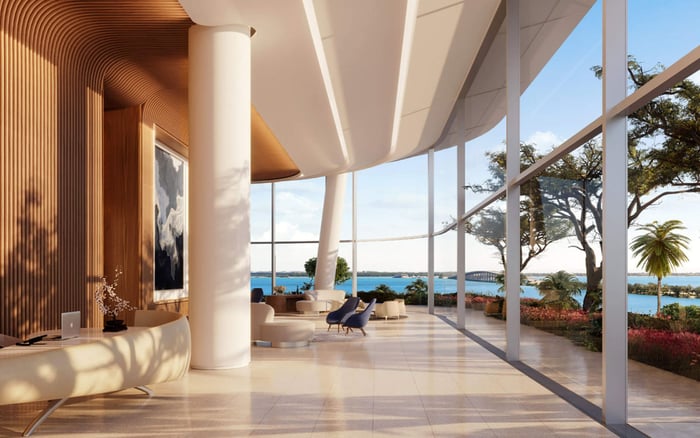
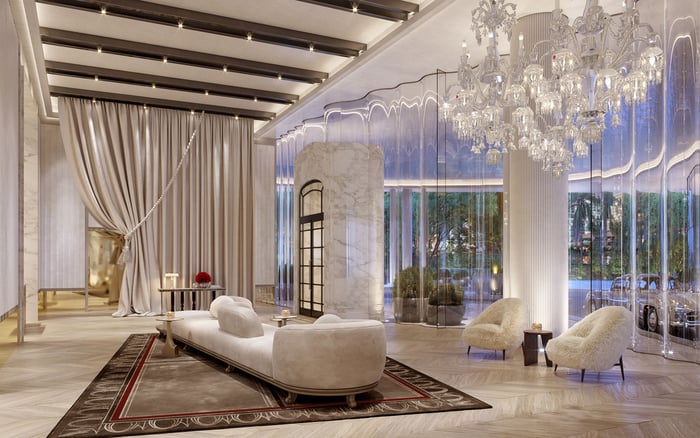
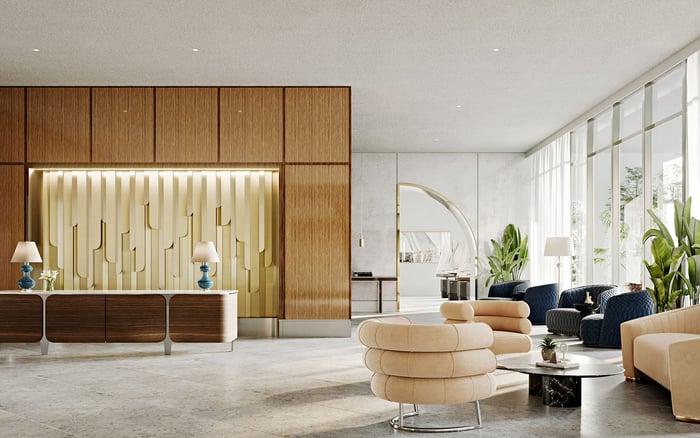
A discreet guide for Greenwich buyers evaluating South Florida residences by amenity depth, privacy, service choreography and the difference between true comfort and resort-style spectacle.
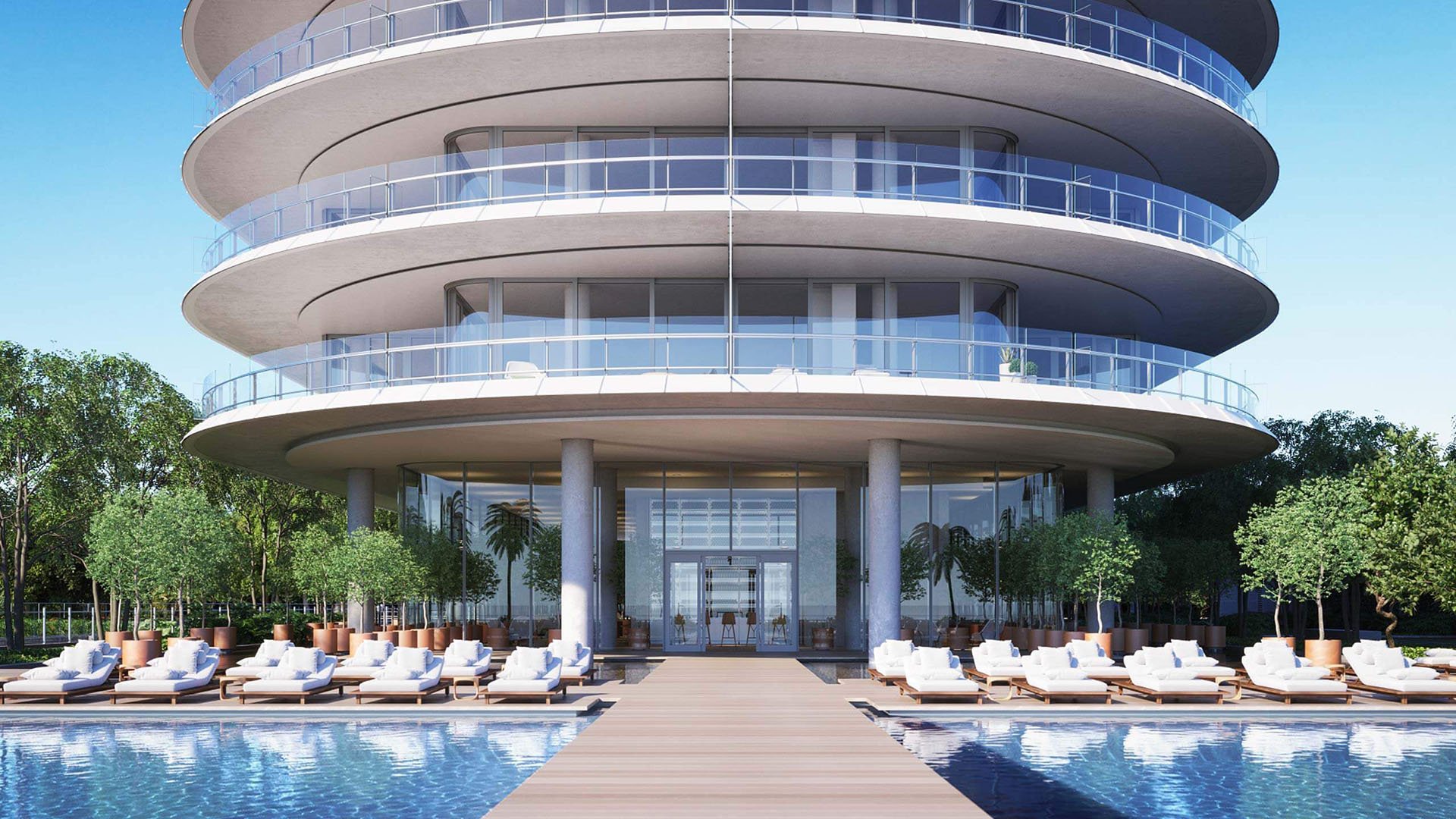
For a Greenwich buyer, the South Florida search often begins with a precise tension: more ease, more service, and more everyday access to water, wellness, and dining, without the feeling of having moved into a hotel. The right residence should expand daily life without taking it over.
That distinction matters. Amenity depth is not the number of rooms on a floor plan or the length of a brochure. It is the quality of the daily sequence: how you arrive, where guests are received, whether wellness feels calm or crowded, how private dining is handled, and whether staff presence is polished without becoming theatrical. A building can offer many amenities and still feel composed. Another can offer fewer and feel constantly activated.
The most successful South Florida choices for this buyer profile are not necessarily the loudest. They are the residences that preserve control. They allow an owner to host when desired, disappear when needed, and move through the property without being pulled into a social program.
Amenity depth should be judged by usefulness, not spectacle. A screening room, club room, or wellness suite has value only if it supports how you actually live. If the space depends on constant programming to feel relevant, it may begin to read as a resort. If it is available, discreet, and well managed, it can feel like an extension of a private home.
The best test is behavioral. Imagine a Tuesday morning, not a holiday weekend. Where do you enter after the airport? How long does the elevator sequence feel? Can you train, take a meeting, receive a guest, and dine quietly without crossing the most social parts of the property? If the answer is yes, the building may have depth without noise.
This is especially important for buyers comparing single-family life in the Northeast with a full-service condominium or island residence in South Florida. The goal is not to replace a private estate with a resort. The goal is to preserve the estate mentality while outsourcing the friction.
Fisher Island is often the reference point for buyers who want separation before stimulation. The appeal is not merely amenity volume. It is the feeling of a private residential environment where access, circulation, and daily rhythm are inherently more controlled.
For buyers studying this category, The Residences at Six Fisher Island belongs in the conversation because it sits within a market context where privacy is central to the decision. The key question is not whether the offering is impressive. It is whether the experience lets you live quietly, entertain selectively, and avoid the sense that every common area is part of a public stage.
Fisher Island also asks a buyer to be honest about isolation. For some, separation is the luxury. For others, it can feel like one layer too many between home and the city. The right fit depends on whether you want amenities to be part of an enclave or connected to the broader Miami rhythm.
Miami Beach can work beautifully for a Greenwich buyer, but the building must be chosen with care. The area offers proximity to oceanfront life, dining, and cultural energy, yet that same energy can compromise the residential mood if the property feels too transient or too programmed.
A buyer considering The Perigon Miami Beach should think beyond the architecture and ask how the daily experience is edited. Where are the quiet zones? How are beach, pool, and arrival moments separated? Does the building let residents use the setting without turning every day into a scene?
The ideal Miami Beach residence gives you access to the city’s texture without requiring participation. It should offer ocean proximity, service, and wellness, while still making room for retreat. If the lobby feels like a destination in itself, that may suit some buyers. For those seeking a Greenwich sensibility, discretion is usually more valuable than spectacle.
Brickell is a different proposition. It is not trying to be Greenwich by the water or Fisher Island by design. It is an urban choice for buyers who want service, views, dining access, and business convenience in a vertical format. The risk is not a resort feeling. The risk is over-activation.
At St. Regis® Residences Brickell, the buyer’s lens should be service choreography. In an urban tower, amenity depth must manage movement elegantly: residents, guests, staff, cars, deliveries, and private events all need to feel resolved. When that choreography works, the building feels effortless. When it does not, convenience can become congestion.
Brickell is best for the buyer who wants a lock-and-leave South Florida base with strong service and immediate access to the city. It is less ideal for someone whose first priority is silence, landscape, and estate-like removal. The question is not whether Brickell is luxurious. It is whether its energy matches your threshold.
Coconut Grove appeals to buyers who want a more residential cadence, with greenery, waterfront proximity, and a lower-key sense of place. In this context, Four Seasons Residences Coconut Grove can be considered through the lens of calm service rather than destination glamour. The Grove works best when amenities feel woven into everyday life, not layered on top of it.
Bay Harbor Islands offers another softer alternative. It can appeal to buyers who want access to Miami Beach and Bal Harbour without living directly inside their most visible corridors. A project such as The Well Bay Harbor Islands invites a buyer to think carefully about wellness as a residential habit, not a resort theme. The lived question is simple: does the building make health and privacy feel natural?
These areas may not carry the same instant shorthand as Fisher Island, but they can be compelling for buyers who prize daily usability over status signaling.
Before choosing, walk through five dimensions. First, arrival: does it feel private, calm, and intuitive? Second, wellness: are fitness, spa, and recovery areas designed for regular use rather than occasional display? Third, dining and entertaining: can you host without surrendering privacy? Fourth, guest flow: can visitors be welcomed elegantly without disrupting the household? Fifth, waterfront experience: if water is part of the promise, does it feel integrated into daily life or simply visible from a distance?
Lifestyle should be the final filter. A residence with fewer amenities may be better if every amenity is useful. A residence with a deep program may be appropriate if the spaces are quiet, separable, and well run. The mistake is assuming that more automatically means better. For the most sophisticated buyers, the best amenity is often the one that removes friction without announcing itself.
What does amenity depth mean in a luxury residence? It means the range and usefulness of services, spaces, and private conveniences that support daily life without requiring a resort atmosphere.
Why do Greenwich buyers often focus on privacy in South Florida? Many are accustomed to estate-like control, so they look for buildings or enclaves that preserve discretion while adding service.
Is Fisher Island the best choice for avoiding a resort feeling? It can be a strong fit for buyers who value separation and controlled access, but the lifestyle must suit your desired level of connection to Miami.
Can Miami Beach feel residential rather than resort-like? Yes, if the building has disciplined circulation, quiet amenity zones, and a culture that favors residents over constant activation.
Is Brickell too urban for this buyer profile? Not necessarily. Brickell works when the buyer values convenience, service, and city access more than estate-like quiet.
How should I evaluate wellness amenities? Look for spaces you would use weekly, not just features that photograph well or sound impressive in marketing language.
Are branded residences always more resort-like? No. The important issue is whether the brand expression is discreet, residential, and service-led rather than theatrical.
Should I prioritize oceanfront or bayfront living? Prioritize the water experience that matches your routine, whether that means beach access, views, boating proximity, or quiet outlooks.
What is the biggest mistake buyers make with amenities? They count amenities instead of testing whether the building’s daily rhythm feels private, useful, and calm.
What is the best way to shortlist comparable options for touring? Start with location fit, delivery status, and daily lifestyle priorities, then compare stacks and elevations to validate views and privacy.
If you'd like a private walkthrough and a curated shortlist, connect with MILLION.
If branded residences are on your mind — as a home or as an allocation — we would be glad to share what we are seeing, privately.
Begin a quiet conversation